make preferable
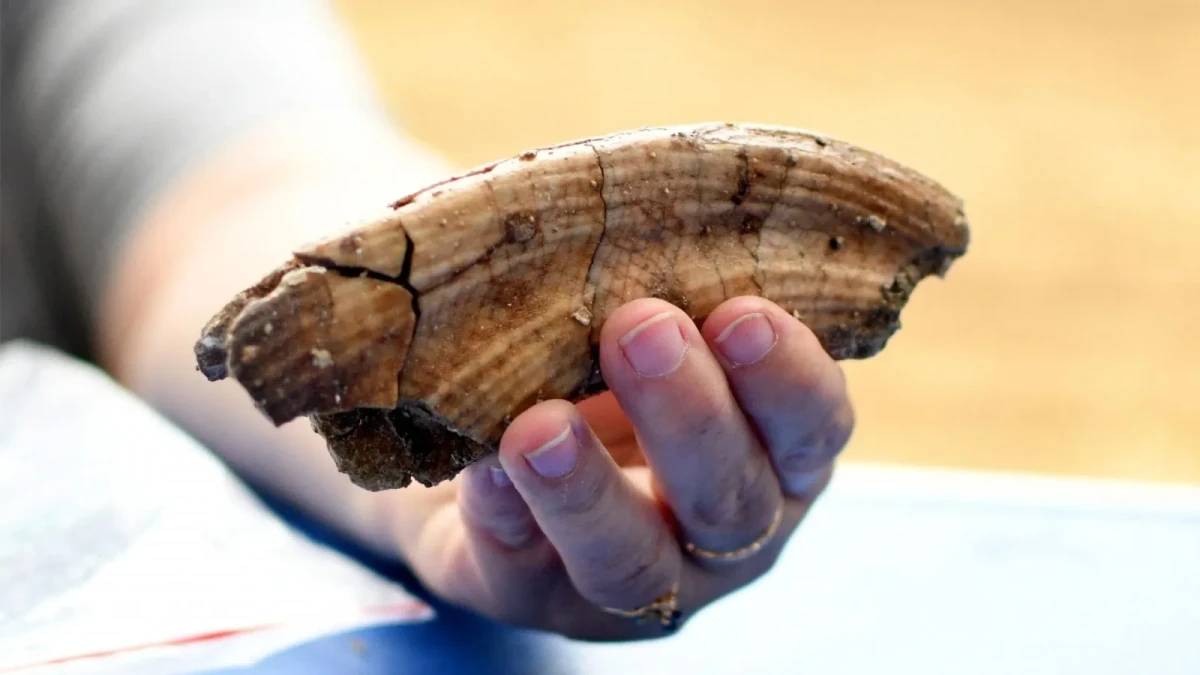
The archaeological site of Ubeidiya in the Jordan Valley has turned out to be significantly older than previously thought. According to a new study, it is at least 1.9 million years old. This means that early humans settled in the Levant hundreds of thousands of years earlier than scientists had assumed. Ubeidiya is comparable in age to Dmanisi in Georgia, one of the most important early human sites outside Africa.
The findings offer a revised timeline of early human migrations and suggest that our ancient relatives may have dispersed beyond Africa in several groups using different stoneworking technologies.
The study was conducted by scientists led by Professor Ari Matmon of the Hebrew University of Jerusalem, Professor Omry Barzilai of the University of Haifa, and Professor Miriam Belmaker of the University of Tulsa. To refine the site's age, the team used three independent dating methods.
Stone tools and traces of early humans
Ubeidiya has attracted archaeologists' attention for several decades. Evidence of the Acheulean culture has been found here—a technological tradition of making large stone tools, including hand axes worked on both sides. In addition to artifacts, the site contains a rich collection of fossil animal remains, including species formerly widespread in Africa and Asia, as well as species that are now extinct.
However, the precise age of the finds has long been debated. Previous estimates placed the site between 1.2 and 1.6 million years old. These dates were based primarily on comparisons with other archaeological sites and geological evidence, rather than direct measurements of the age of the deposits.
To obtain a more reliable estimate, the researchers collected new samples and tested them using three methods, each of which provided an independent estimate of the age of the geological layers.
The first method, cosmogenic isotope dating, involves measuring rare isotopes produced in rocks by exposure to cosmic rays. When rocks become buried underground, the abundance of these isotopes gradually changes through radioactive decay. Their ratios allow scientists to estimate how long the material has been buried.
The second method examined traces of Earth's ancient magnetic field preserved in lakebed sediments. As the sediments accumulated, they recorded the direction of the magnetic field. By comparing these data with known changes in Earth's magnetic polarity, the researchers established that the deposits formed during the Matuyama chron, a geological interval that began more than two million years ago.
Finally, the scientists examined fossilized shells of freshwater snails of the genus Melanopsis found in the same deposits. Uranium-lead dating allowed them to determine the minimum age of the geological layers containing the stone tools.
Taken together, all three methods indicated that Ubeidiya is substantially older than previous estimates suggested.
Two technological traditions spread at the same time
The new dating places Ubeidiya in the same time frame as Dmanisi, a site in Georgia that plays an important role in the study of early human dispersal beyond Africa.
The similar ages of the two sites indicate that early humans may have settled different regions at roughly the same time. Archaeological finds also suggest that groups with different toolmaking technologies were spreading beyond Africa.
One was the Oldowan tradition, characterized by relatively simple stone tools. The other was the Acheulean tradition, which included more carefully worked tools, such as hand axes.
Early human dispersal may therefore not have occurred as a single successive wave in which one technology replaced another. Different groups may have left Africa during overlapping periods, bringing their own stoneworking techniques and adapting to new environments.
However, the ages of the sites alone cannot establish precisely which groups of humans inhabited them or how closely their migrations were connected.
Why some rocks appeared to be about three million years old
The study revealed an unexpected discrepancy between the results of the different methods. Initial cosmogenic isotope measurements suggested that some rocks could be about three million years old. This is significantly older than estimates based on magnetic data, fossil remains, and archaeological finds.
Further analysis showed that the discrepancy stemmed from the complex history of the deposits themselves. The material had repeatedly accumulated, been buried underground, resurfaced, and moved within the Dead Sea Rift Valley. Some of the sediments had been buried long before they were transported and redeposited along the shores of an ancient lake at Ubeidiya.
As a result, some rocks retained traces of a much earlier geological past than the layers in which the archaeological finds ultimately came to rest. In other words, the age of individual particles of material did not necessarily match the age of their final deposition.
Accounting for this history of sediment movement allowed the researchers to explain the discrepancies and reconcile the results of the different dating methods.
The new estimate makes Ubeidiya one of the oldest known examples of human presence outside Africa. It also strengthens the view that early human populations began dispersing at least 1.9 million years ago and that this process may have involved several groups with different technological traditions.