make preferable
The British ruler Verica, whom historians have regarded as a man for nearly two centuries, may have been a woman. Archaeologist Miles Russell of Bournemouth University reached this conclusion after examining the ruler's name, ancient coins and their imagery. In his view, Verica was one of the most influential women in Iron Age Britain and played an important role in preparations for the Roman invasion in AD 43.
Verica ruled the Atrebates tribe, whose lands covered much of what are now the counties of Hampshire and West Sussex. Around AD 40, she was deposed, after which she fled to Rome and appealed to Emperor Claudius for help.
The Roman historian Cassius Dio maintained that it was Verica's appeal that prompted the emperor to begin the conquest of Britain. If this account is correct, the exile of one female ruler may have been among the events that shaped the island's subsequent history.
Why Verica may have been a woman
Miles Russell, director of archaeological research at Bournemouth University, believes that the view of Verica as a man arose from the entrenched assumptions of 19th-century historians, who automatically regarded ancient rulers as male.
The researcher offers several arguments in support of Verica having been a woman. The first is the name itself, which ends in “a.” This feature is characteristic of the names of well-known female rulers of the time. They include Cartimandua, who led the Brigantes tribe in what is now Yorkshire, and Boudicca, leader of the Iceni tribe, famed for her revolt against the Romans in AD 60.
All three female rulers lived at roughly the same time. Russell believes, however, that Verica's political influence may have been even greater than that of the better-known Boudicca.
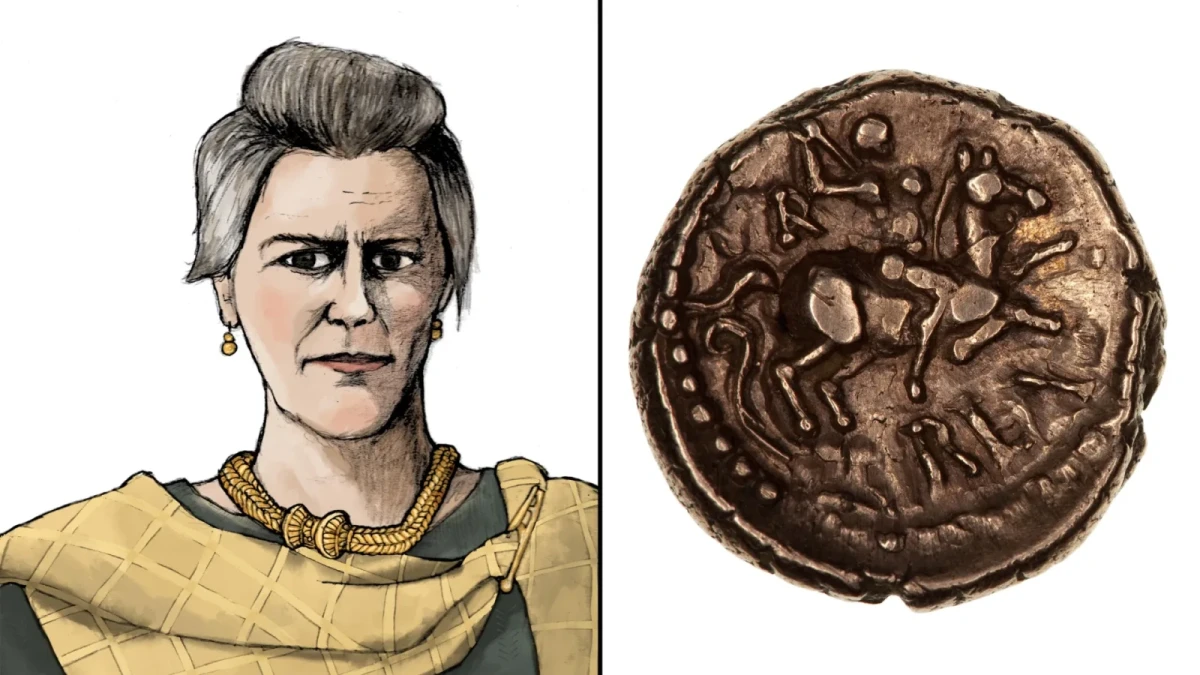
Another argument concerns the coins minted during Verica's reign. They bear the Latin title rex, traditionally translated as “king.” This was a major factor in cementing the view of Verica as a man.
However, according to Russell, the title did not necessarily indicate the ruler's sex. The Romans also recognized women as holding it. The researcher cites the Egyptian queen Cleopatra as a well-known example.
In addition, the imagery on Verica's coins differs from the iconography typical of British rulers of the Iron Age. While other leaders depicted themselves as warriors with distinctly masculine features, Verica's coins show a slender, feminine figure with a bare chest riding a horse.
How a female ruler's exile may have led to the Roman invasion
Russell believes that Verica's historical role extended beyond ruling the Atrebates. In his interpretation, the exiled ruler may have become an important ally of Rome and helped Claudius organize a successful invasion of Britain.
In ancient sources, Emperor Claudius is often portrayed as a weak ruler susceptible to the influence of women and freed slaves. Russell suggests that this reputation also affected how Cassius Dio described Verica's appeal.
In his account, the decision to invade appeared to result from a woman's influence over the emperor. The archaeologist, however, believes that Verica's role may have been much more substantial: she may have provided the Romans with intelligence, information about the local political situation and practical assistance during the military campaign itself.
The conquest of Britain was particularly important to Claudius. It gave the emperor an opportunity to demonstrate his military abilities and bolster his reputation as a successful commander. Verica's exile provided a political pretext for intervention, while her knowledge of Britain may have helped the Romans carry out their plans.
Verica may therefore have been not merely an exiled ruler who sought help from a powerful neighbor, but one of those involved in preparing for Roman expansion.
Might the Roman conquest of Britain never have happened?
The researcher suggests that without Verica's exile and her appeal to Claudius, the invasion of AD 43 might never have taken place. Had she remained in power, Rome might not have had the same political pretext for a military campaign.
This is, however, a historical hypothesis rather than an established fact. The arguments about Verica's role rest on interpretations of archaeological finds and ancient written accounts, which do not provide a complete picture of the political circumstances of the time.
Nevertheless, Russell believes that Verica should be restored to her place among the most significant women in Britain's early history.
Women in the Iron Age may have held more power than previously thought
The new work builds on Bournemouth University's research into the status of women in ancient British society. Last year, researchers at the university found evidence that some Iron Age communities may have had a matrilineal social structure.
The study showed that men moved to their wives' communities after marriage. This may point to women's central role in the structure of society and the organization of kinship ties.
Together with the new conclusions about Verica, these findings challenge conventional views of how power was distributed in Britain before the Roman conquest. Women may not only have held high status within their communities, but also ruled territories in their own right, participated in international politics and influenced the course of major military events.
The research on Verica is presented in Miles Russell's new book, Caratacus: Great King of Britain, due to be published by Bloomsbury in January. The material has also been published in the latest issue of Current Archaeology.