make preferable
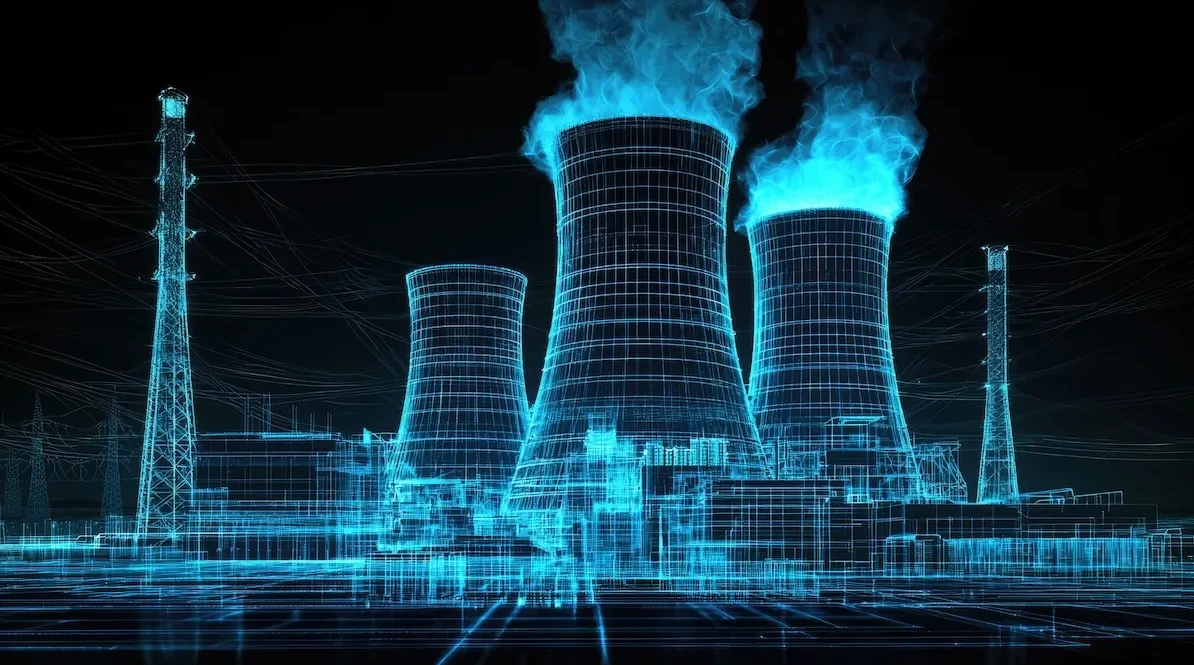
America's artificial intelligence boom has run into an unexpected constraint: data centers do not have enough electricity. Energy demand from new computing facilities is growing roughly ten times faster than power grids are expanding. Unless the situation changes, capacity shortages could slow the construction of new facilities as early as 2030 and threaten the continued development of AI infrastructure. Technology companies are trying to solve the problem themselves by building gas-fired power plants, restarting shuttered nuclear reactors, and investing in small modular nuclear power plants. But each of these options has its limitations.
Electricity has become the AI industry's new bottleneck
At the start of the artificial intelligence boom, the main constraints were computing accelerators and memory. A sharp rise in demand for graphics processing units and RAM sent prices soaring and forced manufacturers to increase component production. According to forecasts, however, equipment shortages could begin to ease by late 2027 or early 2028.
The electricity situation is more complicated. Data centers consume enormous amounts of energy, and both their number and their computing workloads continue to grow. Meanwhile, expanding energy infrastructure requires far more time and money than purchasing servers.
A report by insurance broker Howden, based on data from the US Energy Information Administration and S&P Global, offers a telling comparison: since 2000, data center energy consumption in the country has grown by an average of 19% annually, while power grid capacity has increased by only about 2% a year.
Whereas data centers accounted for about 0.1% of total US power system capacity in 2000, their share had reached 5% by 2025.
Howden estimates that if data centers continue expanding at the same pace, up to 58% of the electricity they need will have to come from alternative sources rather than conventional connections to the public grid.
The problem resembles the situation during the dot-com boom, when the growth of internet companies was constrained by a shortage of fiber-optic lines. At the time, telecommunications infrastructure needed urgent expansion. Today, energy is becoming a similar constraint.
Why electricity shortages could halt construction by 2030
New data centers cannot be built without guaranteed access to large amounts of electricity. Even if a company has the money for servers and a site, connecting to the grid can prove a major obstacle.
According to a Gartner forecast, a shortage of power capacity could slow further data center expansion as early as 2030. This means AI development could be constrained not by the capabilities of chips or software, but by the ability to supply them with electricity.
Technology companies are not the only ones paying for power grid expansion. A significant share of the costs is passed on to consumers through electricity rates. As a result, ordinary American households may effectively help finance the infrastructure needed by the largest AI companies.
Experts estimate that electricity prices in some states could rise by 50% by 2030. The consequences of the AI boom therefore extend far beyond the technology market: growing data center demand could affect electricity bills for millions of residents.
Gas turbines: a quick solution with unpleasant consequences
Some companies have decided not to wait for power grids to catch up with their needs. One option is to install their own gas-fired power plants right next to data centers.
For example, Anthropic announced a $3.4 billion investment in gas turbine generators. Caterpillar equipment with a combined capacity of up to 1.7 GW is intended to supply electricity to the company's new sites.
This approach reduces reliance on overloaded power grids and allows computing capacity to come online faster. But alongside the grid connection problem comes another issue: dependence on natural gas supplies.
Fuel prices pose an additional risk. Geopolitical tensions in the Middle East and competition for energy resources could make gas more expensive. Companies therefore risk replacing electricity shortages with uncertainty over fuel supplies and rising operating costs.
There is also a problem for people living nearby. Large data centers may use entire arrays of gas generators whose noise has been compared to that of an international airport. Local residents report sleep disturbances, dizziness, and other unpleasant symptoms, which they attribute to the equipment's constant low-frequency hum.
Gas generators can deliver the required capacity more quickly, but using them increases the environmental burden and can create conflicts with local communities.
Nuclear power is making a comeback for artificial intelligence
Another option is nuclear power. Unlike gas generators, nuclear power plants can provide large amounts of electricity without continuously burning fossil fuels. Technology companies are therefore increasingly considering them as a foundation for the long-term electricity supply of data centers.
Preparations are already underway in the United States to restart three shuttered nuclear power plants: Palisades in Michigan, Crane Clean Energy Center in Pennsylvania, and Duane Arnold Energy Center in Iowa. A total of $4.4 billion in federal grants is planned for their restoration. Microsoft and Google are among the companies interested in obtaining electricity from these facilities.
Amazon has taken a different approach: the company intends to purchase more than 960 MW of electricity from 12 small modular reactors planned for construction in Iowa. The project will likely cost more than $1 billion. However, the sites still need the necessary permits, and the reactors themselves may not begin operating until the mid-2030s.
The United States has also approved plans to build the first small nuclear reactor intended specifically to power a data center. This is the BWRX-300 project in Tennessee. Each such reactor will be able to provide up to 300 MW of capacity.
Why nuclear power will not solve the problem immediately
Despite the appeal of nuclear power, a quick end to the shortage is not in sight.
Building new reactors requires enormous investment, complex approval processes, and lengthy preparations. Even small modular units, promoted as a more compact alternative to conventional nuclear power plants, remain a promising solution rather than a widely deployed one.
Bringing old nuclear power plants back into service also involves more than simply switching idle equipment back on. The facilities must be inspected, safety systems upgraded, and the reactors' remaining service life assessed to ensure it justifies the investment. This could require billions of dollars.
There are additional obstacles at the political level. Donald Trump's administration supports expanding energy capacity, including through less environmentally friendly sources, and is seeking to ease certain restrictions on data centers. However, growing opposition to such projects and shifts in the political balance in Congress could make these plans harder to implement.
As a result, technology companies must take into account not only equipment and fuel costs, but also environmental requirements, local residents' views, and political risks.
AI could hit the limits of the energy system
The artificial intelligence industry is currently expanding its computing capacity rapidly, but energy infrastructure is not keeping pace with its ambitions. Gas generators allow new facilities to come online faster, nuclear power plants promise a more stable electricity supply, and small modular reactors could become an additional source of capacity in the future.
However, none of these options can instantly close the growing gap between supply and demand. Doing so will require years of construction, upgrades, and multibillion-dollar investments.
The central paradox is that the continued development of artificial intelligence increasingly depends on a thoroughly conventional resource: electricity. Ever more powerful chips can be created and models improved, but without sufficient energy infrastructure, they will not be able to operate at the necessary scale. And if the United States fails to solve this problem in time, electricity supply, rather than computing technology, could become the main constraint on the next phase of the AI boom.