make preferable
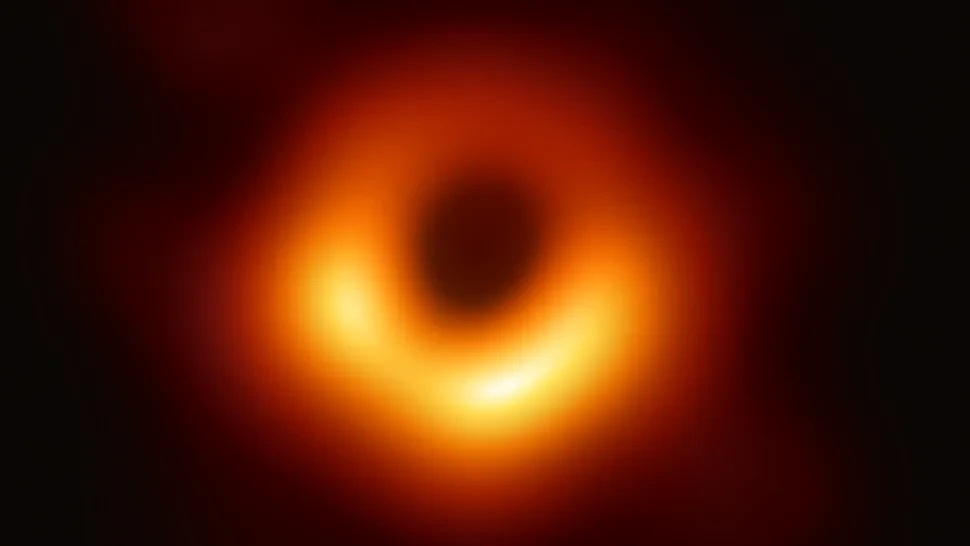
An international team of researchers has independently confirmed, for the first time, the reliability of the historic image of the supermassive black hole M87*, published in 2019. To verify it, the scientists used a machine learning method developed in Australia that reconstructed almost the same image without relying on the original results. The study strengthens the evidence supporting Einstein's general theory of relativity and shows that the original reconstruction was not a result of quirks in data processing.
Why the first black hole image needed verification
In April 2019, the international Event Horizon Telescope (EHT) project unveiled the first-ever image of a black hole. It captured M87*, a supermassive black hole at the center of the galaxy Messier 87, approximately 55 million light-years from Earth. Its mass is about 6.5 billion times that of the Sun.
The image was made possible by combining several radio telescopes around the world into a single system—an interferometer comparable in size to Earth. However, the telescopes themselves did not photograph the black hole in the conventional sense. Scientists collected radio signals and then used complex computational methods to reconstruct an image from the resulting data.
It was this process that required additional verification. The results could have been affected by Earth's atmosphere, interference during observations, and the characteristics of the algorithms used to combine data from different telescopes into a single image.
The lead researcher on the new study, Samuel Lai of Australia's national science agency, CSIRO, compared the difficulty of the task to trying to photograph a doughnut on the Moon while standing in your own backyard.
The scientists therefore decided to test whether they could obtain a similar image using a different approach, without making assumptions about exactly what a black hole should look like.
Artificial intelligence independently reconstructed the image
The Australian team developed a machine learning method called GenDIReCT. It can analyze telescope observation data, separate useful information from interference, and account for systematic distortions that arise when several instruments are combined into one virtual telescope.
The researchers applied this method to the original EHT dataset. The resulting image of the black hole was almost identical in size and shape to the one published in 2019.
Crucially, the algorithm was given no prior information about what the black hole image should look like. Rather than attempting to reproduce an already known result, it independently reconstructed the object's structure from the observations.
Moreover, the researchers examined data spanning several years and found that the distinctive ring around M87* persisted in the independent reconstructions.
Event Horizon Telescope collaboration director Laurent Loinard noted that independent verification is particularly important for such extraordinary scientific findings. He said the new work not only strengthens scientists' confidence in the original image but also expands the range of methods available to black hole researchers.
What the image tells us about general relativity
The result is also important for testing the theory Albert Einstein published in 1915. General relativity describes gravity as a consequence of the curvature of spacetime caused by mass and energy.
The more massive an object is, the more strongly it curves the spacetime around it. In the extreme case, a black hole forms—a region where gravity is so strong that not even light can escape.
German physicist Karl Schwarzschild was among the first to obtain a mathematical solution describing such an object. He showed that a black hole must have a boundary beyond which nothing can return. Today, this is called the event horizon.
The theory also makes it possible to predict what a black hole's immediate surroundings will look like. Matter around it heats up to extremely high temperatures and forms a bright ring of intensely hot plasma. Against this backdrop, the black hole itself appears as a dark region—a shadow caused by its gravity trapping light.
This is precisely the structure scientists saw in the 2019 image of M87*. The resemblance between the observed image and theoretical predictions became one of the clearest visual confirmations of general relativity.
The new work strengthens this finding: researchers have now shown that the distinctive ring is not an artifact of a particular processing algorithm or a peculiarity of the original data reconstruction.
From black holes to medical diagnostics
The method developed by the Australian scientists could prove useful beyond astrophysics. The researchers suggest that similar algorithms could eventually be used to improve medical imaging and earthquake mapping.
In both cases, it is important to extract reliable information from complex data containing interference and distortions. Methods that can reconstruct images independently of initial assumptions and verify the reliability of the results could therefore prove useful outside astronomy as well.
The Australian team's study was published on November 11 in the journal Nature.
The new verification does not mean that general relativity has been definitively proven under every possible condition. But it resolves an important question about the reliability of one of the most famous astronomical images in history: the ring around M87* is genuinely present in the observational data and did not arise solely from the way those data were processed.