make preferable
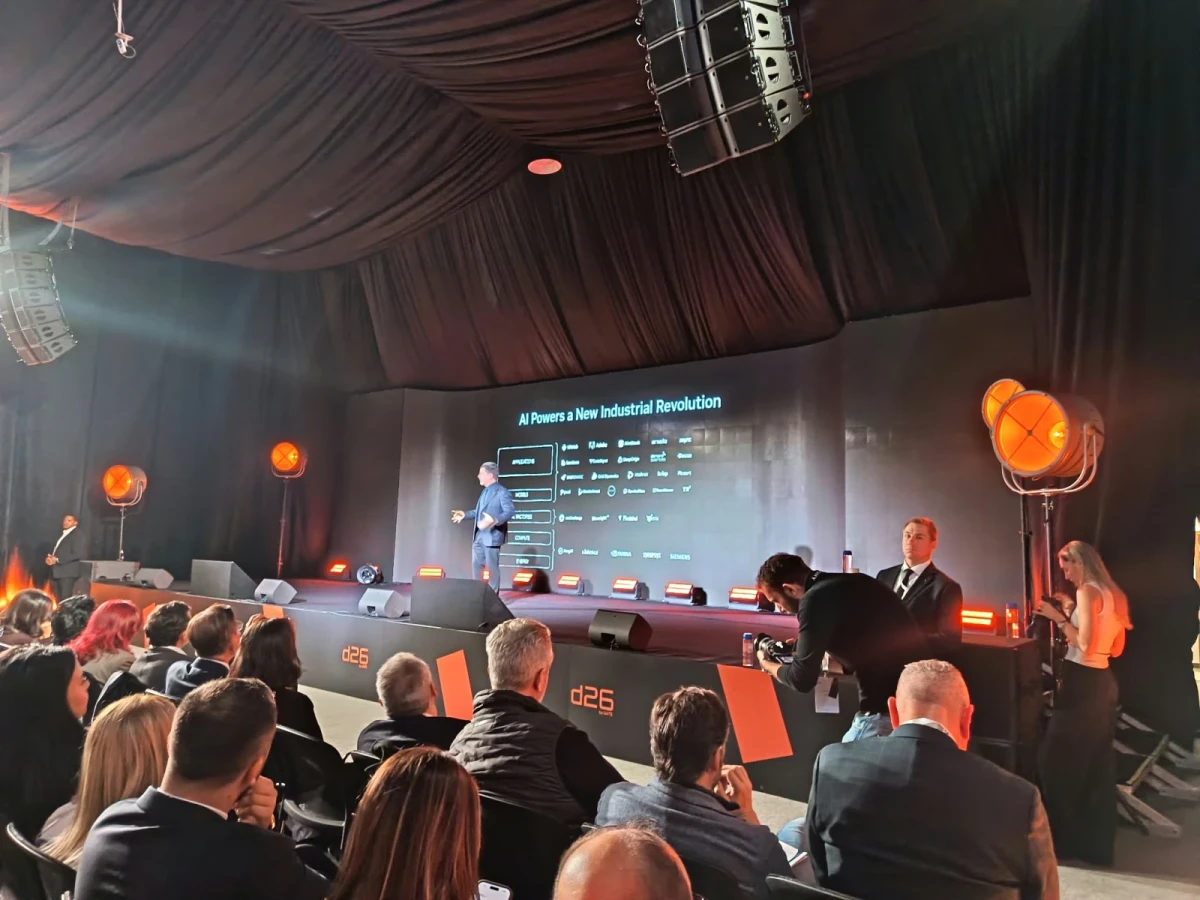
The development of artificial intelligence offers small countries an opportunity to build their own technology ecosystems, but doing so requires access not only to computing power but also to open models and software tools. Otherwise, governments and companies will be forced to use solutions from major international developers without being able to influence their development. NVIDIA Vice President Rev Lebaredian made these remarks at the Digitec 2026 conference in Yerevan.
According to him, the AI industry is currently developing along two main tracks: closed commercial models at the forefront of technological progress, and an open ecosystem of models and software.
Closed solutions, which include the most advanced chatbots and other AI products, provide access to modern technologies but do not allow individual companies and countries to independently determine how those technologies develop. For countries that want artificial intelligence to reflect their own language, culture, and working practices, this becomes a serious constraint.
Lebaredian believes that an open ecosystem can give them the ability to create their own solutions based on foundational technologies that have already been developed.
The five layers of the AI industry: from electricity to applications
Lebaredian suggested viewing artificial intelligence as a system of five interconnected layers, each essential to the functioning of the industry as a whole.
Energy lies at its foundation. AI systems require electricity to operate; without it, computation is impossible.
The next layer consists of semiconductors and computing chips. They convert electricity into computational operations that create and process tokens—the units of information used by AI models.
The third layer is infrastructure. It brings chips together into large-scale computing systems capable of processing vast amounts of data and running models.
The fourth layer consists of the artificial intelligence models themselves, which are trained on data and then used to generate responses, analyze information, and perform tasks.
Finally, the top layer is applications. These turn AI capabilities into practical solutions for business and everyday life.
In Lebaredian's view, the final layer is particularly important: all the other technologies lose their purpose if they cannot be used to solve real-world problems and create economic value.
He noted that the market for artificial intelligence applications is still at an early stage of development. In addition to chatbots and tools for working with documents, AI coding agents have been developing rapidly in recent months. He predicts that artificial intelligence will eventually affect virtually every area of human activity.
Why Armenia does not need to build the entire AI ecosystem on its own
Lebaredian pointed out that Armenia is already represented at several layers of the AI technology stack.
In particular, the country has a substantial community of chip design specialists. He attributed this to the history of Armenia's computing industry, which dates back to the Soviet era, as well as to the presence of international companies.
Among the organizations operating in this field, he named Synopsys, Siemens EDA, and others. He estimates that thousands of chip design specialists work in Armenia, giving it a significant advantage even compared with much larger countries.
At the infrastructure layer, Lebaredian highlighted Firebird, Elevate AI, and the companies ActiveLoop and Netris. At the same time, he stressed that Armenia's technology ecosystem should not be limited to companies physically located in the country.
Historically, Armenia served as a bridge between East and West, carrying flows of trade and information. Lebaredian believes that, thanks to Armenians' international connections and the diaspora, the country can revive this role in the technology sector.
He proposed creating a new “AI Silk Road” as a promising direction, bringing together countries in the region and enabling cooperation across all five layers of the technology stack.
He sees a special role in this system for Armenia and Kazakhstan, which he believes could become its key hubs. Lebaredian noted that he has recently been devoting considerable attention to cooperation with Kazakhstan.
Rather than trying to develop every area independently, countries in the region could specialize in particular segments, share resources and technologies, and build an interdependent ecosystem. According to the NVIDIA representative, this would contribute not only to economic development but also to stronger regional security.
Why open technologies matter for technological sovereignty
Lebaredian also addressed the issue of countries' technological independence.
He explained that closed AI models may be the most technically advanced, but users cannot independently change their fundamental principles or the direction of their development. A country that relies exclusively on such solutions must accept the technology as the developer provides it.
This is particularly sensitive for small countries. For artificial intelligence to reflect national languages, cultural characteristics, and the specific working practices of government agencies and businesses, they need the ability to adapt technologies to their own needs.
However, building a complete AI system from scratch requires enormous resources. According to Lebaredian, developing foundation models is so costly that only a handful of organizations and countries can afford it.
He said NVIDIA is advancing open technologies by providing models, software, data, and tools that other developers can use to build their own solutions.
As examples, he cited Cosmos, an open world model designed for physical AI, as well as Groot for robotics and AlphaMaya for autonomous driving.
This approach allows developers to use an existing technological foundation rather than starting from scratch, and to focus on creating their own products.
According to Lebaredian, NVIDIA intends to provide access to such technologies to small countries as well, enabling them to develop their own AI systems tailored to their needs.
Demand for computing is outpacing chip production capacity
Another important factor in the development of the AI economy is the imbalance between demand for computing power and the capacity to supply it.
Lebaredian noted that global demand for AI infrastructure is already so high that it cannot be fully met over the next few years.
One reason is the semiconductor industry's limited manufacturing capacity. Building chip fabrication plants takes three to four years, so near-term output is already largely determined by existing capacity.
As a result, demand continues to grow while supply cannot increase at the same pace.
According to the NVIDIA representative, this creates opportunities for countries that are ready to develop computing infrastructure now.
For Armenia and its regional partners, this means an opportunity to carve out their own niche in the global AI economy. But, as Lebaredian's remarks suggest, the key to success will not be an attempt to retrace the entire path of the largest technological powers. Instead, it will be the creation of an interconnected ecosystem in which countries complement one another, while access to open technologies allows them to retain control over their own technological development.