make preferable
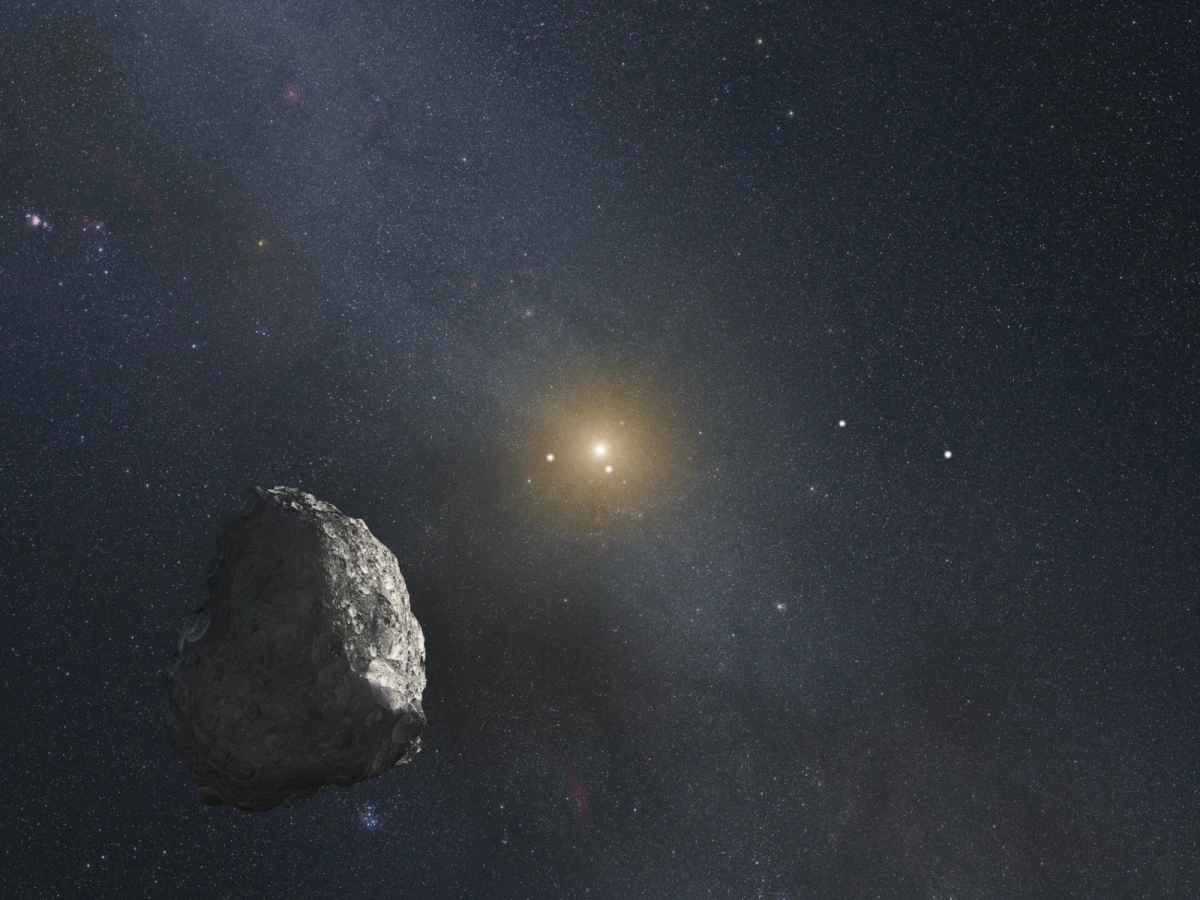
A study of cosmic dust collected in Earth's upper atmosphere has helped NASA scientists find evidence of an ancient ice reservoir in the Kuiper Belt—a distant region of the Solar System beyond Neptune's orbit. The findings offer a fresh perspective on the distribution of water and other materials during the early stages of the Solar System's formation and their role in planet formation.
For decades, researchers have hypothesized that ice enriched in heavy oxygen isotopes existed in the outer Solar System. Some evidence of this had been found in studies of meteorites and samples returned from carbon-rich asteroids, but the available data were insufficient to draw firm conclusions.
Cosmic dust collected high in the stratosphere
For the new study, specialists at NASA's Johnson Space Center in Houston analyzed 12 microscopic dust particles collected in Earth's stratosphere using an ER-2 high-altitude research aircraft.
The scientists found numerous tracks in the particles left by exposure to energetic solar particles. These tracks helped establish their possible origin and link the samples studied to the Kuiper Belt.
To examine the mineral composition and oxygen isotope characteristics, the researchers used advanced electron microscopy techniques at NASA, as well as an ion microprobe at the University of California, Los Angeles (UCLA).
The analysis revealed minerals formed through interactions between water and cosmic dust early in the Solar System's history. Their chemical characteristics showed that the ancient water contained an elevated concentration of heavy oxygen isotopes.
Discovery sheds light on planet formation
The findings provide new insights into how materials from different regions of the Solar System moved and mixed during the period of planet formation.
To compare oxygen isotope compositions, the researchers used data from NASA's Genesis mission, which was designed to collect solar wind samples. These data provide a baseline for comparing the isotopic characteristics of different materials in the Solar System.
The scientists note, however, that similar isotopic signatures are rarely found in meteorites. This may indicate that the giant planets restricted the mixing of material between the inner and outer Solar System.
Studying cosmic dust particles thus helps reconstruct the conditions that existed billions of years ago and improve our understanding of how water and other substances were distributed among different regions of the young Solar System. These processes played an important role in forming planets and determining their chemical composition.