





 make preferable
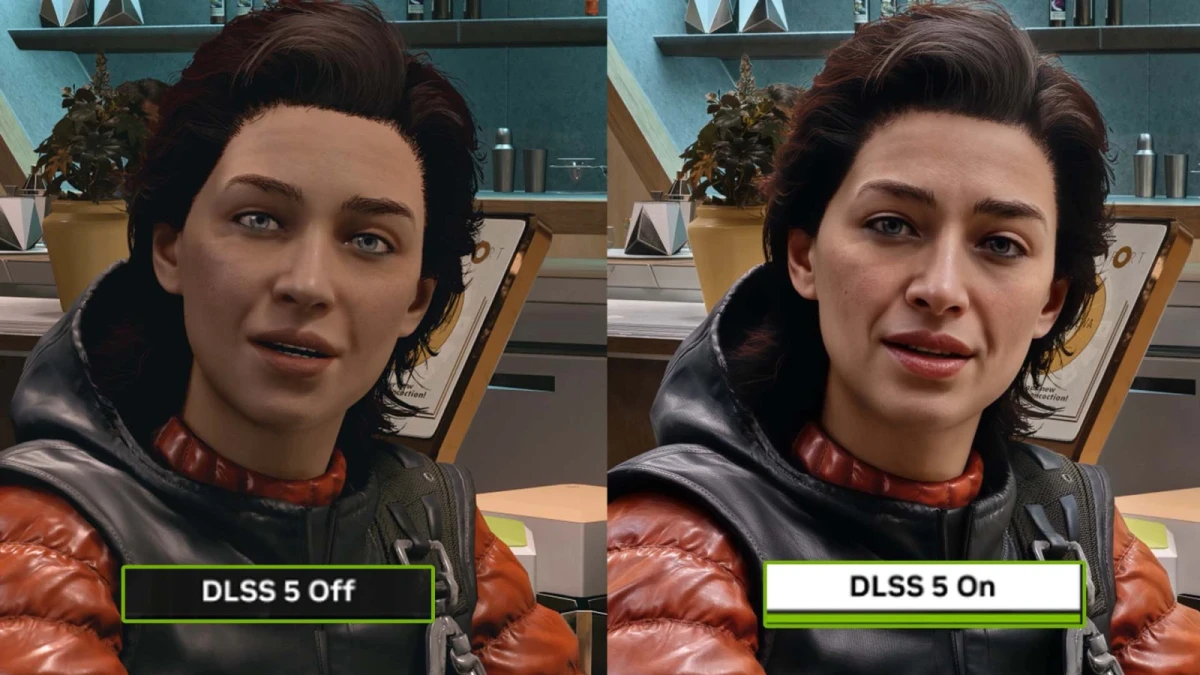
Some players have already grown so accustomed to DLSS 5 that conventional graphics look outdated and uninspiring without it. As Nvidia faces graphics card shortages and rapidly rising prices, its bet on neural rendering could prove to be more than just a way to improve image quality: it could offer an alternative path forward for the company’s gaming business, TechRadar reports.
From rejection to the new normal
When Nvidia first unveiled DLSS 5, the gaming community’s response was largely negative. Many users criticized the demos, arguing that the neural processing changed characters’ appearances too much and made the visuals look artificial. The technology seemed poised to become a major reputational problem for the company.
Over time, however, some players began to change their minds. One notable turning point was a demonstration of DLSS 5 in NBA 2K27, where the technology looked more convincing than it had in the initial presentation videos. Now, enthusiasts are reporting that returning to conventional graphics after experiencing neural processing is becoming increasingly difficult.
In a Reddit discussion, one user admitted that DLSS 5 was gradually losing its novelty. But this was not a sign of disappointment: visuals with the technology enabled had already become normal to them, and turning it off made the game look flat, as though the graphics settings had been switched to low.
Another participant compared the experience to moving to a new quality standard: every game now seems to get a graphical upgrade, while the old Ultra preset without DLSS 5 feels almost like low settings. Another user highlighted the faces of non-player characters: with the technology enabled, skin and shadows look more natural, while without it, faces appear pale and resemble clay sculptures.
One Cyberpunk 2077 player’s account is particularly telling. After installing several hundred mods, the game stopped working properly, forcing the user to restore its settings. When they finally launched Cyberpunk, the characters looked plastic and cartoonish. The reason turned out to be unexpected: ReShade had stopped running in the background, taking DLSS 5 down with it.
Some gamers compare returning to graphics without DLSS 5 to dropping from 60 frames per second to 30. These are subjective impressions, but they illustrate how profoundly neural processing can change the perception of visuals after prolonged use.
Players are experimenting with the technology themselves
There is an important caveat to these accounts: they do not refer exclusively to officially supported games and configurations. Enthusiasts are using various tools to run DLSS 5 in titles for which Nvidia has not yet announced support. Some even manage to use the technology on previous-generation graphics cards, although it is officially designed for GeForce RTX 5000 cards.
The results depend heavily on the settings. Neural processing can be overly conspicuous, so users have to fine-tune the parameters to keep image enhancements from turning into artificial stylization.
There is also a more serious trade-off: performance. DLSS 5 requires additional GPU resources, and enabling it can significantly reduce frame rates. For older games, however, this is not always a major issue: they often have enough performance headroom to absorb the additional overhead.
Nvidia is also continuing to optimize the technology. According to TechRadar, early improvements have already substantially reduced the GPU load while maintaining comparable image quality. If developers can keep making neural rendering more efficient, the range of games and configurations that can use it without major performance losses will expand.
The graphics card crisis is shifting Nvidia’s priorities
Interest in DLSS 5 is growing at a particularly difficult time for buyers. Nvidia’s gaming graphics card market is facing shortages and rising prices. The RTX 5080 and RTX 5070 Ti have become significantly more expensive, and further increases in component costs and limited supply could make the situation even worse.
The situation at the high end is especially worrying: the RTX 5090 has virtually disappeared from sale, the RTX 5080 is moving beyond the reach of many enthusiasts, and rumors that the RTX 5080 Super has been canceled are fueling concerns about the lineup’s future. Some forecasts suggest that, in certain countries, prices for high-end models could reach several times their recommended retail prices by the end of the year.
The problems are not limited to Nvidia. AMD Radeon graphics cards are also becoming more expensive, while the company is increasingly focusing on the data center and AI infrastructure markets. GPU manufacturers are finding more lucrative opportunities in the enterprise sector, where demand for AI computing power continues to grow.
Against this backdrop, a question arises: how actively will Nvidia support its consumer business if most of its profits come from data centers?
The TechRadar author suggests that DLSS 5 could serve as a fallback plan for the company. If powerful graphics cards become increasingly hard to obtain, Nvidia could partially offset this with software improvements. More efficient neural rendering would deliver better visuals even on less powerful models, without requiring users to buy yet another expensive graphics card.
This does not mean software technologies can fully replace hardware advances. DLSS 5 has its own performance requirements, and optimization will inevitably run into diminishing returns: the easiest ways to speed things up will be exhausted first. For now, though, Nvidia still has room for improvement.
Compatibility is another important issue. Official DLSS 5 support is currently limited to RTX 5000 graphics cards, but Nvidia promises to add RTX 4000 support next year. This will significantly expand the technology’s potential audience. Meanwhile, unofficial experiments by enthusiasts already show that interest extends beyond the latest GPUs.
An ironic way out of the crisis
This situation presents a curious paradox: artificial intelligence could help Nvidia cope with the consequences of the artificial intelligence boom. The rapid expansion of data centers and demand for AI accelerators is intensifying competition for computing resources and putting additional pressure on the graphics card market. Now, neural graphics processing technologies could provide a way to sustain interest in gaming GPUs even when supply is limited.
The history of DLSS already shows that an audience’s initial reaction does not always determine a technology’s eventual fate. Early versions of the image upscaling system were also met with skepticism, but over time DLSS became one of the key features of Nvidia graphics cards. The article’s author believes DLSS 5 could follow a similar path—especially since enthusiasts are already experimenting with it far more actively than might have been expected after its divisive announcement.
It is still too early to say whether neural rendering can truly offset graphics card shortages and high prices. But Nvidia has an opportunity to change the very basis of competition: instead of constantly offering customers more powerful hardware, the company could sell them increasingly sophisticated ways to use what they already own.
If this approach works, the next major milestone in gaming graphics will be less about another generation of GPUs and more about software technologies that squeeze more out of the graphics cards already installed in people’s computers.