make preferable
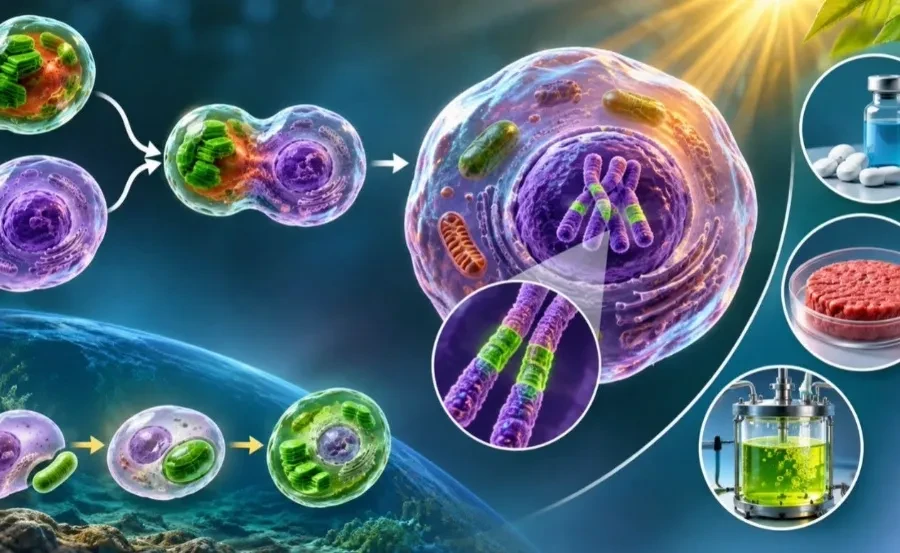
Japanese scientists have created cells that combine genetic material from animals and algae. Dubbed Planimal cells, these hybrids retain foreign DNA for more than 150 generations and continue to divide normally. This is the first confirmed case in which the genomes of such evolutionarily distant organisms have been combined in a single cell and maintained stably.
The discovery could be an important step toward creating cellular systems capable of harnessing certain advantages of plant organisms: for example, producing oxygen through photosynthesis, obtaining nitrogen independently from the environment, and synthesizing useful substances. In the future, such technologies could transform the production of medicines and other biological products, while also reducing the costs and environmental impact of cell-based manufacturing.
The study was conducted by an international team of scientists, including specialists from the University of Tokyo, Tokyo University of Science, Kindai University, and other Japanese research institutions. The results were published on November 12, 2026, in the journal Nature Communications.
How Two Genomes Were Combined
For the experiment, the researchers used the single-celled red alga Cyanidioschyzon merolae and cultured hamster cells. These organisms belong to different evolutionary lineages, so their genetic systems differ substantially.
The scientists fused the alga with animal cells and then tracked what happened to the genetic material after fusion. Using high-precision DNA sequencing, they established that the alga's genetic material had been incorporated directly into the animal cell's chromosomes. In other words, the foreign DNA was not merely present temporarily inside the cell but had become part of its chromosomal material.
Particularly important was the finding that the resulting hybrid cells continued to divide normally for more than 150 generations. With each division, they passed the algal DNA on to their descendants. This fundamentally distinguishes the result from the short-term transfer of individual genes, which may disappear after a few cycles of cell division.
But the researchers also discovered another intriguing mechanism explaining how the animal cell was able to accommodate such a large amount of foreign genetic information. They found that more than 95% of the algal genes in the hybrid cell remained inactive. The animal cell effectively suppressed their activity through epigenetic mechanisms: chemical marks, particularly methyl groups, appeared on the foreign DNA, promoting its compaction and blocking the reading of genetic information.
The scientists described this mechanism as epigenetic control, or a kind of "gatekeeping mechanism." It allows the cell to retain foreign DNA while limiting its activity. Experiments with cells lacking a particular enzyme involved in DNA methylation confirmed the importance of this process: without it, the efficiency of hybrid cell creation fell sharply, and the transferred DNA was gradually lost.
This discovery is important not only for creating unusual hybrid cells. It also helps explain how large fragments of genetic material might be transferred between evolutionarily distant organisms and how a cell adapts to the arrival of foreign DNA.
Why Give Animal Cells Plant Abilities?
The main promise of this technology lies in the possibility of giving animal cells functions that naturally occur in plants and algae.
Plants can use sunlight, water, and carbon dioxide to produce organic substances. Animal cells work differently: they obtain the organic compounds they need from their surroundings. If scientists can transfer certain plant biochemical mechanisms into animal cells and make them work, this could substantially expand the possibilities of cell engineering.
One of the most intriguing avenues is photosynthesis. In the future, animal cells may be able to use light energy and carbon dioxide for certain processes involved in producing organic substances. In addition, photosynthesis releases oxygen, opening up possibilities for developing cellular systems capable of supplying their own oxygen.
For example, researchers are considering the possibility of creating cells for medical applications that could produce oxygen directly in oxygen-deficient conditions. This is potentially promising for developing new approaches to treating damaged tissues where oxygen supply is limited. However, this remains a direction for future research rather than a medical technology ready for use.
Another promising avenue is nitrogen fixation. Some microorganisms can convert atmospheric nitrogen, which most living cells cannot use directly, into compounds that can participate in biological processes. Transferring the relevant genetic mechanisms could expand the capabilities of cell-based manufacturing and reduce the need for certain externally supplied nutrients.
Finally, the scientists hope to use the technology to produce useful substances. If the necessary groups of genes can be transferred and activated, the cells will be able to synthesize compounds of interest to medicine, pharmaceuticals, and the biotechnology industry.
Potential for Medicine and Environmentally Friendly Manufacturing
The practical significance of the discovery extends far beyond fundamental biology. Today, cells grown in laboratories are used to produce vaccines, medicines, antibodies, enzymes, and other biological products. However, these processes require a controlled environment, nutrients, oxygen, and substantial energy inputs.
Creating cells with new metabolic capabilities could potentially change this model. For example, if researchers learn how to incorporate photosynthetic mechanisms into them, the cells could use light and carbon dioxide to produce some of the compounds they need. This could reduce dependence on external sources of certain culture medium components and lessen the environmental impact of biotechnology manufacturing.
The possibility of using nitrogen-fixing mechanisms is also of interest: it could help researchers develop cellular systems that require fewer ready-made nitrogen-containing nutrients.
In the long term, such technologies could find applications in the production of pharmaceuticals, biomaterials, and other substances made using cell cultures. The Japanese researchers explicitly link further development of the technology to reducing the cost of cell culture, cutting carbon dioxide emissions, and expanding methods for producing useful substances.
However, practical applications are still a long way off. The cells created do not yet carry out full photosynthesis, fix atmospheric nitrogen, or possess other functional capabilities of algae. At this stage, the scientists have demonstrated that a large amount of foreign genetic information can be incorporated into an animal cell's chromosomes and maintained stably. The next challenge is to learn how to selectively activate the desired genes without disrupting normal cell function.