make preferable
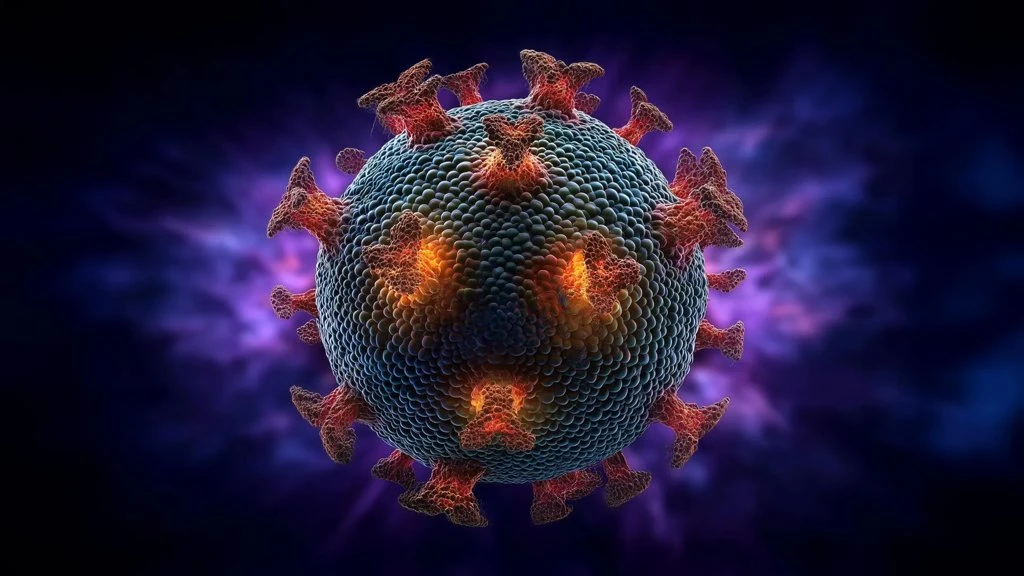
American researchers have discovered a previously unknown group of viruses that may help explain how some of the most important biological structures emerged in the early stages of evolution. The discovery challenges the prevailing theory about the origin of protein microcompartments within cells and suggests that viruses may have played a much more complex role in evolution than previously thought.
The study by University of Miami scientists, published in the journal Nature Communications, revealed an unexpected similarity between viruses and so-called encapsulins—small protein structures found in bacteria and archaea that can create isolated spaces within cells for biochemical reactions.
Until now, the prevailing view was that these cellular structures evolved from viruses. However, the new findings suggest a more complex picture: viruses and encapsulins may have repeatedly evolved from one another over millions of years.
Two Functions of a Single Protein Shell
At the heart of the discovery are proteins with a distinctive three-dimensional structure known as the HK97 fold. They can self-assemble into shells that form protective containers. These proteins are found in both viruses and encapsulins.
The difference is that these shells perform different tasks. Viruses use them to package and protect genetic material, while similar structures within cells can isolate specific biochemical processes, creating conditions for chemical reactions to take place.
It was this similarity that prompted the researchers to take a fresh look at the origins of such protein complexes.
“These proteins create compartments with two different functions. This is directly relevant to studying the origin of life and its early evolution: if you think about it, life is fundamentally based on the ability to enclose chemical reactions in a separate space, along with information that can be passed on to subsequent generations so that these reactions can continue,” explained the study’s first author, Abelardo Aguilar, a doctoral student in the University of Miami’s Department of Biology.
The newly discovered viruses are of particular interest: their genomes are smaller and simpler than those of other viruses that form HK97-fold protein shells. At the same time, they have features characteristic of both viruses and encapsulins. The scientists suggest that these organisms may represent intermediate links that could help trace evolutionary transitions between the two types of structures.
AI Helped Find Viruses Among Billions of DNA Sequences
The unusual viruses were discovered by analyzing vast genetic databases. Rather than attempting to grow unknown viruses in the laboratory, the researchers examined billions of DNA sequences obtained from environmental samples.
The study used bioinformatics methods, models of protein behavior, and artificial intelligence tools. In particular, the scientists used protein language models and AlphaFold—a system that predicts the three-dimensional structure of protein molecules from their amino acid sequences.
One source of data was the IMG/M database, associated with the U.S. Department of Energy’s Joint Genome Institute and the University of California, Berkeley. It contains genetic information from samples collected in a wide variety of environments: soil, seawater, wastewater, the human gut, and other biological systems.
This approach is particularly important for virology. A substantial proportion of viruses cannot be cultured under laboratory conditions, meaning that traditional research methods cannot be used to study many of them.
“Most viruses cannot be grown in the laboratory. But sequencing gives us access to information about viruses whose hosts are unknown to us and which cannot be cultured, even though they are everywhere,” noted the study’s senior author, Antoni Luque Santolaria, an associate professor at the University of Miami.
According to him, analyzing genetic data makes it possible to investigate viral evolution and adaptation to the environment even when the viral particles themselves are not available for direct study.
Can Viruses Facilitate Chemical Reactions?
The researchers proposed a possible explanation for how viral shells and cellular compartments could have emerged from shared evolutionary forms.
At the center of this hypothesis are so-called procapsids—immature viral protein shells. The scientists suggest that these could have served as an intermediate form capable of acquiring different functions over time, from storing genetic material to creating a space for biochemical reactions.
This hypothesis changes the conventional view of the role of viral capsids. They are usually regarded primarily as protective packaging for viral DNA or RNA. However, some types of these shells may potentially also help organize chemical processes.
“One possible implication of our study is that viral capsids may also facilitate biochemical reactions. This opens up the possibility of discovering other functions of these structures in the environment,” Aguilar explained.
For now, this remains a hypothesis that will need to be tested in further research. Nevertheless, the scientists believe that attention should be paid not only to active viral particles capable of infecting cells, but also to their noninfectious forms.
According to Aguilar, these very structures may have escaped researchers’ attention, even though they can perform functions beyond spreading viral genetic material.
The approach developed can be used both to study the origin of life and to search for new viruses and investigate potentially emerging pathogens.