make preferable
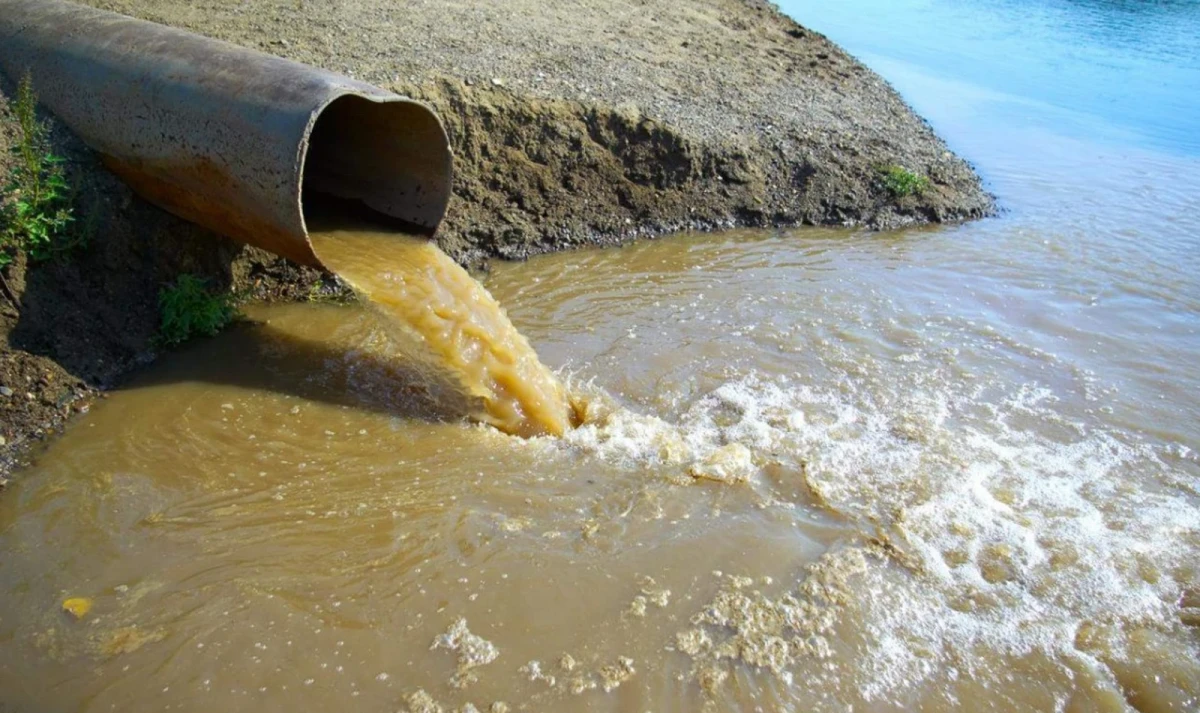
Scientists have created a fabric that extracts phosphates from wastewater, allowing them to be reused in fertilizer production. The technology could eventually help address two environmental challenges at once: preventing phosphate pollution in bodies of water, which causes massive algal blooms, and recovering a valuable mineral resource needed to produce fertilizers. Researchers at Northwestern University in the United States and Argonne National Laboratory have developed an electrically conductive fabric capable of capturing phosphates from water and then releasing them for subsequent collection and reuse.
The findings were published in the journal ACS ES&T Engineering.
The material consists of carbon cloth coated with nanoparticles of magnetite, a common iron oxide. It works as a reusable electrode: when a voltage is applied, it captures phosphates, and when the polarity is reversed, it releases them back into the solution. This makes it possible to recover phosphorus compounds without using additional chemicals to regenerate the material.
Electricity boosts the fabric's ability to capture phosphates
The need for such technologies stems from the fact that phosphates in agricultural fertilizers can enter rivers and lakes through rainwater and stormwater runoff. An excess of these compounds stimulates massive algal growth. Some of these blooms release toxins that are dangerous to people, animals, and aquatic organisms.
When algae die and decompose, the process consumes oxygen dissolved in the water. This creates so-called dead zones, where aquatic plants cannot grow normally and fish are forced to leave or die. At the same time, phosphates are an important raw material for mineral fertilizer production. Their reserves are finite, so recovering phosphorus from wastewater could offer a way to reduce environmental pollution while minimizing the loss of a valuable resource.
Existing phosphate removal methods generally involve adding chemical compounds to water, such as metal salts, which bind phosphates and allow them to be separated from the liquid. However, these technologies can be costly, affect the water's acid-base balance, and generate additional waste that requires disposal.
The new approach allows the process to be controlled using electricity. To create the electrode, the researchers used carbon cloth, which is electrically conductive and has a large surface area. They first cleaned the material, then dipped it three times into a solution of magnetite nanoparticles, forming a coating on its surface.
The nanoparticles bind phosphates through surface interactions. However, experiments showed that applying a voltage substantially improves the efficiency of this process. At a voltage of 1.2 volts, the amount of phosphate captured was approximately 2.6 times that in the control experiment without electrical stimulation. The system also makes it possible not only to collect phosphates but to remove them from the material itself. A positive voltage enhances the capture of these compounds, while reversing the polarity promotes their release into the surrounding solution. The resulting solution could potentially be used for further phosphate recovery and reuse.
“We use electrons as a controllable switch that allows us to capture and release phosphates without adding chemicals to regenerate the material,” explained study co-author Vinayak Dravid.
He said the scientists' long-term goal is to develop technologies for recovering valuable resources from polluted water while minimizing chemical use and secondary waste generation.
The next step is testing with real wastewater
So far, the technology has undergone laboratory testing. The next phase involves testing the electrode in real wastewater, which has a more complex and varied composition than the solutions used in laboratory experiments.
“First, we want to test it in wastewater at the same scale, and then move on to scaling it up,” said the study's first author, Kelly Matuszewski.
The scientists also plan to investigate whether a similar principle could be used with other metal oxide nanoparticles. If the technology proves effective under real-world conditions and suitable for scaling up, it could be considered one way to treat wastewater while returning phosphorus to productive use. For now, however, it is too early to discuss industrial applications: the researchers still need to test how the material performs outside the laboratory.