




 make preferable
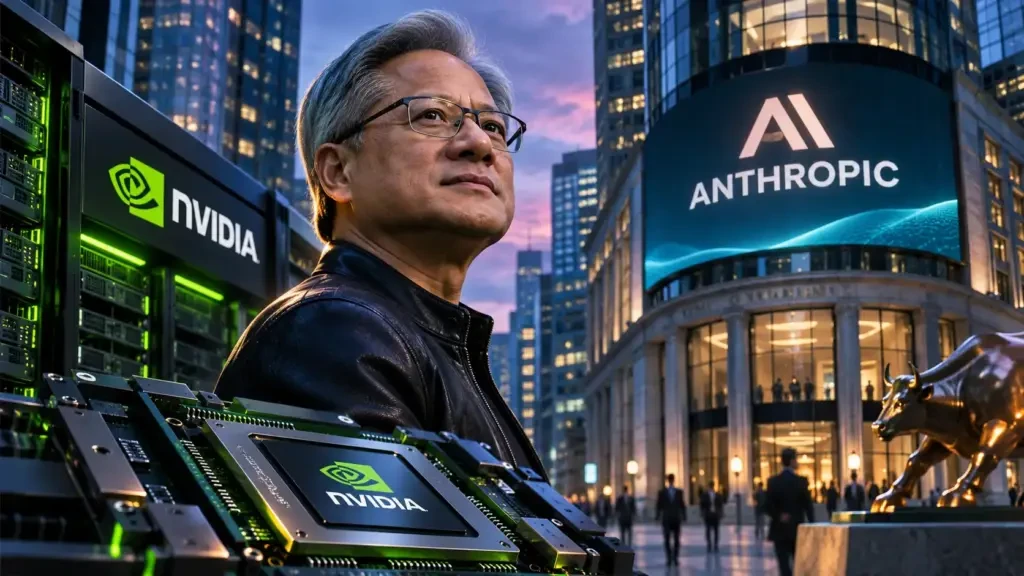
Jensen Huang’s return as Nvidia’s CEO was good news for the company’s investors and most players in the artificial intelligence market. Anthropic’s shares, however, fell against this backdrop. The reason may lie less in financial performance than in a fundamental clash between two approaches to AI development: the closed models on which Anthropic builds its business and the open solutions Huang has actively promoted.
As Business Insider notes, the Nvidia chief’s return could reignite competition over the future of the AI market. This is particularly important for Anthropic: the company makes money by selling access to its proprietary models, while the spread of open alternatives could weaken its ability to charge high prices for its technology.
Two Models for the Future of Artificial Intelligence
Anthropic is betting on powerful closed models that customers access primarily through paid services. The company invests heavily in their development, and its business model relies on users accessing its technology rather than downloading it and running it themselves.
Jensen Huang has promoted a different approach: open-weight models. These can be downloaded, adapted to specific needs, and run on an organization’s own infrastructure. In that case, companies do not necessarily have to pay Anthropic for every query to its AI: they can use their own computing resources and manage model deployment themselves.
For Nvidia, this strategy makes perfect sense. The more organizations run AI themselves, the greater the potential demand for the company’s computing accelerators. Nvidia can make money selling hardware regardless of whose models its customers use.
The company has developed its own Nemotron family of models and invested in startups working on open AI systems, including Reflection AI, Thinking Machines, and Poolside.
For Anthropic, this approach poses a competitive threat. If open models become powerful and accessible enough, some customers may abandon expensive closed solutions. This would not necessarily push Anthropic out of the market, but it could increase pricing pressure and make its technology harder to monetize.
One AI startup executive described relations between Nvidia and leading model developers as a “cold war.” Companies once seen as partners are gradually finding themselves on opposite sides of the battle over what the artificial intelligence market will look like.
Disagreements Over China
Huang and Anthropic CEO Dario Amodei have had other fundamental disagreements, this time concerning exports of American technology.
Amodei has advocated strict restrictions on China’s access to advanced American AI accelerators. He believes that the spread of such technologies beyond the United States could pose serious risks. Huang, by contrast, has criticized excessive restrictions, arguing that they could spur the development of Chinese competitors and accelerate the creation of alternatives to American technology.
Against the backdrop of tighter U.S. export policy, Huang’s removal from Nvidia’s leadership could have been seen as strengthening the position of those favoring tougher restrictions. Now that he has returned, that balance could shift again.
The issue is particularly important for Anthropic: the company is not only competing for customers and revenue but also participating in the debate over how the international spread and use of advanced AI technologies should be regulated.
Why Huang’s Return Matters to Investors
At first glance, the decline in Anthropic’s shares as Nvidia’s rose looks paradoxical. Both companies operate in the same industry, and the expansion of the artificial intelligence market generally creates opportunities for many participants.
But their interests do not align in every respect. Nvidia wants as many companies as possible to develop and run AI systems on its hardware. That does not require all of them to buy access to closed models from Anthropic or other major labs. On the contrary, the spread of open models could expand the market for accelerator manufacturers.
Anthropic, meanwhile, wants its proprietary technology to retain its technological edge and commercial value. The more comparable alternatives are available for free or on more flexible terms, the harder it becomes for the company to maintain premium pricing for its services.
Nevertheless, it would be premature to attribute the decline in Anthropic’s share price solely to Huang’s return. A single day’s trading does not establish the specific reasons for investors’ reaction. Other factors may also have influenced share prices. But the contrast between Nvidia’s and Anthropic’s performance illustrates just how differently the market can assess the prospects of companies operating in the same field.
A Return After Scandal and National Security Concerns
Huang’s return followed a brief but eventful period. On November 12, he stepped down as CEO amid reports about his personal relationships and suspicions of possible contacts between people in his circle and Chinese intelligence. Chief Financial Officer Colette Kress temporarily took over Nvidia’s leadership.
It is important, however, to distinguish between the different aspects of this story. Huang himself admitted to marital infidelity and publicly apologized to employees, the board of directors, and shareholders. However, reports of alleged links between certain people in his circle and Chinese intelligence services do not mean that Huang’s own involvement has been proven.
According to media reports, supporters of the executive advocated his return, and U.S. President Donald Trump personally asked the board to reinstate him. On November 23, the board unanimously restored Huang to the positions of president and CEO. Nvidia said it had conducted the necessary consultations before making the decision, including obtaining information from senior U.S. government officials, and saw no national security threat in his return.
The company did not, however, declare the investigation closed: Nvidia announced an ongoing independent review and the creation of a special committee on national security and export controls. The board’s decision also drew criticism. Senator Elizabeth Warren demanded an explanation of the information underlying the decision to reinstate Huang and once again raised the issue of restrictions on exports of advanced chips to China.
Thus, Huang’s return not only restored Nvidia’s familiar leadership but also brought disagreements over open models and the international spread of AI technologies back into focus. For Anthropic, it means the return of an influential competitor whose strategy could simultaneously expand Nvidia’s market and put additional pressure on the business model of closed AI system developers.