make preferable
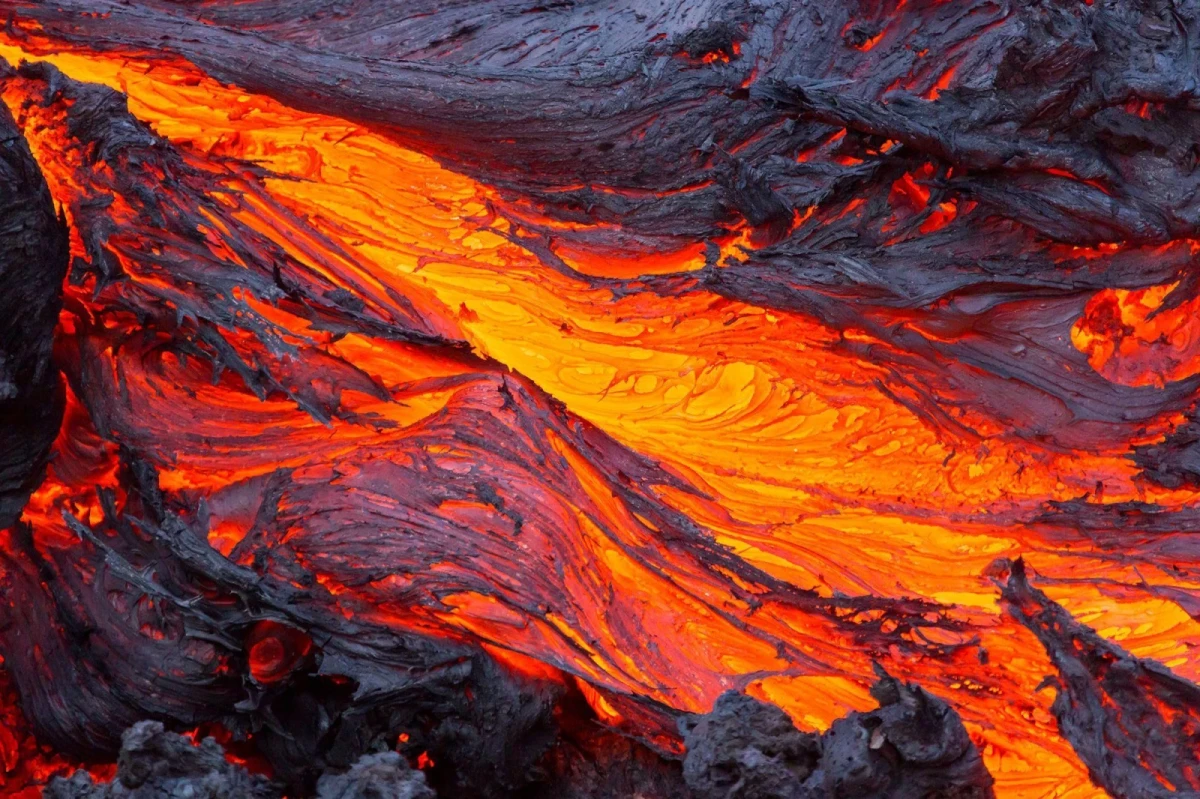
The exoplanet TOI-561 b, located about 280 light-years from Earth, has turned out to be far more reflective and cooler than astronomers expected. Observations by the James Webb Space Telescope have shown that it reflects about 75% of the starlight falling on it. One possible explanation is clouds composed of silicate minerals that act as a giant sunshield. The planet, whose surface may be a global ocean of molten rock, also appears to retain a thick atmosphere, even though its star's intense radiation should have stripped away its gaseous envelope over billions of years.
The findings of an international research team, which included University of Birmingham astrophysicist Anjali Piette, have been published in The Astronomical Journal. The scientists observed TOI-561 b with the James Webb telescope for 37 hours, tracking the planet through almost four complete orbits around its star.
An atmosphere that should not have survived
TOI-561 b is a rocky planet that orbits extremely close to its star. Conditions there are so extreme that astronomers expected intense radiation to have almost completely destroyed its atmosphere over billions of years.
However, the new data suggest that the planet's gaseous envelope may still be quite thick. This raises the question of how it has survived such prolonged exposure to stellar radiation.
“Our discovery challenges existing theories. We would expect a highly irradiated rocky planet like TOI-561 b to have lost its atmosphere billions of years ago,” says Anjali Piette, an associate professor of astronomy at the University of Birmingham.
According to the researcher, the precise gases making up the atmosphere remain unknown. Possible scenarios include a thick, carbon dioxide-rich envelope resembling the atmosphere of Venus but existing at much higher temperatures. Another possibility is an atmosphere dominated by sulfur dioxide, a gas released during volcanic activity, notably on Jupiter's moon Io.
Mineral clouds as a giant sunshield
A clue came from earlier measurements of the temperature on TOI-561 b's dayside. It turned out to be significantly cooler than a dark, rocky planet so close to its star should be.
The researchers proposed two possible explanations: either the atmosphere transports heat from the illuminated side to the nightside, or a substantial portion of the stellar radiation is reflected back into space before it can heat the surface.
To understand what was happening, the scientists tracked the planet over almost four orbits. Since TOI-561 b apparently always keeps the same side facing its star, its dayside hemisphere is permanently illuminated, while its nightside receives no direct starlight.
The measurements showed that the nightside is not hot enough for heat transport alone to explain all the features of the temperature distribution. Instead, the data indicate that the planet is highly reflective: it sends about 75% of the incoming light back into space. In this respect, TOI-561 b is comparable to Venus.
To determine what could produce such an effect, the team compared the observations with computer models of the planet's climate. The simulations showed that clouds composed of silicate minerals, including silicon dioxide ($SiO_2$) and magnesium silicate ($MgSiO_3$), could form on the dayside.
If such clouds do exist, they could reflect a substantial portion of the stellar radiation before it even reaches the surface. As a result, the planet absorbs less energy and does not heat up as much as would be expected without this cloud layer.
“We measured how the planet's brightness and thermal emission changed over the course of its orbit. This method, known as phase-curve analysis, showed that the planet reflects a significant portion of its star's light and that heat is redistributed across the entire planet rather than remaining only on the illuminated side. Together, these findings point to the presence of an atmosphere,” explains Lisa Dang of the University of Waterloo in Canada, who led the research.
For now, mineral clouds remain a possible explanation for the observations rather than a directly confirmed feature of the planet. Additional data will be needed to determine their composition and properties.
An ocean of molten rock could replenish the atmosphere
There is another mystery: if TOI-561 b has indeed retained a thick atmosphere, how does it replenish the gases that gradually escape into space?
The new findings complement earlier data obtained by the same research team. They point to the possibility that the planet's atmosphere is constantly replenished by gases released from its molten interior.
The surface of TOI-561 b may be covered by a global magma ocean. In that case, the planet would resemble a giant volcano: gases continually escape from the molten rock and enter the atmosphere, compensating for at least some of the losses.
“This raises important questions: did the planet form with an unusually large supply of gases, or does the ocean of molten rock covering its surface act as a planetary volcano, constantly replenishing the atmosphere?” Piette notes.
If confirmed, the hypothesis would help explain why a gaseous envelope has survived on a world that should have lost it under extreme irradiation.
What the James Webb telescope will investigate next
The next step is to determine the chemical composition of TOI-561 b's atmosphere and establish which of the possible scenarios best explains its properties. Scientists want to understand whether this planet more closely resembles an extremely hot Venus or represents an even more extreme version of the volcanic moon Io.
To do this, the researchers are planning new observations with James Webb at longer wavelengths. These could provide additional information about the atmosphere's composition and help reveal how it persists over billions of years.
TOI-561 b is unlikely to be a habitable world: its extreme temperatures and possible ocean of molten rock make it exceedingly inhospitable to life as we know it. But the planet is of great scientific interest. It shows that even under conditions that would seem likely to completely destroy a rocky world's atmosphere, mechanisms may operate that allow it to survive and be continually replenished.