make preferable
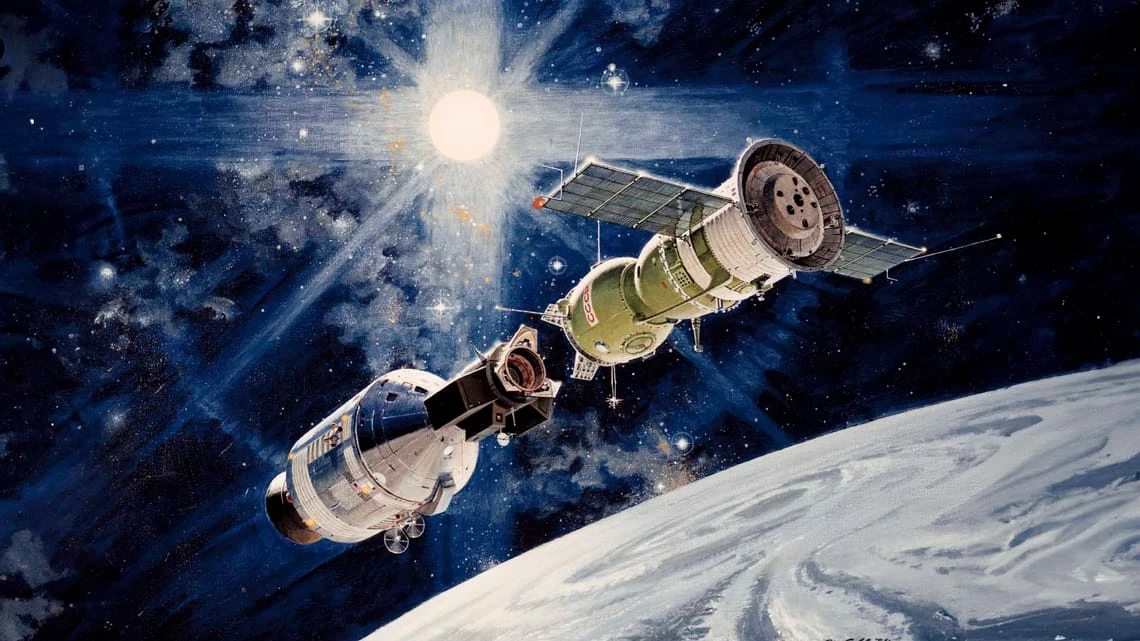
In the early years of the space age, rumors circulated that the USSR had covered up failed crewed launches even before Yuri Gagarin's flight. The main source of these stories was a pair of Italian amateur radio operators who claimed to have intercepted signals from dying cosmonauts. They heard an SOS in Morse code, labored breathing, and even the heartbeat of a person aboard a spacecraft. Yet in more than 60 years, none of these recordings has been independently verified.
A Radio Station in a World War II Bunker
The story began in 1957, after the launch of Earth's first artificial satellite. Italian brothers Achille and Gian Battista Judica-Cordiglia became fascinated by the idea of tracking spacecraft themselves and assembled a radio receiving station from secondhand military equipment.
They set up their makeshift radio station in an abandoned World War II bunker near Turin. The facility became known as Torre Bert. The brothers built their own antenna from materials at hand, including scrap metal and wire mesh.
Despite its modest equipment, the station could receive signals from orbiting spacecraft. The Judica-Cordiglia brothers claimed to have tracked transmissions from Sputnik 2, which carried the dog Laika, as well as from the American satellite Explorer 1.
The station was indeed well situated: Soviet spacecraft passing over northern Italy were within reception range. The brothers achieved some success in radio tracking, and this later lent credibility to their more sensational claims.
An SOS from Space
In November 1960, the amateur radio operators took note of reports from a West German observatory about an unidentified satellite in orbit. They speculated that the USSR might have launched a spacecraft without officially announcing it and began searching for its signals.
According to the brothers, they eventually intercepted an unusual transmission. Instead of the familiar electronic signals, they heard the international distress signal SOS in Morse code.
As they listened, the signal grew weaker. The brothers suggested that the craft was moving away from Earth and might therefore be a spacecraft that had gone out of control and was drifting into deep space.
This observation gave rise to one of the best-known versions of the “lost cosmonauts” legend: the Soviet Union had supposedly sent a person into space, but the mission ended in a disaster that the authorities chose to conceal.
There is, however, a fundamental problem here. Even if the brothers really did pick up an unusual signal, that does not prove it came from a crewed spacecraft. Nor is there any evidence that the transmission was connected to a Soviet launch omitted from official records.
Heartbeats and the Voices of Dying Cosmonauts
In early February 1961, the Judica-Cordiglia brothers announced another interception. This time, they said, the labored breathing and groans of a person aboard a spacecraft could be heard over the radio.
Another recording presented by the brothers sounded like a rapid human heartbeat. The amateur radio operators passed it on to Italian cardiologist Achille Dogliotti. According to the brothers' account, the doctor thought the sounds resembled the breathing of a person in critical condition and a racing heartbeat.
Other recordings later emerged that the Italians linked to failed Soviet space missions before Yuri Gagarin's historic flight in April 1961.
The most famous was a recording the brothers attributed to a female cosmonaut. She was supposedly transmitting her final messages from a spacecraft in distress before the 1963 flight of Valentina Tereshkova, the first woman in space.
But experts noted that the nature of these transmissions did not match standard military radio protocols. This casts doubt on their authenticity and on the claim that the recordings genuinely captured communications by Soviet cosmonauts.
Did Soviet Intelligence Services Keep the Amateur Radio Operators Under Surveillance?
As the brothers became better known, their story attracted attention beyond journalists and space mystery enthusiasts. By their own account, a man introducing himself as a Russian journalist visited them one day. Soon afterward, another visitor, claiming to be an Italian counterintelligence officer, warned the brothers that their first guest had supposedly been a KGB agent.
Decades later, British journalist Chris Hollington tried to investigate the story for Fortean Times magazine. According to him, a former KGB officer who later became Russia's ambassador to a European country confirmed that Soviet intelligence services had taken an interest in the Italian amateur radio operators. He agreed to speak on condition of anonymity.
Hollington's source claimed that after these stories emerged, Soviet cosmonauts were advised to be more careful about their conversations during flights, while the brothers themselves were placed under surveillance.
According to the former intelligence officer, at one point there was even discussion of eliminating the Italians, for example by staging an accident. However, the widespread publicity surrounding their activities made such a scenario too risky.
This story cannot be verified: the source remained anonymous, and there is no independent corroboration of his account. The claim of KGB surveillance therefore remains part of the same mysterious story rather than an established fact.
Why the Legend Remains Unconfirmed
Space researchers do not dispute that the Judica-Cordiglia brothers built a functioning station and received signals from various spacecraft. But that does not mean they correctly interpreted everything they heard.
Spaceflight researcher Sven Grahn explained that the Italians may have been tracking spacecraft in good faith but then misinterpreted some transmissions. In his view, the desire to maintain their station's reputation for successful tracking may have pushed the brothers into making sensational claims that were later difficult to retract.
The possibility that the recordings were deliberately fabricated cannot be ruled out either. None has been independently authenticated in a way that would confidently link the recorded voices or signals to Soviet crewed spacecraft.
Still, the legend has a historical basis that has helped it endure for decades. The Soviet space program was indeed extremely secretive, and the authorities concealed some disasters and altered official accounts of events. For example, a rocket explosion at Baikonur on October 24, 1960, which killed a senior military official and at least a hundred other people, was initially presented by the Soviet press as a plane crash.
Such cases show that the Soviet authorities were indeed capable of concealing major tragedies. But they do not confirm the existence of secret crewed flights that ended in the deaths of cosmonauts.
Over the decades, no verifiable documents about such launches, authentic crew communications, or independent testimony have emerged to substantiate the Italian amateur radio operators' accounts. The “lost cosmonauts” therefore remain one of the best-known legends of the early space age—a story in which the real secrets of the Soviet space program became intertwined with unverified radio intercepts and conspiracy theories.