make preferable
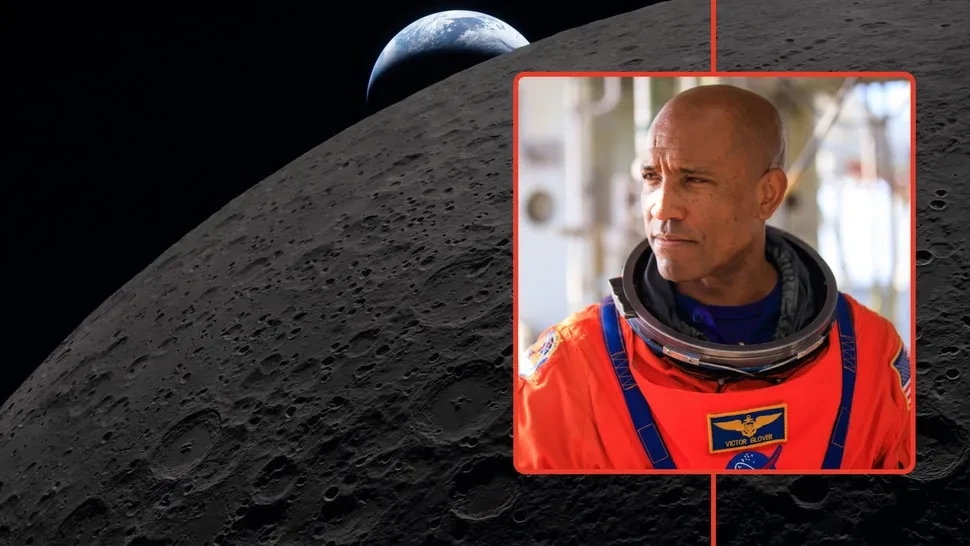
For NASA astronaut Victor Glover, preparing for a historic flight around the Moon involved more than training and technical tests. He described talking to his four daughters about the risk of not coming home as the hardest challenge of his career. Before the flight, he had to explain to his family why he still believed the mission was necessary, Space.com reports.
A conversation you cannot prepare for
Victor Glover shared his recollections at the Starmus VIII festival in Tenerife on October 18. During a conversation with former astronaut Chris Hadfield, he said that preparing his family for Artemis II had proved harder than many of his professional challenges.
Glover had already flown in space, flown combat missions and completed four spacewalks. Yet before setting off for the Moon, he had to discuss something with his loved ones that he had previously tried to avoid addressing directly: the possibility of his own death.
During his first spaceflight, on the SpaceX Crew-1 mission in 2020, his daughters were still young. At the time, Glover and his wife, Dionna, planned ahead to help their children cope with being apart from their father. The family visited Kennedy Space Center, toured the launchpad and crew quarters, and arranged when the astronaut would contact his family from the International Space Station.
“Dionna and I decided that, as parents, we would put as much effort into preparing our family as NASA puts into preparing me as a crew member,” Glover recalled.
But by the time of Artemis II, things had changed: all four daughters were grown up. It was no longer enough to explain that their father would be going into orbit for an extended period. They needed to talk about the real risks of flying around the Moon and the fact that his return was not guaranteed.
“You need to talk to our daughters about this”
Glover admitted that his wife had said something he described as perhaps the scariest thing he had ever heard:
“You need to talk to our daughters about this.”
He knew she was right, but the conversation itself proved extremely difficult. The astronaut openly acknowledged that, in his view, it had not gone well.
“We talked, and I don't think it went very well. But the point wasn't for the conversation to go well. It simply had to happen, no matter how difficult it was,” he said.
The next day, Glover sent his wife and daughters the poem Live Your Life, attributed in the publication to Chief Tecumseh. It helped him express what he had been unable to put into words during their face-to-face conversation: why he believed the risks of spaceflight were justified.
The astronaut wanted to explain to his family that this was not simply about their father's willingness to put his life on the line. The mission had a purpose that, to him, made the risk meaningful.
“It was a very difficult conversation, but they understood that I was aware of the danger. I wasn't just telling them that Dad was risking his life. There is a real purpose to it, a reason to take that risk. The poem helped me express that in words I couldn't find myself,” Glover explained.
Coming home was the most important moment
Glover took part in Artemis II alongside NASA astronauts Reid Wiseman and Christina Koch, as well as Canadian astronaut Jeremy Hansen. The crewed spacecraft launched on April 1, 2026, on the first crewed flight to the Moon since 1972. The mission marked an important step in NASA's preparations to return humans to the lunar surface.
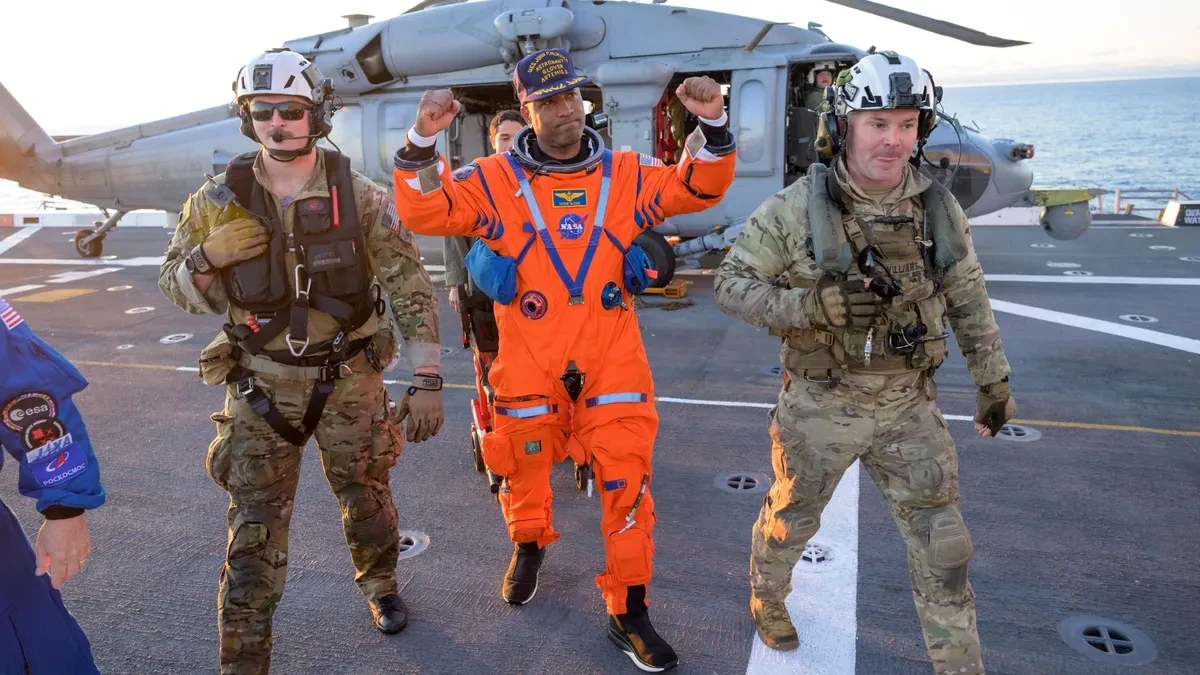
After flying around the Moon, the crew returned safely to Earth. When Glover was asked separately on October 20 which moment of the flight he would like to experience again, he answered without hesitation: splashdown.
For him, that was the moment the mission's success was complete—not just accomplishing its objectives, but bringing every crew member home.
“That is the true, final achievement of the mission's goal. Just realizing: we did it. We survived. My family is relieved. There is nothing like it. There is nothing better than coming home, coming back to Earth,” Glover said.
Behind the technical achievements of Artemis II lies another side of spaceflight that is discussed far less often. Even for an experienced astronaut, preparing for a mission means not only accepting the risk personally, but also helping loved ones understand that it is real.