make preferable
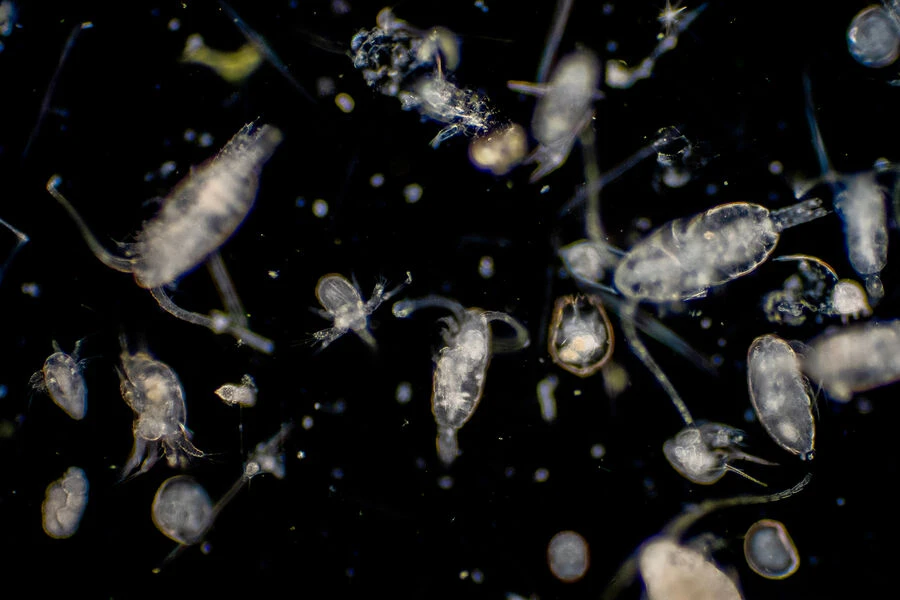
Climate change could cause a sharp decline in the populations of tiny marine organisms on which the health of entire ocean ecosystems depends. According to a new study by researchers at the University of Strathclyde in Glasgow, under high greenhouse gas emissions, populations of some zooplankton species in the seas of northwestern Europe could fall by 84–93% by the end of the century. This could affect food chains, fish stocks and marine wildlife.
The researchers developed a new machine learning model that can assess in fine detail how ocean warming and associated environmental changes will affect marine ecosystems in the coming decades. The findings were published in the journal Communications Earth & Environment.
Why the disappearance of tiny crustaceans could transform marine ecosystems
The study focused on copepods, one of the most abundant and ecologically significant groups of zooplankton. Despite their microscopic size, these crustaceans play a vital role in the marine food chain.
Copepods are a primary food source for many fish species, including herring. Herring, in turn, are prey for seabirds, salmon and marine mammals. Changes in the abundance of these tiny organisms could therefore affect much larger marine animals.
Zooplankton also help transfer energy between different levels of the food chain, recycle nutrients and regulate harmful algal blooms. Their decline could therefore disrupt several mechanisms that sustain the resilience of marine ecosystems.
Machine learning revealed threats with high precision
To assess the potential consequences of climate change, the scientists trained the model on long-term observational data collected through the Continuous Plankton Recorder programme. The programme tracks the distribution and abundance of plankton in the seas of northwestern Europe.
The researchers then combined these data with regional climate projections. This allowed them to model how zooplankton habitats would change at a much higher spatial resolution than in previous global climate models.
The results under the high greenhouse gas emissions scenario were particularly alarming. According to the calculations, copepod populations in the study region could decline by 58–72% by 2050. By 2100, the decline could reach 84–93%.
These estimates are substantially higher than those produced by previous, lower-resolution global models. This suggests that the seas of northwestern Europe may be more vulnerable to climate change than previously thought. The area covers the waters around Great Britain and Ireland, including the North, Celtic and Irish Seas, as well as the English Channel.
Warming waters and weakening ocean currents
The scientists link the projected decline in zooplankton populations to several interconnected processes. The first is rising seawater temperatures, which alter the organisms' living conditions and may affect their distribution and abundance. The second factor is a decline in the concentrations of nutrients needed to sustain marine food chains.
The third is changes in ocean circulation associated with the weakening of the Atlantic Meridional Overturning Circulation (AMOC). This large-scale system of currents transports heat and water masses through the Atlantic Ocean and plays an important role in shaping conditions in the North Atlantic region.
The new model also identified areas that could serve as refuges for zooplankton. According to the calculations, the effects of climate change will be less pronounced in these areas, which could help preserve some populations.