make preferable
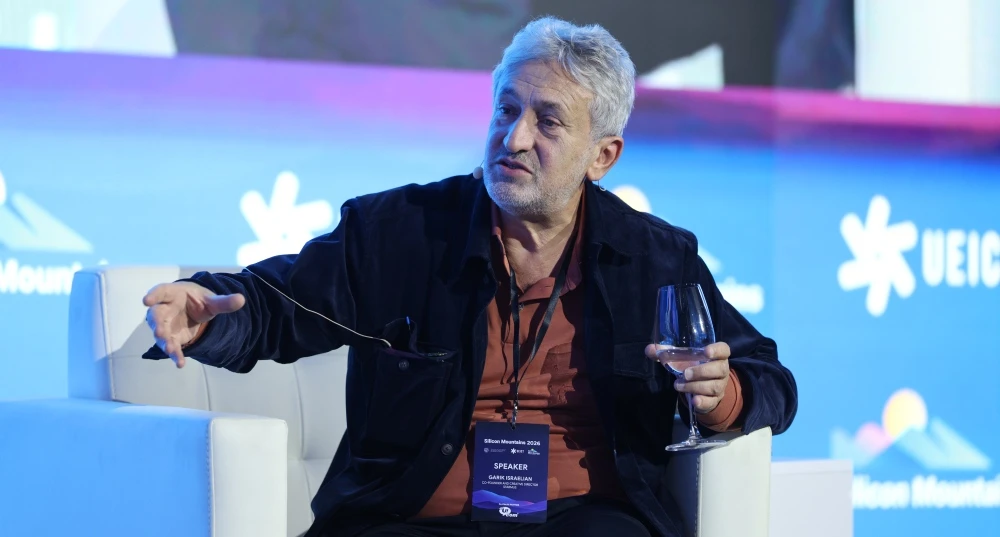
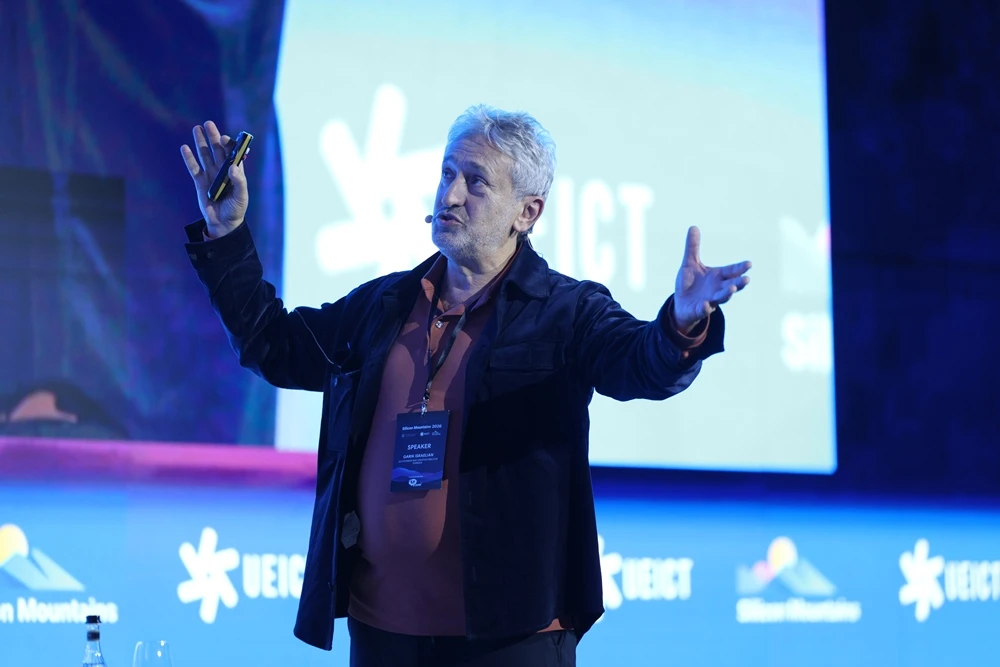
A new generation of telescopes will allow astronomers to observe billions of celestial objects and collect volumes of data that cannot be processed using traditional methods. Artificial intelligence and machine learning will become essential tools for analyzing these datasets, searching for rare phenomena and detecting objects that humans might overlook. Garik Israelian, co-founder and creative director of the international STARMUS science and arts festival, made these remarks while speaking at Silicon Mountains 2026 in Yerevan.
He outlined the prospects for modern astrophysics and explained why the technological revolution in astronomy is directly linked to advances in semiconductors, sensors, computing systems and artificial intelligence.
Telescopes will generate an unprecedented volume of data
According to Israelian, astronomy has always been a science whose development depends directly on technology. Modern advances in semiconductors have enabled the creation of highly sensitive detectors, enormous camera arrays, infrared sensors and electronic systems capable of recording extremely faint signals from space.
The next stage involves bringing new large-scale observatories into operation. Among the most significant projects, he highlighted the Extremely Large Telescope (ELT), with its 39-meter mirror, currently under construction in Chile, the Square Kilometre Array (SKA) radio telescope in South Africa, and the Vera C. Rubin Observatory, which has already opened up new opportunities for systematic observation of the sky.
Israelian attaches particular importance to the Vera C. Rubin Observatory and its ten-year survey of the southern sky—the Legacy Survey of Space and Time (LSST). The telescope is equipped with a camera with an enormous field of view and will be able to observe virtually the entire southern sky regularly. The scientist estimates that each object will be recorded around 800 times over ten years, while the total number of objects observed will reach 37 billion.
The scale of the incoming data will be unprecedented: according to the estimates cited by Israelian, the observatory will be able to collect approximately 15–20 terabytes of data per night and generate up to 10 million alerts about new or changing objects. These will include supernovae, asteroids, transient astronomical phenomena and other objects whose nature has yet to be determined.
For comparison, in three years of observations, LSST will collect a volume of data comparable to the entire contents of the internet, the speaker noted. This scale of observation has implications beyond fundamental science. It could significantly improve the ability to detect potentially hazardous objects in space. By repeatedly recording asteroids and other small bodies, scientists will be able to greatly expand their catalog and calculate orbits more accurately.
Israelian cited the example of objects measuring around 50–60 meters. According to him, advances in observational capabilities will eventually make it possible to calculate the trajectories of such bodies and determine the probability of a collision with Earth four to five months before a potential event.
Artificial intelligence will help find what humans cannot see
However, the main challenge that the new generation of telescopes poses for astrophysics lies not only in obtaining data, but also in analyzing it. Israelian noted that even an image of a small region of space can contain thousands of galaxies, stars, nebulae and other objects. With millions of new observations every night, visually analyzing such datasets becomes virtually impossible.
Machine learning is therefore essential for automatically classifying objects, studying galaxy morphology, identifying unusual structures and searching for rare astronomical events. AI offers even broader possibilities in spectroscopy—the study of stellar emission spectra, which reveal stars' chemical composition, physical characteristics and age.
Israelian gave an example from his own research. He spent a year analyzing a single spectral line to confirm the presence of the isotope lithium-6 in a star. This isotope is extremely unstable and is destroyed at temperatures of around 2–2.2 million degrees, whereas the corresponding threshold for lithium-7 is approximately 2.5 million degrees. Detecting lithium-6 in a particular star led the scientist to conclude that the most likely explanation was a collision between the star and a massive planet. According to Israelian, a similar task could now be completed in seconds using machine learning: a system could be trained to recognize the relevant spectral features and compare millions of stellar spectra.
AI can also accelerate research involving the detection of heavy chemical elements—osmium, thorium, uranium and transuranic elements, Israelian noted. Moreover, he added, their isotopic ratios will make it possible to estimate the ages of stars. Such observations could therefore help determine the ages of individual objects with a precision unattainable using simpler methods.
At the same time, the scientist drew attention to the challenge of data preparation. Astronomy has vast observational archives and spectroscopic surveys containing millions of stellar spectra. Yet researchers spend a substantial portion of their time not on analysis itself, but on cleaning, calibrating and organizing datasets. This is precisely where machine learning can significantly accelerate the work: automatically identifying and classifying objects, matching observations and finding patterns in data that cannot be processed manually.
Can signs of an extraterrestrial civilization be detected in a star's spectrum?
Israelian described the search for possible technosignatures—signs of artificial activity in other star systems—as one of the most unusual applications of artificial intelligence. The scientist pointed out that astronomers are already discovering planets beyond the Solar System, including those located in potentially habitable zones. In some cases, researchers can even study the spectral characteristics of their atmospheres.
However, the search for extraterrestrial life need not be limited to detecting water or other conditions potentially suitable for living organisms. Israelian suggested also considering the possibility of searching for artificial chemical traces in stellar spectra.
As a hypothetical example, he cited technetium—a short-lived radioactive element that, he explained, should not be present in stellar spectra as a result of ordinary natural processes. If the corresponding lines were detected in a star's spectrum, this could indicate that the substance was of artificial origin.
Israelian proposed a thought experiment: a civilization wishing to announce its existence to other inhabitants of the Universe could synthesize radioactive isotopes in nuclear reactors and artificially introduce them into its star's atmosphere. Observers studying its spectrum could then detect unusual lines that could not be explained by natural processes.
Of course, this is a hypothetical scenario, not a confirmed method of detecting an extraterrestrial civilization. But Israelian believes that AI could make precisely these kinds of tasks feasible.
If researchers obtain spectra for hundreds of millions of stars, artificial intelligence will be able to search them for unusual and extremely rare features, first cleaning and calibrating the data. Instead of testing each hypothesis manually, a scientist will be able to give the system a task: find all anomalous spectral features that warrant further investigation.
In his view, AI could prove particularly effective in searching for anomalies: it can detect rare phenomena, gravitational lenses, transient events and other objects that humans might miss when analyzing enormous datasets.
Artificial intelligence could make the next discovery
Israelian is convinced that without machine learning and artificial intelligence, modern astrophysics will not be able to take full advantage of the new generation of telescopes. He also believes that further advances in research will require more powerful computing systems, including quantum computers.
At the same time, the adoption of AI could change not only the pace of scientific work, but also the very concept of who gets credit for discoveries. If an algorithm discovers an unusual phenomenon while analyzing billions of objects, a question will arise: who should be credited with the discovery—the researcher who designed the system, the software developers or the database itself? “The next great discovery could begin on a microchip,” the scientist noted.
In his view, artificial intelligence has already become a fundamental tool of science and technology, and discussions about its usefulness in research should not overshadow the clear opportunities these tools offer. “Perhaps the most exciting discovery is one we do not yet even know how to look for. And it could be made with the help of AI,” Israelian concluded.