make preferable
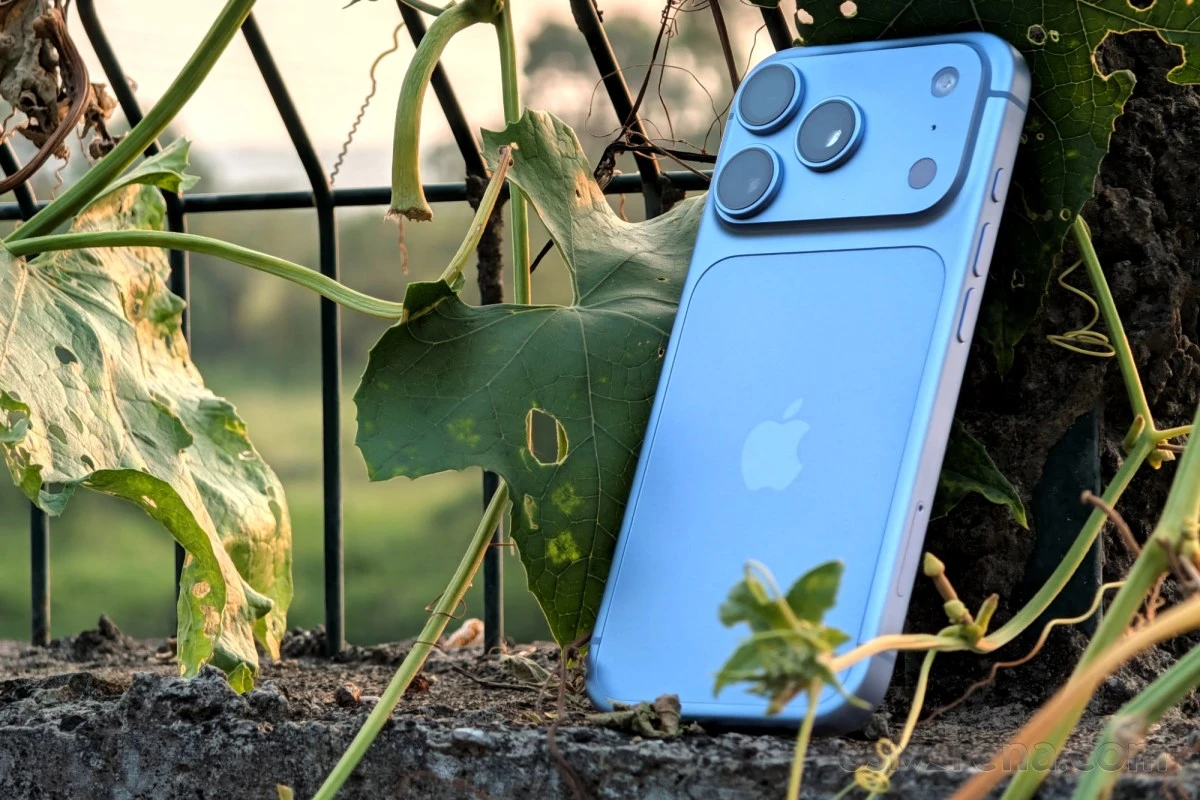
The iPhone 18 Pro has received Apple’s first-ever main camera with a variable aperture in a smartphone. This feature makes it possible not only to control how much light reaches the sensor, but also to manage depth of field, image detail, and the character of motion in video. Practical testing has shown that it can be especially useful for video recording and close-ups, although it does not noticeably improve photo quality in every scenario.
Variable aperture has long been used in professional cameras and camcorders, but it has never become standard in smartphones. Some manufacturers have already experimented with this technology, though they later abandoned it. Now Apple is bringing it back into the spotlight — and that is a good reason to understand exactly what it offers users, gsmarena.com reports.
What aperture is and how it works
The aperture is the opening in the lens through which light reaches the camera sensor. In systems with a variable aperture, its size can be changed using moving blades: widening the opening in low light and narrowing it in bright conditions.
Aperture size is обозначается by an f-number, such as f/1.8 or f/4. The relationship here is inverse: the smaller the number, the wider the opening and the more light reaches the sensor. At f/1.46, more light passes through than at f/4.
Aperture is one of the three main parameters that determine a photo’s exposure. The other two are shutter speed and ISO.
· Aperture controls the amount of light and affects depth of field.
· Shutter speed determines how long the sensor collects light for a shot. A longer shutter speed makes the image brighter, but it can also increase motion blur in moving subjects.
· ISO sets the level of signal amplification from the sensor. Raising ISO makes the image brighter, but usually increases visible noise.
In smartphones, these parameters are most often adjusted automatically. A variable aperture adds another tool for controlling the image — one that affects more than just brightness.
Smoother motion in video
One of the most interesting capabilities of a variable aperture is related to video recording. To make motion look natural, cinematographers usually follow the 180-degree rule: at 24 frames per second, the shutter speed should be about 1/48 of a second, and if that exact value is unavailable, the closest option is used — for example, 1/50.
In bright lighting, such a shutter speed can lead to overexposure. Smartphones with a fixed aperture are forced to shorten the shutter speed, which makes motion in video look sharp, jerky, and less natural.
A variable aperture makes it possible to solve this differently: reduce the opening, limit the amount of incoming light, and keep a longer shutter speed. As a result, moving objects gain natural motion blur, which makes the video look smoother.
In tests, the iPhone 18 Pro was compared shooting at f/1.46 with a short shutter speed versus shooting at f/4 with a longer shutter speed. In the second case, motion looked noticeably more natural.
At the same time, it is important to understand that it is not the aperture itself that changes motion smoothness, but the shutter speed that becomes possible thanks to aperture adjustment.
In very bright conditions, even this may not be enough. That is when a neutral density (ND) filter becomes useful, as it further limits the amount of light. But in most everyday situations, a variable aperture gives more freedom without additional accessories.
Depth of field: more details in focus or beautiful blur
Aperture also affects depth of field — the area in front of and behind the focus point within which the image remains sufficiently sharp.
With the aperture wide open, depth of field becomes shallower: the subject stands out from the background, but some parts of the subject itself may end up out of focus. Stopping down the aperture makes details farther from the focus plane appear sharper.
In iPhone 18 Pro tests, the same subject was photographed using four aperture settings: f/1.46, f/1.8, f/2.8, and f/4. At the widest setting, only a small part of the subject remained sharp, while at f/4 the sharply focused area expanded noticeably.
This is especially important for close-ups. Smartphones are getting ever larger sensors and faster lenses, but at close distances, shallow depth of field can cause part of the subject to appear blurred. Stopping down the aperture helps preserve more detail.
That said, strong background blur is not inherently a drawback. In portrait photography it can be a desirable effect, while when shooting objects or documents, maximum sharpness is more often required.
A variable aperture lets you choose the right option depending on the task.
Can a stopped-down aperture make photos sharper
Reducing the opening can potentially help improve sharpness across the entire frame, especially at the edges of the image. This can be useful when shooting landscapes or other scenes where it is important to preserve detail from the center to the corners.
However, tests of the iPhone 18 Pro showed that the difference between f/1.46 and f/4 in ordinary photos was small. The authors compared RAW images to minimize the influence of the smartphone’s software processing.
At f/4, some frames showed slightly better corner sharpness and fewer purple color fringing artifacts around high-contrast objects. But the stopped-down aperture also revealed a side effect: starburst-like patterns appeared around bright point light sources.
Thus, the ability to stop down the aperture is useful, but it does not guarantee a dramatic increase in detail. The difference is more noticeable under certain conditions and when comparing images carefully, especially those shot in high-resolution RAW.
Why changing aperture just for brightness is usually unnecessary
The most obvious use of aperture is controlling image brightness. But on a smartphone, that is not necessarily the best reason to change it manually.
The iPhone can automatically compensate for changes in the amount of light using shutter speed and ISO. In addition, Night mode combines several frames to improve photo quality in low-light conditions. Therefore, in most cases the user does not need to open the aperture manually just to get a brighter photo.
The maximum f/1.46 setting lets in more light than the f/1.8 of previous models, but the practical difference may not be very noticeable: software processing largely compensates for a lack of light.
The standard Camera app offers four aperture settings: f/1.46, f/1.8, f/2.8, and f/4. At the same time, the hardware system supports finer adjustment: third-party apps, such as Optika, offer up to nine options. Such apps can also be useful for those who need manual ISO control, which the standard app lacks.
What Apple should improve
The variable aperture in the iPhone 18 Pro does not automatically turn the smartphone into a professional camera, but it adds useful capabilities for those who want better control over shooting results. Its benefits are especially noticeable in video, where it helps preserve natural motion blur, and in close-ups, when it is important to keep the entire subject in focus.
At the same time, Apple’s implementation has its limitations. Variable aperture is available only on the main camera — the telephoto lens would also benefit from such a feature.
There are also questions about the interface of the Camera app. As more settings appear, the menu becomes increasingly complex, and switching between parameters requires moving from one section to another. A dedicated professional mode with all settings gathered in one place would make manual control more convenient both for experienced photographers and for those just beginning to understand photography.
Overall, variable aperture is not a revolution but an additional tool that reveals its value when used deliberately. For ordinary automatic snapshots, it may change almost nothing. But if you shoot video with natural-looking motion, work with close-ups, or aim for maximum landscape sharpness, the ability to control aperture genuinely expands the camera’s creative possibilities.