make preferable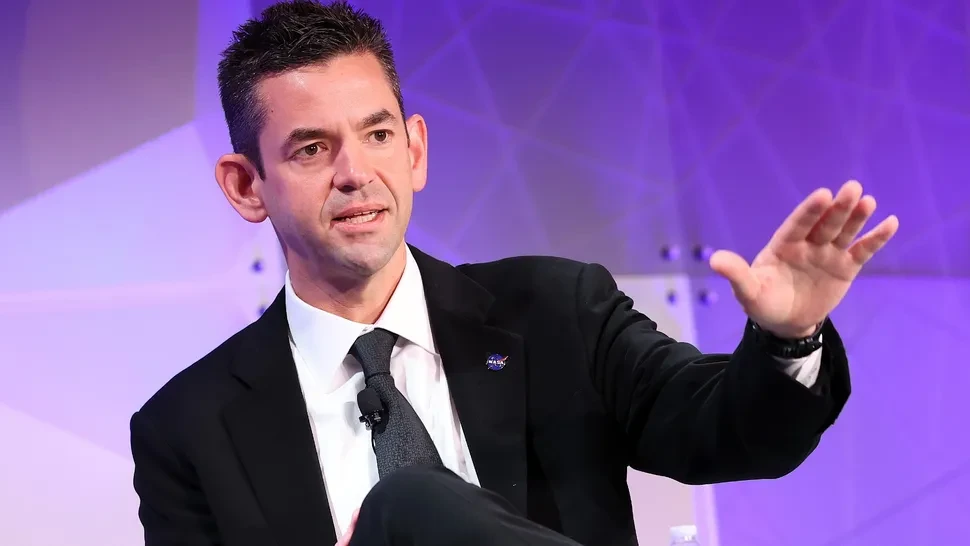
NASA chief Jared Isaacman said that when investigating unidentified anomalous phenomena, no possible explanation should be ruled out in advance — from natural phenomena to secret military technologies and extraterrestrial origin. At the same time, he personally considers natural phenomena or tests of new technologies by potential U.S. adversaries to be more likely.
Isaacman spoke about UFOs and UAPs in a recent interview with NewsNation. According to him, NASA should take part in investigating such cases, especially if they действительно involve phenomena that cannot be explained by known technologies or natural processes, Space.com reports.
‘If it’s aliens, NASA should be involved’
The term UAP (unidentified anomalous phenomena) is now used in the United States instead of the more familiar UFO — unidentified flying object. It is broader and can include unusual phenomena not only in the atmosphere, but also in the ocean or in space.
NewsNation host Blake Burman asked Isaacman about numerous reports from military personnel and pilots about objects with unusual flight characteristics. In particular, he wanted to know whether the NASA chief allows for the possibility that at least some of them may be of extraterrestrial origin.
‘My position going into each of these cases is: first of all, you need to keep an open mind,’ Isaacman replied.
According to him, one of NASA’s tasks is precisely to search for an answer to the question of whether humans are alone in the universe. Therefore, if a specific case really does turn out to be connected to an alien civilization, NASA should take part in studying it.
At the same time, the agency chief is not claiming that the detected objects are extraterrestrial.
A ‘new Sputnik’ could turn out to be military technology
Isaacman compared the growing interest in UAPs to the Cold War era, when the Soviet Union’s launch of the first artificial Earth satellite in 1957 became a technological shock for the United States.
In the interview, he suggested that today’s unusual sightings could theoretically be a similar signal — only this time, it could involve a secret technology of a potential adversary.
‘This could be a Sputnik moment,’ the NASA chief said, noting that the United States has been through a similar situation before and managed to respond to it successfully.
According to him, one possible explanation could be new low-observability systems or fundamentally new propulsion technologies being tested by someone in the atmosphere.
When asked directly what his own intuition tells him, Isaacman named two options as the most likely. The first is an unknown natural phenomenon. The second is tests of new technologies.
At the same time, he stressed that the extraterrestrial-origin theory should also not be ruled out in advance.
Even within the Solar System, NASA still doesn’t know a great deal
As an argument for taking a cautious approach to the question of extraterrestrial life, Isaacman pointed out how little humanity still knows even about Earth’s closest cosmic neighborhood.
Saturn has a moon, Enceladus, with a subsurface ocean, and Jupiter has Europa, which also hides an ocean beneath its icy shell. Complex chemical processes take place in their interiors and oceans, yet scientists still cannot say definitively whether life exists there.
All the more so, it is impossible to assert or deny this for other star systems and galaxies.
That is why, Isaacman believes, NASA’s scientific program for studying the Solar System and searching for signs of life is of fundamental importance.
What the new whistleblower protection actually provides
Amid the discussion of UAPs in the United States, another story related to the topic emerged in September. The U.S. Department of War announced a special legal carveout for people who want to pass information about unidentified anomalous phenomena to a new body called PURSUE — Presidential Unsealing and Reporting System for UAP Encounters.
However, according to Robert Powell of the Scientific Coalition for UAP Studies, the significance of this measure should not be exaggerated.
A similar option for service members, government employees, and contractors already existed: a 2023 law allowed people with access to information about UAPs to pass it on to representatives of the All-domain Anomaly Resolution Office (AARO). The new measure effectively just adds another body to which such information can be reported.
At the same time, it does not give whistleblowers the right to independently disclose protected information to journalists or the public.
Moreover, it remains unclear how exactly a potential whistleblower is supposed to identify a PURSUE representative and contact them. It is also unclear whether the new procedure protects a person from possible criminal consequences for disclosing classified data.
Without independent verification, claims will remain just claims
The problem of verifying information remains one of the main issues in the UAP story.
Powell gives a hypothetical example: if someone claims to know about a captured alien craft at a U.S. military base, the claim itself is not enough. It is necessary to independently verify whether such an object exists and whether it really is extraterrestrial technology.
In his view, until Congress uses its powers to obtain the necessary information from military agencies and conduct a full investigation of such claims, many UAP stories will remain a case of ‘he said, she said.’
That is why Isaacman’s call to ‘keep an open mind’ does not mean that NASA considers aliens the most likely explanation for the observed anomalies. Rather, it reflects a different principle: an unusual observation must first be studied, and only then should it be decided whether it is explained by a natural phenomenon, a known or secret technology — or something for which science still has no answer.