make preferable
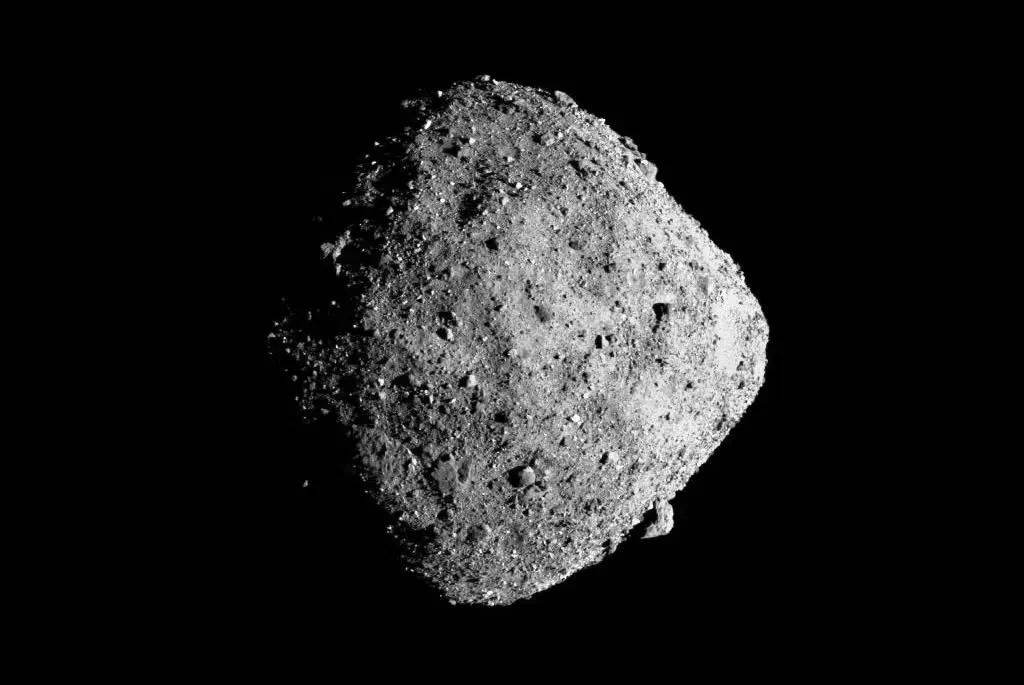
Scientists have detected all five major nitrogenous bases used to store genetic information in DNA and RNA in samples from the asteroid Ryugu. This is the first confirmation of the complete set of these molecules in material from this celestial body, which has remained virtually unchanged since the formation of the Solar System. The discovery strengthens the hypothesis that the chemical components needed for life to emerge could have formed in space long before the first organisms appeared on Earth.
All Five Components of the Genetic Code
Nitrogenous bases can be thought of as the molecular letters of life. They are involved in encoding and transmitting hereditary information.
DNA contains adenine, guanine, cytosine, and thymine. RNA uses uracil instead of thymine. The first two substances are purines, while the other three are pyrimidines.
Combined with sugars and phosphates, these molecules form nucleotides—the structural building blocks of DNA and RNA. Without them, the genetic systems that enable living organisms to grow, reproduce, and evolve could not exist.
Researchers had previously found individual nitrogenous bases in extraterrestrial material. In particular, in 2023, an international team of scientists reported the discovery of uracil in samples from the asteroid Ryugu. Now, Japanese scientists have confirmed the presence of all five major molecules.
The findings have been published in the journal Nature Astronomy.
4.5-Billion-Year-Old Samples Brought to Earth
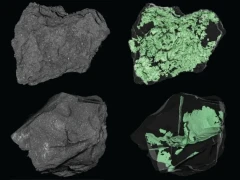
The asteroid Ryugu was explored by Japan's robotic spacecraft Hayabusa2. In 2020, the spacecraft delivered 5.4 grams of material from the celestial body's surface to Earth.
These samples are particularly valuable because they were collected directly in space and delivered in a sealed capsule. This significantly reduced the risk of contamination by terrestrial organic substances, an unavoidable concern when studying ordinary meteorites after they have fallen to Earth's surface.
The scientists used two samples for their analysis. Organic compounds were extracted using water and hydrochloric acid, after which the resulting material was purified and its chemical composition examined.
All five nitrogenous bases were found in both samples in roughly comparable quantities. Working with such material requires exceptionally strict laboratory conditions: even minor contamination can affect the analytical results and lead to incorrect conclusions about the origins of the molecules found.
Similar Molecules Are Also Found on Other Asteroids
The discovery on Ryugu is consistent with findings from studies of other objects in space.
Organic compounds, including nitrogenous bases, had previously been detected in the Murchison meteorite, which fell in Australia in 1969, and in the Orgueil meteorite, found in France back in 1864. However, such findings are harder to interpret: after reaching Earth, meteorites can become contaminated with terrestrial substances.
More compelling evidence has emerged from studies of samples returned directly from asteroids. In 2025, scientists reported finding all five nitrogenous bases in material from the asteroid Bennu, which NASA brought to Earth as part of the OSIRIS-REx mission.
However, the chemical composition of different objects in space varies considerably. For example, purines predominate in the Murchison meteorite, whereas samples from Bennu and Orgueil contain more pyrimidines.
The researchers suggest that this ratio may be influenced by ammonia—a compound that can participate in the chemical reactions that form nitrogenous bases. Thus, the mix of organic substances in each asteroid depends on the conditions in which its parent body formed and evolved.
Could the Ingredients of Life Have Arrived on Earth from Space?
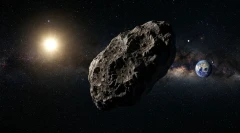
The asteroids Ryugu and Bennu are remnants of the early Solar System. Their material preserves traces of chemical processes that took place about 4.5 billion years ago. By studying such objects, scientists can investigate organic chemistry that existed even before the formation of Earth as we know it today.
The discovery of the complete set of nitrogenous bases in Ryugu samples shows that all the major molecular components of genetic material could have been present in extraterrestrial environments early in the Solar System's history.
This supports the hypothesis that some of the organic substances needed for life to emerge could have formed in space and then reached the young Earth aboard asteroids and other celestial bodies.
However, it is important to understand the difference between discovering the building blocks of life and discovering life itself. Nitrogenous bases are not living organisms and do not, on their own, form a complete genetic system. Scientists have yet to establish exactly where the first mechanisms of heredity arose or how individual organic molecules came together to form systems capable of reproduction and evolution.
Nevertheless, the findings from studies of Ryugu and Bennu suggest that the young Earth may have received a fairly diverse range of organic compounds from space. The chemical ingredients needed for life to emerge may not have formed exclusively on our planet, but may instead have been part of the Solar System's shared chemical history.