make preferable
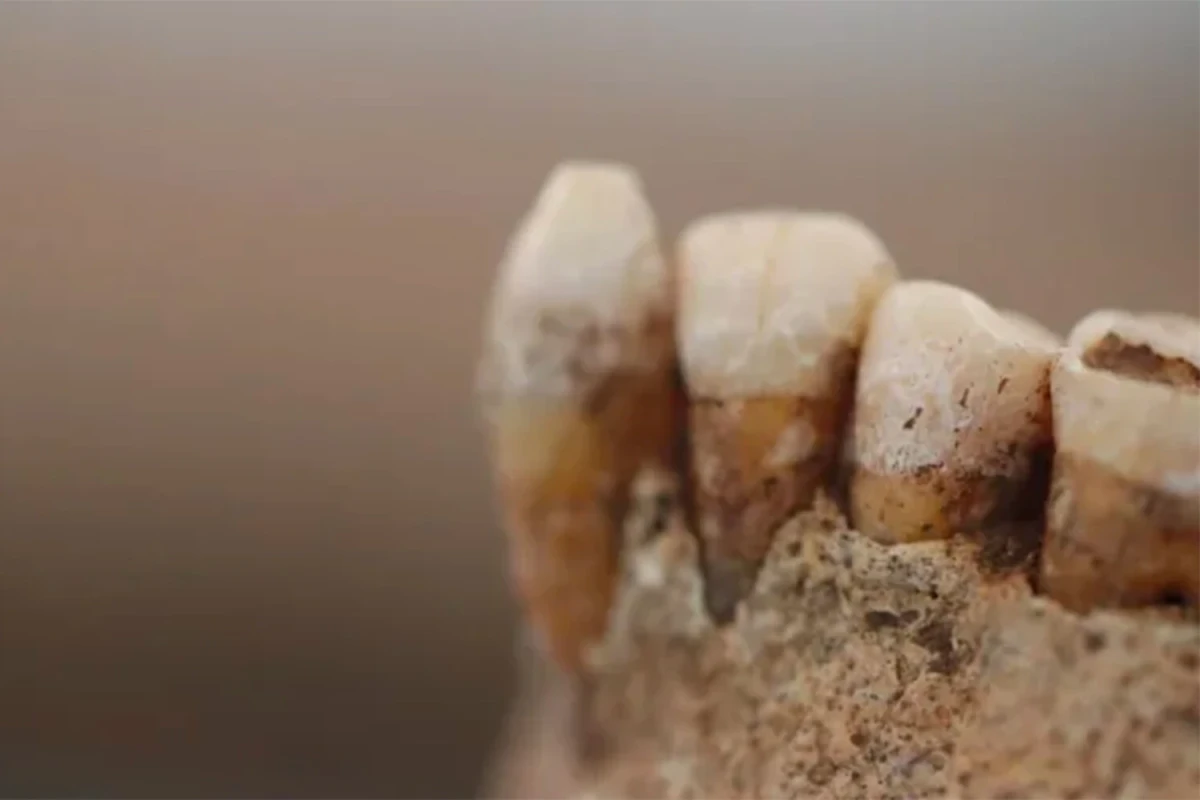
A man who died around 5,800 years ago on the Danish island of Sejerø may have witnessed local communities' transition from hunting and fishing to farming. Analysis of his teeth showed that his diet changed sharply during adolescence, with a substantial increase in food from terrestrial sources. This may have been linked to the arrival of the region's first farmers and livestock herders. The study was published in the journal Antiquity.
A skeleton discovered almost 70 years ago
The nearly complete skeleton was discovered in 1956 in the Rødhals shell midden on the island of Sejerø. The man was short—about 1.55 meters tall—and died at approximately 30–40 years of age.
Genetic analysis showed that he belonged to the Western European hunter-gatherer group. Members of this population inhabited what is now Denmark before the spread of farming.
However, new research has revealed that the man's way of life may have differed considerably from that of his ancestors. Scientists examined the isotopic composition of his teeth, which helps reconstruct diet at different stages of life. Dental tissue preserves chemical traces of food consumed during childhood and adolescence, allowing the researchers to track dietary changes over time.
How the man's diet changed
As a child, the man mainly ate shellfish and fish found in shallow waters. From around the age of 11, his diet included more cod and haddock. But the most striking change occurred during adolescence, when the proportion of protein from terrestrial sources rose sharply.
This level of consumption of terrestrial foods proved unusual. Among 65 other Danish hunters and fishers from the Mesolithic period studied, the scientists found no comparable diet.
Isotope analysis alone cannot establish exactly what the man ate. The terrestrial protein could have come from wild animals hunted by local people. However, the researchers consider it more likely that his diet began to include foods associated with farmers: meat from domestic animals and cereals.
Features of the burial also support this interpretation. The Rødhals burial differs from typical Mesolithic burials and includes features characteristic of early farming cultures.
Two cultures sharing the same territory
Radiocarbon dating showed that the man died sometime between approximately 3930 and 3710 BCE. By then, the first livestock herders had already arrived on the Danish islands.
He probably lived during a period when hunter-gatherer and farming communities coexisted in the same territory. They may have interacted and exchanged not only objects but also aspects of everyday life, including dietary habits.
The remains from Rødhals thus offer a rare glimpse into a transitional period when traditional ways of life were gradually changing under the influence of new methods of food production.
However, the researchers caution against drawing overly broad conclusions: the study concerns a single individual, and his diet cannot reveal how widespread such changes were among local hunter-gatherers.
The Rødhals man remains the latest known individual in Denmark with exclusively Mesolithic genetic ancestry. His story shows that the transition to farming did not necessarily happen all at once: old and new traditions could coexist throughout an entire generation's lifetime.