make preferable
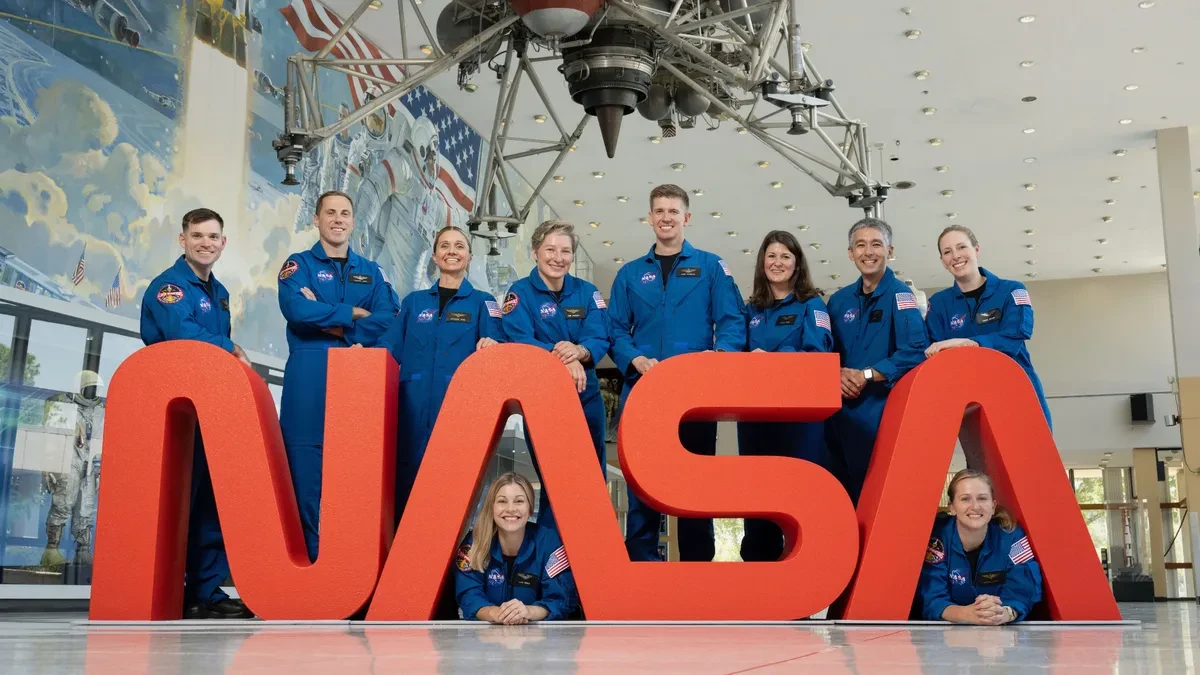
NASA has announced that it is recruiting a new generation of astronauts. The agency aims to expand its astronaut corps as it prepares to return humans to the Moon, establish a permanent lunar base, and undertake future expeditions to Mars. Applications are open until December 3, 2026, with the final selection of candidates scheduled to be completed in late 2027.
The recruitment drive was announced on November 7 during the Max Power event at Kennedy Space Center in Florida. According to NASA Administrator Jared Isaacman, the new astronauts could take part in lunar landings, work at a future lunar base, and develop technologies for crewed missions to Mars.
This is NASA's 25th astronaut recruitment round. The previous round took place in 2024, when the agency received more than 8,000 applications and selected ten people—five men and five women. They are now undergoing a two-year training program.
Why NASA Needs New Astronauts
NASA currently has 32 active astronauts. Since 1959, when the first seven members of the Mercury program were selected, the agency has recruited a total of 370 people for spaceflight.
However, the tasks ahead require significantly more specialists. NASA is preparing to expand its lunar program, test new spacecraft and spacesuits, and build infrastructure for long-term human presence beyond Earth.
NASA astronaut Nichole Stilwell, who joined the corps in 2021, explained that the agency will need to work simultaneously on new spacecraft, equipment, and operations required to return to the Moon and explore farther into space. The current number of astronauts is therefore insufficient.
The recruitment drive comes as preparations continue for the next phases of the Artemis program. In 2026, NASA sent astronauts around the Moon on the Artemis II mission—the first such flight since the Apollo program. In 2027, the Artemis III crew is scheduled to test lunar landers in Earth orbit.
Who Can Apply
NASA's primary requirement is U.S. citizenship. Candidates must also hold a master's degree in one of the following scientific or technical fields:
· engineering;
· biological sciences;
· physical sciences;
· computer science.
At least three years of professional experience in the relevant field is also required.
However, a master's degree is not the only option. NASA accepts several alternative educational pathways:
· At least two years of doctoral study in a relevant technical or scientific discipline, including engineering, biology, physics, computer science, or mathematics.
· Medical education: a Doctor of Medicine (MD), Doctor of Osteopathic Medicine (DO), physician assistant (PA), Doctor of Nursing Practice (DNP), family nurse practitioner qualification, or a comparable medical qualification.
· Graduation from or enrollment in a nationally recognized test pilot school. The program must be completed by July 2027. If this is the candidate's only additional technical qualification, at least a bachelor's degree in an eligible STEM field is required.
For physicians, NASA will also count residency training as professional experience, provided it is completed by July 2027.
What Are the Requirements for Pilots?
Candidates applying for pilot-astronaut roles must meet separate flight experience requirements. Depending on the aircraft type, they must satisfy one of the following conditions:
· At least 750 hours as pilot in command of high-performance jet aircraft.
· At least 1,000 flight hours in rotorcraft, including 300 hours as pilot in command.
· At least 1,500 hours in other fixed-wing aircraft, including 750 hours as pilot in command.
NASA is therefore considering candidates from a range of professional backgrounds, but the pilot specialization requires extensive flight training.
When Will the New Astronauts Begin Training?
NASA plans to announce the final members of the new class in late 2027. After selection, the candidates will begin a two-year training program at Johnson Space Center in Houston, which also houses the agency's astronaut corps and Mission Control Center.
NASA Chief Astronaut Scott Tingle emphasized that this work is not simply a new career, but an opportunity to take part in exploration that will shape the future of human spaceflight.
Applications are already open and will close on December 3, 2026. Detailed requirements and the application form are available on NASA's official website.
The new recruitment round is intended to provide the agency with specialists for the next phase of lunar exploration. In the future, these astronauts could take part in expeditions that turn brief visits to other celestial bodies into sustained work beyond Earth.