make preferable
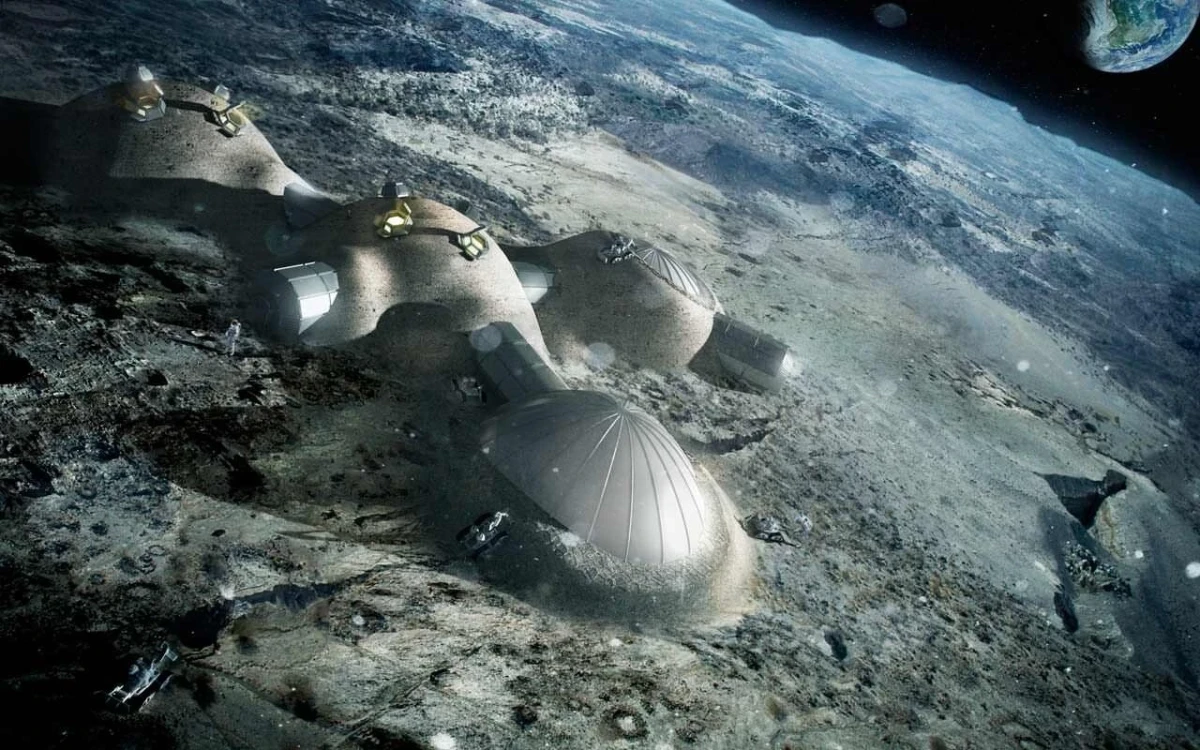
Researchers at Purdue University have developed a way to make an ultralight thermal insulation material from lunar dust and cellulose. They propose using regolith and fibers from waste paper as raw materials that could be processed directly on the Moon. In the future, this technology could help reduce shipments of construction materials from Earth and protect future lunar settlements from extreme temperatures.
Building Material from Local Resources
One of the main challenges in establishing permanent bases on the Moon is minimizing dependence on supplies from Earth. Delivering every additional kilogram of cargo requires substantial resources, so researchers are looking for ways to use materials already available on the lunar surface.
A Purdue University team led by chemistry professor Alexander Wei proposed turning lunar regolith into the basis of an aerogel—an extremely lightweight material with strong thermal insulation properties. The second component is cellulose, which could eventually be obtained from recycled paper and other waste generated by the base's inhabitants.
For the initial experiments, the scientists used a lunar soil simulant and cellulose from shredded paper. The findings were published in the journal ACS Sustainable Chemistry & Engineering.
The idea fits into the concept of in situ resource utilization (ISRU): rather than shipping everything needed to build and maintain a settlement from Earth, future colonists could process local raw materials and their own waste into useful materials.
How Lunar Dust and Paper Become Aerogel
Aerogels have an extremely porous structure: voids can account for up to 99% of their volume. As a result, heat passes through the material much less readily than through dense solids.
On Earth, these pores are usually filled with air, while on the Moon they could contain a vacuum. A vacuum conducts virtually no heat, making such materials promising for protecting living quarters and equipment modules from temperature fluctuations.
In the experiment, the researchers mixed regolith simulant, cellulose fibers from waste paper, and water. The mixture was processed in a planetary ball mill with heavy ceramic balls. This broke the cellulose down into thin, threadlike fibers less than one micrometer in diameter. The resulting nanofibrillated cellulose increases the material's surface area and helps reinforce its structure.
The mixture was then frozen to prepare it for water removal. One method under consideration is lyophilization, or freeze-drying. In this process, frozen water passes directly from a solid into vapor, bypassing the liquid phase.
According to Wei, this method could be particularly well suited to manufacturing on the Moon. A natural vacuum already exists there, and nighttime temperatures fall below freezing. In addition, the water removed during drying could be collected and reused, creating a closed-loop production process.
Balancing Thermal Insulation and Strength
The researchers produced several versions of the aerogel with different ratios of regolith to cellulose to determine how the composition affects the material's properties.
The experiments revealed a trade-off between thermal insulation and mechanical strength. Samples with a lower proportion of cellulose generally had lower densities and retained heat better. Increasing the regolith content is also desirable from a practical standpoint: it is far more abundant on the Moon than any imported materials.
However, it is the cellulose fibers that help the aerogel maintain its mechanical integrity. Increasing their proportion therefore makes the material stronger, but worsens its thermal insulation performance.
In the future, the researchers will need to find an optimal composition that provides sufficient strength for practical applications while maintaining low thermal conductivity.
A Long Road Ahead Before Lunar Construction
The development is still at the experimental stage. The scientists worked with regolith simulant and recycled paper rather than producing the material directly on the Moon. Whether a full aerogel manufacturing process is feasible under lunar conditions therefore remains to be tested.
In addition, the future construction material must withstand not only temperature fluctuations but also mechanical loads, radiation exposure, and other features of the lunar environment. The mere availability of suitable raw materials does not guarantee that processing them will be straightforward and economical enough.
Nevertheless, the approach is interesting because it combines two ideas: using local soil and reusing waste. If the technology can be scaled up, future lunar bases could produce some of the insulation they need from materials that would otherwise be considered useless. This will not solve every challenge of building beyond Earth, but it could make a long-term human presence on the Moon less dependent on regular cargo shipments.