





 make preferable
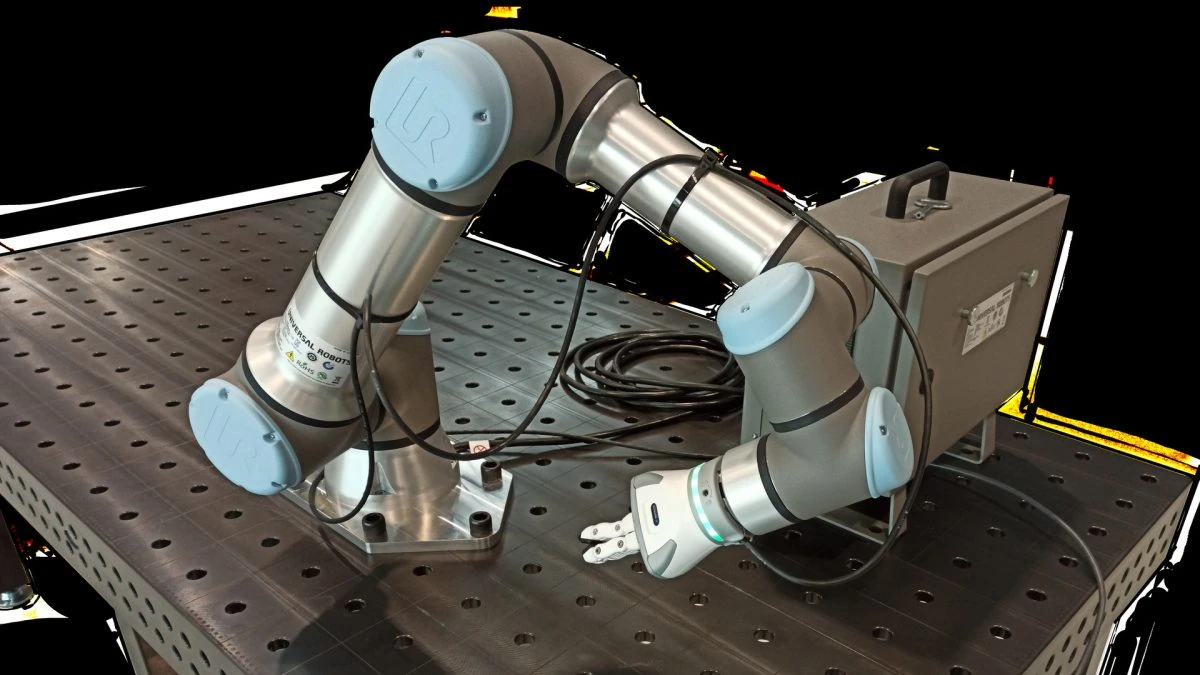
One of the expected outcomes of the seven-year program for the development of physical artificial intelligence is to make Armenia more attractive to major international technology companies. Hrant Khachatryan, head of the machine learning laboratory at YSU's Center for Mathematical and Applied Research and the YerevaNN laboratory, stated this at a press conference today.
Increasing Interest in Armenia
According to him, global companies, including NVIDIA and major robotics manufacturers, need to see that Armenia has a scientific foundation, skilled research teams, and a steady annual supply of graduates that can support the establishment and expansion of technology businesses.
Khachatryan believes that Armenian scientists currently find it difficult to demonstrate capabilities that would persuade such companies to immediately establish large research divisions in the country. Armenia can present its programs, scientific ambitions, and development plans, but convincing an international company to build, for example, a team of 50 robotics or artificial intelligence specialists here remains challenging. Finding that many trained professionals in the country is extremely difficult.
This is precisely the situation the seven-year program is intended to change.
“The program's goal is to ensure that the situation is different in a few years. We need to train specialists who will join the laboratories and make Armenia attractive to major international companies working in this field,” Khachatryan explained.
This is not only about attracting foreign investment and opening branches of international corporations in Armenia. Establishing and developing domestic companies is another important objective. According to the scientist, Armenia already has at least one company with fairly ambitious plans in this area. Its growth, in turn, creates additional demand for training specialists.
Research teams must provide these companies with the specialists they need to expand their operations and compete in international markets. In effect, Khachatryan links the program's success to establishing a sustainable connection between science, education, and industry: research groups should generate new knowledge and technologies, universities should train specialists, and companies should turn research成果 into competitive products.
“The program's success will mean that we can be confident that foreign companies can expand their research base in Armenia, and that our economy can support these high-tech, cutting-edge fields,” he noted.
Where Physical AI Can Be Applied: Rescue Operations, Industry, and Security
Discussing the potential practical applications of physical artificial intelligence, Khachatryan emphasized that they are extremely wide-ranging. At this stage, the main task is not to create a specific type of robot, but to establish the technological and scientific foundation on which systems for a wide variety of sectors can subsequently be developed.
He identified the use of robotics in emergencies as one promising area. Robots will be able to assist rescuers, enter hard-to-reach places, and work in smoke, heavy dust, and other conditions that pose a danger to humans.
Such systems will make it possible to conduct search and rescue operations, survey hazardous areas, and perform tasks that would put people at serious risk.
Another major area is the introduction of robotics into industry. Many countries already have large manufacturing facilities with extensive production lines where a significant share of operations are performed by people. Gradually automating these processes will make it possible to increase production volumes, improve productivity, and reduce unit costs.
Khachatryan pointed out that this process is already well underway in Japan, Germany, the United States, and other countries. Industrial enterprises are gradually introducing robots and assigning them specific production tasks.
In his assessment, Armenia remains largely on the sidelines of these developments. One of the program's objectives is to ensure the country's participation in the global development of robotics and build domestic expertise that will enable it not only to use existing solutions but also to develop new technologies.
The potential applications are not limited to industrial enterprises and rescue services. According to Khachatryan, working with even a single type of robot or drone opens up hundreds of practical uses, from monitoring various sites to performing specific operations in the physical environment.
Khachatryan also addressed the security sector. He noted that the potential for robotics is particularly broad in this area, since assigning dangerous operations to robots reduces risks to human life.
As an example, he mentioned developments in Ukraine, where the use of unmanned and robotic systems demonstrates how significant a role such technologies can play in carrying out dangerous tasks.
Thus, the development of physical artificial intelligence is important not only for scientific research and industrial automation, but also for creating systems capable of operating in high-risk conditions.
Automated Laboratories and the Next Stage of Development
Another promising area, according to Anik Margaryan, program director at the ARCS.ai robotics and artificial intelligence research center, is the creation of automated laboratories. This area is also being considered in the context of expanding Armenia's research capabilities.
Automating laboratory processes will enable the introduction of new technological approaches to research and become an additional component of the scientific infrastructure being developed.