make preferable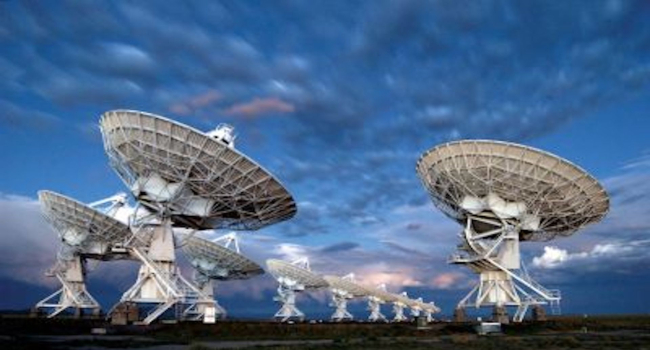
A team from the SETI Institute has spent nearly a year conducting daily observations of the pulsar PSR J0332+5434 using the Allen Telescope Array in California. Their results, published on December 10, 2025, in The Astrophysical Journal, show that interstellar gas introduces tiny delays in the arrival of pulsar signals—on the order of just tens of nanoseconds. These delays subtly change the familiar “twinkling” or scintillation pattern of radio waves and can affect both the search for gravitational waves and the hunt for signals from extraterrestrial civilizations.
What Is Pulsar “Scintillation”?
According to Space.com, pulsars are rapidly rotating neutron stars that emit narrow beams of radio waves from their magnetic poles. When such a beam sweeps past Earth, we detect it as a highly regular pulse, much like a cosmic lighthouse.
However, before reaching us, the signal must pass through the interstellar medium, which is filled with clouds of charged gas, mainly free electrons. These clouds bend, scatter, and slightly delay the radio waves. The result is scintillation, the radio equivalent of how stars appear to twinkle when their light passes through Earth’s atmosphere.
Between February and December 2023, the SETI team observed changes in scintillation patterns over timescales of hundreds of days. As Earth, the pulsar, and the interstellar gas move relative to each other, bright and dark patches in the signal shift across different frequencies. This produces microscopic delays in pulse arrival times, typically tens of nanoseconds.
Why This Matters
These tiny delays have important consequences for two major areas of research.
- Pulsar timing arrays and gravitational waves
Pulsar timing arrays search for low-frequency gravitational waves by looking for correlated variations in the arrival times of pulses from many pulsars. If the delays caused by interstellar gas are not precisely accounted for, they can either hide real gravitational-wave signals or mimic them. - SETI and the search for extraterrestrial intelligence
Scintillation also helps scientists distinguish genuine cosmic signals from human-made radio interference. A signal that has traveled across interstellar space should show a characteristic scintillation pattern. If that pattern is missing, the signal is very likely of terrestrial origin.
The study shows that by understanding how much scintillation to expect along a particular line of sight, astronomers can more confidently classify suspicious signals. In other words, the “twinkling” itself becomes a powerful authentication tool for cosmic origins.
The Scale of the Project and Its Lessons
In total, the team monitored about 20 pulsars over the course of a year. Although no simple repeating patterns in scintillation changes were found, the project provided crucial insights for future SETI searches.
Researchers also point out that modern algorithms and machine learning techniques could be applied to older datasets. Signals that were once buried in noise or overlooked because of technical limitations might still be waiting to be discovered.
As one of the founders of SETI@home has noted, if a real extraterrestrial signal exists in the archived data, humanity might have missed it by the narrowest margin.
In Brief
SETI astronomers have learned to measure microscopic delays—just tens of nanoseconds—in pulsar signals caused by interstellar gas. These measurements improve the accuracy of searches for low-frequency gravitational waves and make it easier to distinguish real extraterrestrial signals from Earth-based interference. The study, carried out in 2023 with the Allen Telescope Array, marks an important step toward a more precise and reliable search for life beyond Earth.