make preferable
Some of the carbon that makes up all life on Earth today may have taken an extraordinary journey: arriving from the outer reaches of the Solar System on ancient meteorites, becoming trapped in the young planet's metallic core, and returning to the surface billions of years later with volcanic magma. Unusual isotopic traces discovered in Hawaiian volcanic rocks point to this possible history.
The study was published in the journal Proceedings of the National Academy of Sciences. Its authors believe they have found evidence of possible carbon leakage from Earth's core into the mantle and onward to the surface. While this is not yet definitive proof of the material's origin, the discovery offers a fresh perspective on how Earth's carbon inventory formed more than 4.5 billion years ago.
How material from the core can reach the surface
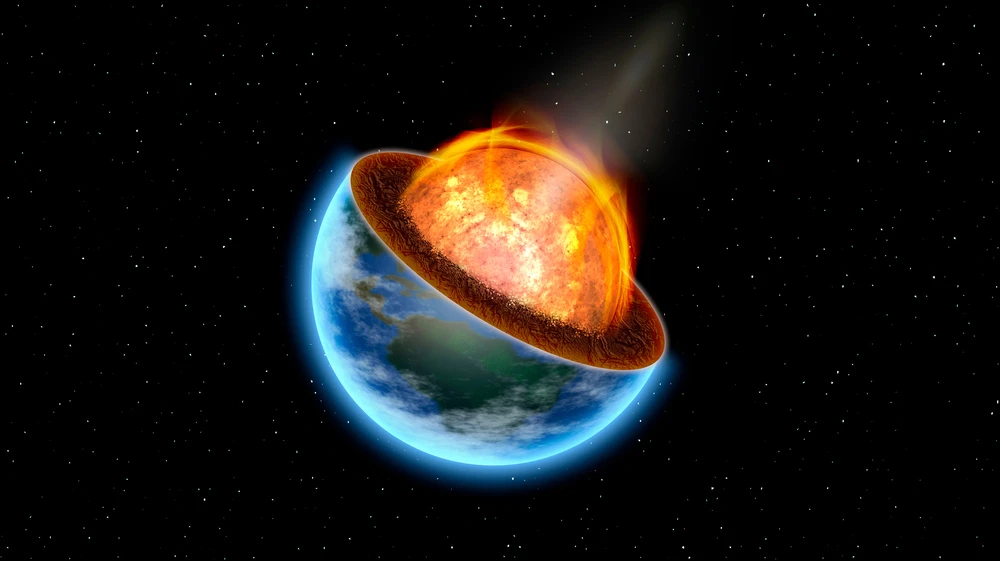
Earth consists of several major layers. Beneath its thin crust lies the mantle — a vast region of predominantly solid rock about 2,900 km thick. Deeper still is the outer core of molten metal, which surrounds the solid inner core.
A substantial share of Earth's carbon is thought to be concentrated in the core. Studying it directly is virtually impossible: no modern instrument can reach such depths and collect samples. Scientists therefore look for indirect evidence — for example, in the products of volcanic activity.
Some elements can escape the outer core and enter the mantle above it. From there, they can rise toward the surface within enormous flows of hot rock known as mantle plumes. These structures originate near the core–mantle boundary and gradually move upward. Partial melting of the rock produces magma, which can eventually erupt through volcanoes.
Crystals form as magma cools. Sometimes, tiny droplets of melt that have not yet lost their dissolved gases become trapped inside them. These inclusions preserve the chemical composition of the original magma and allow researchers to study substances that might otherwise have escaped before an eruption.
These inclusions were the key to the new study. According to lead researcher Yves Moussallam of Columbia University, they are a kind of magma fossil, preserving information about its origin.
Hawaiian volcanoes preserved an unusual isotopic signature
For the study, the scientists selected volcanic rock samples from Hawaii — from the area around Kīlauea volcano and the Tantalus rift. This region is particularly interesting because its volcanism is linked to a deep mantle plume that may bring material up from the core–mantle boundary.
The researchers examined the carbon isotope composition of the preserved droplets of magmatic melt. Isotopes are forms of the same chemical element with different masses. Their relative abundances help identify the origin of a material and the processes it has undergone.
Samples from the Tantalus rift showed values typical of ordinary mantle carbon: approximately −5 to −7 parts per thousand. But the Kīlauea samples revealed a very different picture.
According to the accepted model, magma beneath Kīlauea rises from the central part of the plume — an area potentially closer to the core–mantle boundary. In these samples, the carbon isotopic value was about −1 part per thousand. This differs substantially from typical mantle values.
In Moussallam's view, the unusual isotopic signature points to the addition of carbon from another source. The researchers consider Earth's core the most likely candidate. However, the authors stress that other explanations cannot yet be ruled out, and additional measurements will be needed to confirm the hypothesis.
Traces of ancient meteorites may explain the origin of carbon
The unusual isotopic composition led the scientists to examine events that took place during Earth's formation more than 4.5 billion years ago.
The researchers compared their findings with the characteristics of ancient meteorites and found similarities to carbonaceous chondrites. These are among the oldest surviving materials in the Solar System and contain information about the matter from which planets formed.
Chondrites are broadly divided into two major groups. Non-carbonaceous chondrites are associated with the inner Solar System, while carbonaceous chondrites formed in its outer regions and contain more carbon. How much material of each type contributed to Earth's formation remains a subject of scientific debate.
The new study supports the idea that carbonaceous chondrites made a substantial contribution to our planet's composition, particularly during the later stages of its formation.
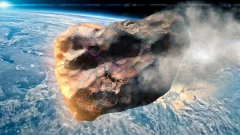
One possible scenario is that carbon-rich meteorites struck the young Earth when it was already better able to retain incoming material. Some of the carbon they delivered ended up in the planet's deep layers and may have become part of its metallic core. Over the following billions of years, some of this material gradually moved into the mantle, rose with plumes, and eventually reached the surface during volcanic eruptions.
If confirmed, the hypothesis would link the origin of some of Earth's carbon to material from the outer Solar System.
From the planet's core to living organisms
Researchers have not yet established either the exact amount of carbon delivered by carbonaceous meteorites or whether the isotopic signature found in Hawaiian magma actually came from the core. Moussallam himself cautions against treating this interpretation as definitive: further measurements and independent confirmation are needed.
Nevertheless, the hypothesis offers an unusual connection between the history of the Solar System and today's biosphere. The carbon now found in living organisms may have arrived on Earth in meteorites billions of years ago, then become bound to iron in the core, before returning to the surface through volcanic activity after an immense span of time.
For now, this is only a possible history, not an established route for every carbon atom. But the study is a reminder of how closely the processes that occurred during the planet's birth are connected to its deep geology and the chemical elements without which life on Earth would be impossible.