make preferable
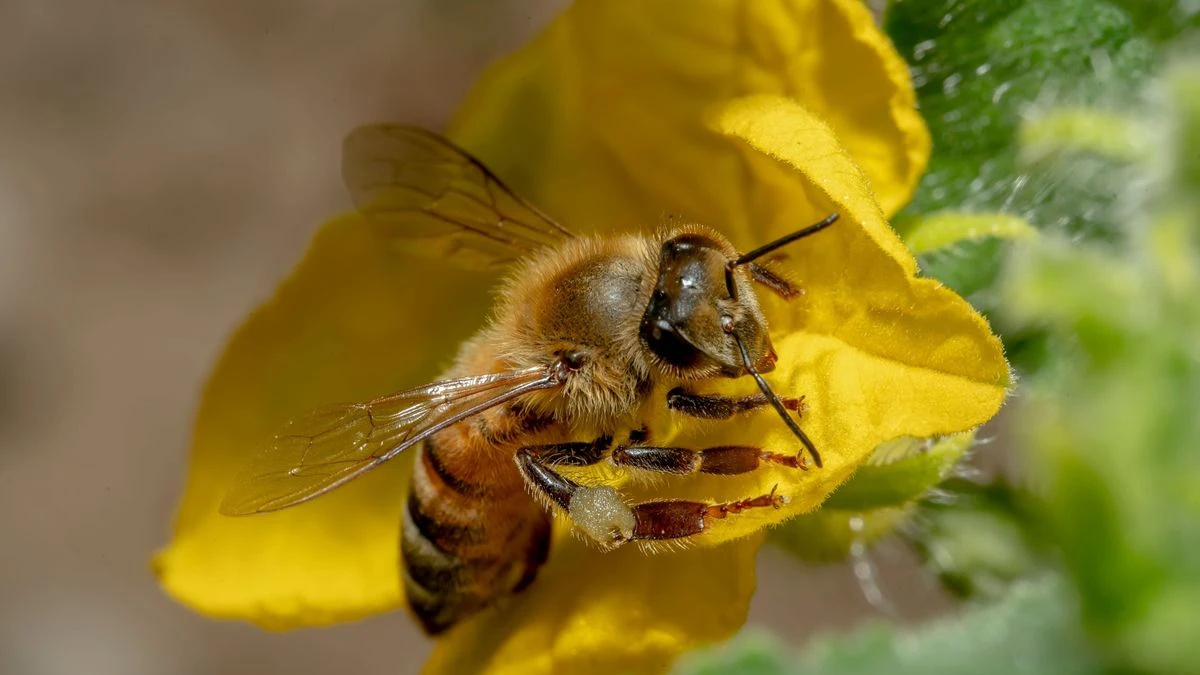
Honeybees do not merely compete with wild pollinators for nectar and pollen, but also actively drive them away from flowers. This is the conclusion reached by researchers from Anglia Ruskin University, who observed insect interactions over two years at five sites in and around Cambridge. The scientists warn that rising temperatures and increasing numbers of honeybees may intensify pressure on wild pollinators, which are vital to ecosystems.
The study results were published in the journal Ecological Entomology. Observations were carried out on flowering blackberry and ivy—plants that attract many insects and provide them with nectar and pollen.
Honeybees win the competition for flowers
Over 93 hours of observations, the scientists examined interactions among five groups of insects: honeybees, bumblebees, solitary bees, hoverflies, as well as butterflies, beetles, and wasps. The researchers recorded cases in which one insect prevented another from feeding or stopped it from reaching a flower. The results showed that in places with a higher concentration of honeybees, there were generally fewer other pollinators, and competition for flowers became more intense. Honeybees also emerged as the winners more often in clashes with other insects.
In particular, a doubling of honeybee density on blackberry flowers was associated with a 14% decline in bumblebee numbers. On ivy, an increase in honeybee numbers was accompanied by a decrease in the number of solitary bees and hoverflies. At the same time, honeybees did not limit themselves to being the first to occupy flowers. They often initiated confrontations themselves, pushing competitors away from food sources.
In 28% of recorded interactions on blackberry and in 36% of cases on ivy, other pollinators avoided contact with honeybees. In at least 20% of the confrontations won by honeybees on both plants, they physically shoved rivals away or drove them off. Aggressive behavior from other species was much less common. One exception was the ivy bee—a solitary species first discovered in the United Kingdom in 2001. It sometimes pursued honeybees itself and pushed them away from flowers, successfully competing for access to food.
Why warming could make the situation worse
The researchers found that under warmer conditions, competitive encounters between pollinators occurred more often. In their assessment, further temperature increases could strengthen honeybees’ advantage over some wild species. One possible reason is that plants experiencing heat stress may produce less nectar. As a result, insects have to compete for a shrinking food supply.
In addition, different pollinators respond differently to heat. Bumblebees and hoverflies are sensitive to high temperatures and may forage more effectively in cooler weather. Honeybees, by contrast, usually become more active as temperatures rise. Previous studies showed that a 12-degree Celsius increase in temperature was accompanied by a tenfold rise in the number of honeybees leaving their hives.
These differences could lead to honeybees gaining an even greater advantage in the struggle for floral resources as the climate warms. At the same time, the number of beekeepers in the United Kingdom is growing: while there were about 19,000 in 2010, last year there were already 47,000. An increase in the number of managed bee colonies may intensify competition in areas with a high density of hives, including cities.
How to protect wild pollinators
The study’s lead author, Anglia Ruskin University PhD student Victoria Buckle, emphasized that the goal of the work is not to discourage people from beekeeping, but to better understand competition between wild pollinators and those kept by humans so that natural populations can be protected more effectively. According to the researcher, most food-related confrontations were initiated by honeybees, which more often won, depriving other insects of the opportunity to collect nectar and pollen. Bumblebees, solitary bees, and hoverflies avoided them, yielded flowers to them, and were sometimes chased away.
At the same time, the ivy bee demonstrated an ability to successfully stand up to honeybees. According to Buckle, as far as the authors know, this behavior has been observed for the first time. The scientists believe it is necessary to find ways to ensure the coexistence of honeybees and wild pollinators, especially in places with large numbers of hives. The study results point to a potential problem for biodiversity conservation, but in themselves do not mean that beekeeping should be restricted everywhere.