make preferable
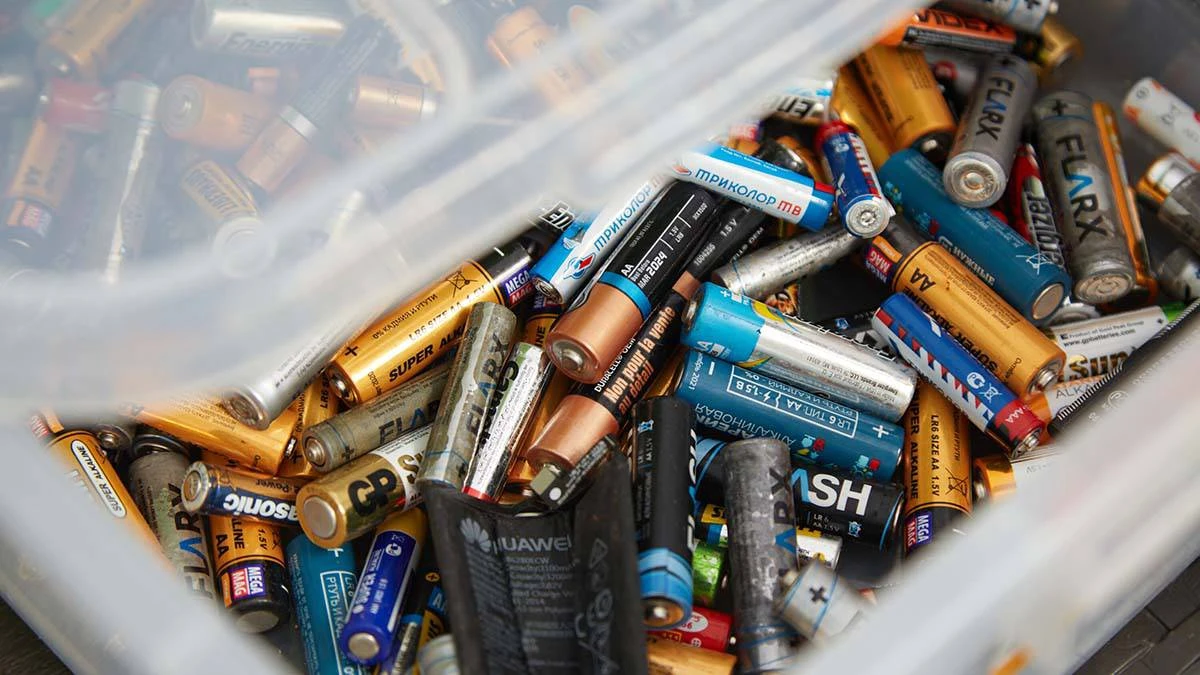
Old batteries and electronic waste could get a second life as materials for wastewater treatment. Scientists at TU Wien (Vienna University of Technology) have developed a technology that extracts metals from used batteries and turns them into magnetic nanoparticles that bind harmful substances in water. The pollutants can then be quickly removed along with the nanoparticles using an ordinary magnet.
The findings were published in the journal Advanced Sustainable Systems. The development is particularly promising for removing synthetic dyes from water, as these are difficult to eliminate through conventional filtration. Such substances have stable molecular structures and can persist in bodies of water for a long time.
From old batteries to magnetic filters
To create the new material, the researchers used zinc from spent alkaline batteries, nickel from nickel-metal hydride (Ni-MH) rechargeable batteries, and iron recovered from rusty scrap metal.
Using these components, the scientists synthesized zinc ferrite nanoparticles as well as a nickel-modified version of the material. They tested the resulting particles on Congo red, a synthetic organic dye often used in wastewater pollution research. The nanoparticles bind dye molecules to their surfaces and can then be separated from the water. Adding nickel significantly enhanced the material's magnetic properties, making the pollutant-laden nanoparticles much easier to recover.
“For practical water treatment, the magnetic properties of nanoparticles are just as important as their ability to bind pollutants,” explained Qaisar Maqbool, the study's first author. He said that modifying zinc ferrite with nickel produced a material with stronger magnetic properties. This allows the nanoparticles to be collected quickly using magnets, without the need for centrifugation.
Water treatment in 5–15 minutes
In laboratory experiments, the entire process of binding the pollutant and separating the nanoparticles took approximately 5–15 minutes. The researchers also tested the technology in a prototype flow-through system. Contaminated water was pumped through a glass tube with an external neodymium magnet positioned around it. The magnet held the magnetic nanoparticles and their captured pollutants against the tube walls, allowing the purified water to continue flowing.
After about 25 minutes, the water was visibly cleaner, and the researchers managed to recover almost all the nanoparticles used. According to TU Wien professor Michael Stöger-Pollach, this approach eliminates the need for complex procedures to separate the material from the water and opens up the possibility of continuous treatment in flow-through systems. The scientists also note that the pollutant itself could potentially be recovered for reuse.
Next step: testing larger volumes of water
The researchers plan to refine the technology to increase the proportion of materials recovered. Another task is to ensure that the nanoparticles themselves do not release harmful substances into the water. The next stage will involve testing larger volumes of wastewater under conditions resembling those in real wastewater treatment plants.
The development thus offers two ways to reduce environmental damage: using metals from waste to create a useful material, and applying that material to remove pollutants from water. Although the technology is still at the laboratory and prototype testing stage, it could eventually help turn some electronic and battery waste into a resource for environmental cleanup.