make preferable
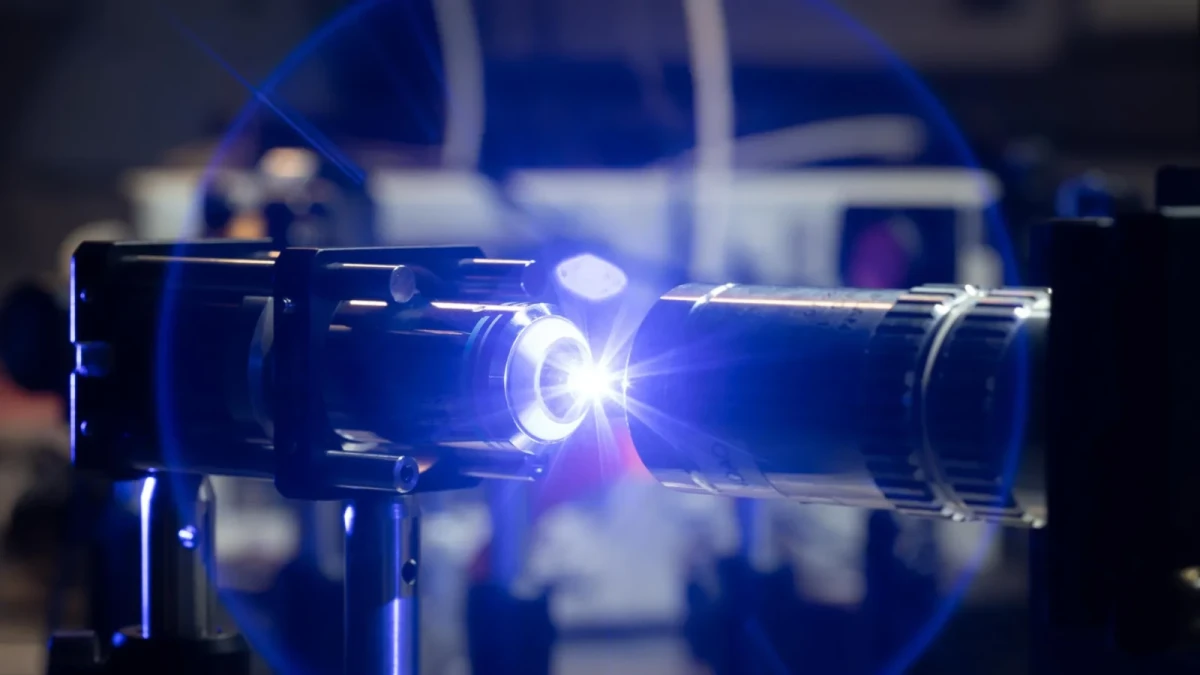
Engineers at the University of California, San Diego have developed a way to control the magnetic states of materials using light. In the future, this technology could make it possible to create faster, more compact, and more energy-efficient data storage devices. The research results were published in the journal Nature Communications.
Modern hard drives and other magnetic storage systems record information using tiny regions of material that represent zeros and ones. To write new data, they usually need to be influenced by an external magnetic field, changing the direction of magnetization. This process requires energy and limits writing speed.
An alternative approach being studied by American researchers is based on optical switching — changing the magnetic state of a material using light. According to the scientists, this method could potentially deliver write speeds more than a thousand times faster than traditional methods using an external magnetic field, reports sciencedaily.com.
How a laser helps write information
To control magnetic states, the team used a specialized ultrafast laser and changed the shape and size of its beam. As a result, the researchers were able to produce a significantly more compact light beam than in previous experiments.
The smaller the area affected by the laser, the smaller the magnetic regions that can be used to store information. This could potentially increase recording density and allow more data to be stored in the same area.
“The smaller the beam size, the smaller and denser optical memory can be,” explained study leader Abdoulaye Ndao, a professor in the Department of Electrical and Computer Engineering at the Jacobs School of Engineering at the University of California, San Diego.
Until now, optical switching had two major limitations. First, in previous experiments the effect could only be achieved in very thin magnetic structures consisting of no more than three layers. Second, switching required light with a specific polarization — a defined orientation of electromagnetic oscillations.
The thickness limitation is especially important for data storage devices: thicker magnetic structures can retain recorded information better over long periods of time.
“Previous experiments showed that increasing the material thickness beyond three layers suppresses optical switching. This limited the overall thickness of the magnetic material and, consequently, its ability to retain information for a long time,” Ndao noted.
Nine layers instead of three
By changing the shape and size of the laser beam, the researchers were able to overcome both limitations. They demonstrated optical switching in a structure of nine alternating layers of platinum and cobalt. In addition, the effect was observed without the need to use light with a specific polarization.
“We changed the properties of the light itself to influence physical processes in the material at the micro- and nanoscale,” said the paper’s first author, Muhammad Walid Khalid, a PhD student in electrical and computer engineering working in Ndao’s research group.
The method is based on a sequence of ultrashort laser pulses. The first pulses briefly heat a small region of the magnetic material, causing it to change the direction of magnetization. Subsequent pulses gradually expand the area with the altered magnetic state until it becomes stable.
In this way, the scientists were able to control the magnetic properties of the material using a precisely shaped light beam, achieving a result that is not possible with conventional laser beams.
“The specialized laser allowed us to shape a beam with a specified size and form. This made it possible to investigate fundamental physical processes that cannot be studied using ordinary lasers,” Khalid explained.
Why scientists had to repeat the experiments many times
The results were so unexpected that it was not easy for the researchers to convince the scientific community of their validity. The effects contradicted ideas formed from previous experiments, so the team had to repeat measurements many times and verify the data they obtained.
“The observed effects were so new and unusual that it was difficult for us to convince colleagues that this was not a random result. We spent a great deal of time and effort repeating and checking the experiments to confirm our conclusions,” Khalid said.
An important role was played by collaboration between specialists in optics and magnetic materials. Ndao’s team joined forces with Eric Fullerton, an expert in thin-film magnetic structures and a professor at the University of California, San Diego.
Instead of developing a new material with unusual magnetic properties, the scientists focused on a different approach — changing the light itself that acts on an existing material.
“Instead of creating a new material for optical switching, we changed the light and demonstrated properties that were previously thought impossible,” Ndao noted.
What is preventing the technology from being introduced into computers
Despite the promising results, practical devices based on this technology are still a long way off. One of the main problems is the need to use a specialized ultrafast laser, which is still difficult to integrate directly into computer chips.
Therefore, researchers are looking for materials capable of producing a similar effect when using laser systems that are better suited to electronic hardware.
Another area of work is the further reduction of the size of the light beam. The team hopes to bring it down to a few hundred nanometers by studying optical structures capable of concentrating light into ever smaller areas.
If these engineering challenges can be solved, optical switching could become the basis for new memory devices with high data storage density and significantly faster writing.
However, for now this is an experimental demonstration of a physical principle, not a ready-made technology for consumer electronics. It remains to be seen whether the results of laboratory experiments can be transferred into compact, reliable, and cost-effective devices.