make preferable
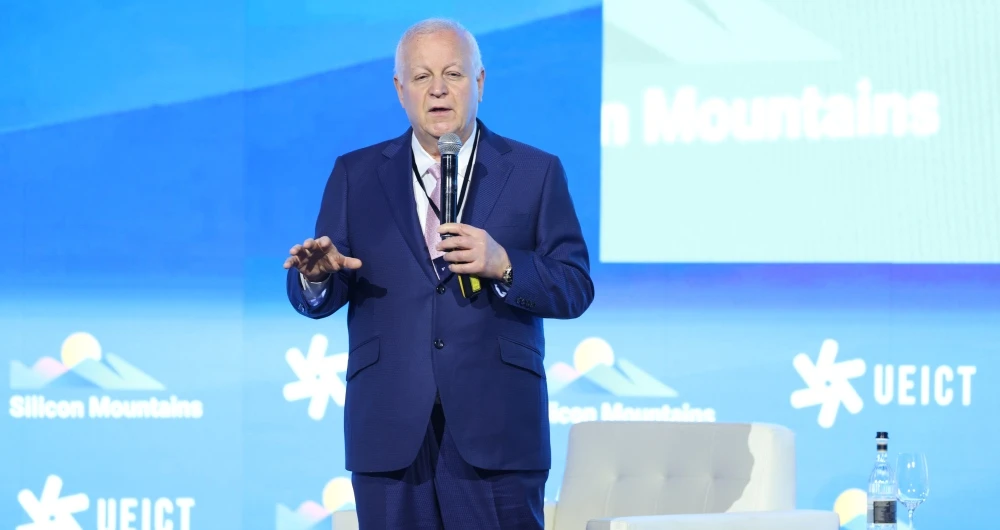
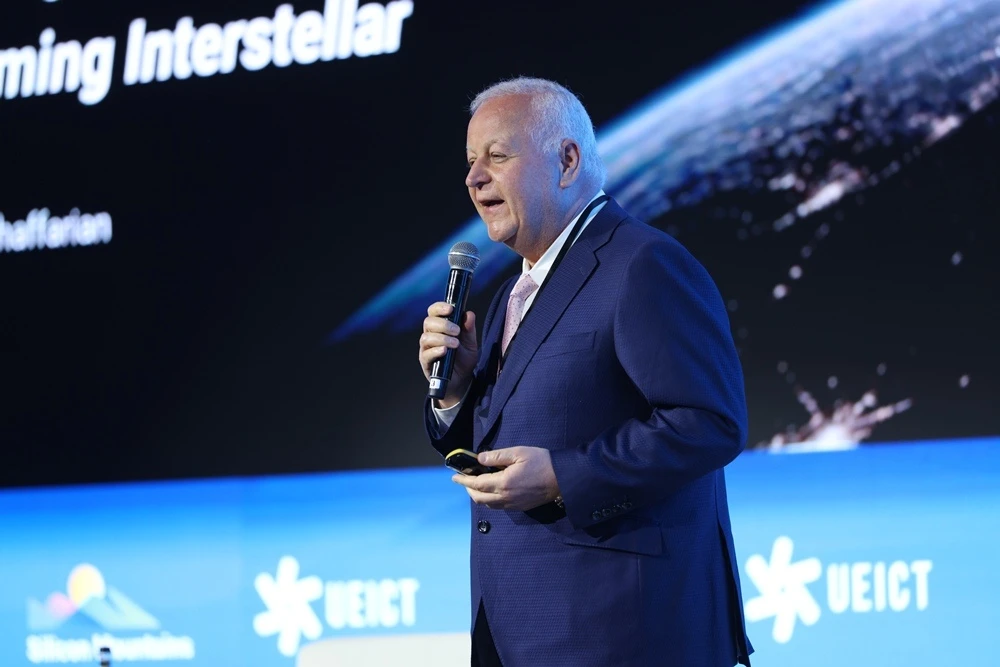
By 2050, Earth orbit could be home to a permanently operating space city, manufacturing facilities, schools and data centers, with flights becoming so routine that launches take place every hour. This forecast was presented by Dr. Kam Ghaffarian, an entrepreneur and co-founder of several aerospace and energy companies, during his speech at Silicon Mountains 2026 in Yerevan.
From an orbital station to a space city
According to Ghaffarian, the first stage of further space exploration will be the transition from the International Space Station to new commercial orbital infrastructure. The next steps should be establishing a permanent base on the Moon, exploring Mars and venturing beyond the Solar System.
One of the key projects in this area is Axiom Space, which Ghaffarian co-founded. The company is developing the first private commercial space station, which is ultimately intended to replace the International Space Station. The first module is scheduled to launch by the end of 2028. Initially, it will be docked to the ISS and operate alongside it, before separating to form the foundation of an independent station.
According to the entrepreneur, the development of orbital infrastructure is gradually becoming the responsibility of private companies, which are taking on the creation of the next generations of space platforms. Axiom Space is also developing a spacesuit for the Artemis program, designed for astronauts working on the lunar surface. Ghaffarian emphasized that it is effectively a personal spacecraft that will allow astronauts to remain on the lunar surface and work there for 10–12 hours.
Another area of focus will be the development of lunar infrastructure. Intuitive Machines, another company founded by Ghaffarian, achieved the first-ever successful landing of a private spacecraft on the Moon in 2024. The company is now developing around six more lunar landers, as well as a communications system for cislunar space. Satellites capable of operating beyond low Earth orbit for extended periods, maneuvering and changing their position in space are expected to become an important part of this infrastructure. Quantum Space is developing such spacecraft, including for national security missions. Ghaffarian estimates that its multimodal technology could reduce the cost of reaching orbits beyond low Earth orbit by 70%.
Space manufacturing and orbital data centers
Ghaffarian predicts that space infrastructure will undergo significant changes over the next 25 years. He estimates that by 2050, at an altitude of around 400 kilometers above Earth, there could be not merely an orbital station but a fully fledged space city where people live and work permanently. He envisions artificial gravity, manufacturing facilities, schools and regular transport links with Earth. Launches and returns could take place every hour.
The entrepreneur believes such a city will offer opportunities to manufacture optical fiber and semiconductors and host orbital data centers. In his view, advances in artificial intelligence, robotics and quantum computing will accelerate the development of the technologies needed to make this possible.
A separate area of focus is pharmaceutical manufacturing in space. Ghaffarian announced plans for a joint venture with one of South Korea's largest pharmaceutical companies. Its goal is to establish space-based production of drugs that are impossible or extremely difficult to manufacture under conditions on Earth.
Microgravity and the characteristics of the space environment could open up new opportunities for research and manufacturing in pharmaceuticals, microelectronics and other high-tech industries. In the future, Axiom Space's commercial orbital station is intended to provide companies with infrastructure for such experiments and manufacturing processes.
Another area of research concerns the effects of the space environment on the human body. Ghaffarian drew attention to observations suggesting that time spent in low Earth orbit may be accompanied by the acceleration of certain aging processes. Researchers associate this, in particular, with radiation exposure and changes in the functioning of the immune system's T cells.
He said that studying these processes could eventually help researchers better understand the mechanisms of aging and find ways to slow it down or even reverse certain changes. For now, however, this remains a field of research rather than an established medical technology.
Nuclear energy and propulsion for flights to Mars
Ghaffarian identified energy availability as one of the main prerequisites for further space exploration. In his view, the growing demands of artificial intelligence, data centers and industry will drive a major expansion of the energy sector. He believes energy will become one of the leading areas for technology investment in the coming decades.
In this context, the entrepreneur attaches particular importance to small modular nuclear reactors (SMRs). X-energy, the company he founded, is developing these systems and, according to Ghaffarian, has an order book for nearly 80 reactors. Its activities include supplying Amazon data centers that support artificial intelligence infrastructure, as well as projects in the United Kingdom and the United States. In Texas, in particular, the first facility for chemical company Dow is under construction.
Ghaffarian stressed that nuclear energy is important not only for meeting the growing needs of the terrestrial economy. It could also become one of the key prerequisites for long-distance spaceflight. The development of safe nuclear technologies will make it possible to create power systems for expeditions to other planets.
An even more ambitious project involves nuclear fusion rocket engines. Helicity, a company in which Ghaffarian recently invested, is developing technologies that he estimates could eventually reduce the travel time from Earth to Mars from the current roughly nine months to nine days.
For now, this remains a technological prospect rather than an operational space transportation system. But the entrepreneur believes it is precisely such developments that could fundamentally transform the possibilities for exploring the Solar System.
What role could Armenia play in the new space economy?
A separate part of the speech focused on opportunities for Armenia. Asked in which segments of the space industry a small country with limited financial resources but strong engineering traditions could become competitive, Ghaffarian suggested rethinking the approach to technological development.
“Reimagine Armenia,” he said, urging a focus not on the industries that shaped the economy in the past, or even solely on today's technologies, but on the fields that will shape the future. He highlighted energy, artificial intelligence, robotics and quantum computing among these areas. In his view, investment in these fields could lay the foundation for the country's technological development.
Ghaffarian also drew attention to the importance of Armenia's participation in space programs. He expressed hope that it would be possible to send an Armenian astronaut into space in the future. He said that having representatives of the country take part in space missions is not merely symbolic, but can also inspire the younger generation to pursue engineering and science education.
The entrepreneur said that over the past four years, Axiom Space has sent 12 private astronauts into space from various countries, including Israel, the United States, Canada, Saudi Arabia, European nations, India and others. In his view, such missions help broaden countries' participation in space activities and stimulate young people's interest in science and technology.
An interstellar future as a long-term goal
Ghaffarian views the exploration of the Moon and Mars not as ultimate goals, but as intermediate steps toward a more ambitious objective: taking humanity beyond the Solar System.
The nearest star to the Sun, Proxima Centauri, is about 4.25 light-years away. Reaching it will require fundamentally new propulsion systems, power systems and life-support technologies. The entrepreneur therefore believes it is essential to begin developing a whole range of interconnected fields today, from orbital infrastructure and nuclear energy to artificial intelligence and new ways of traveling through space. “The ultimate destiny of all humanity is to become an interstellar species,” Ghaffarian declared.