make preferable
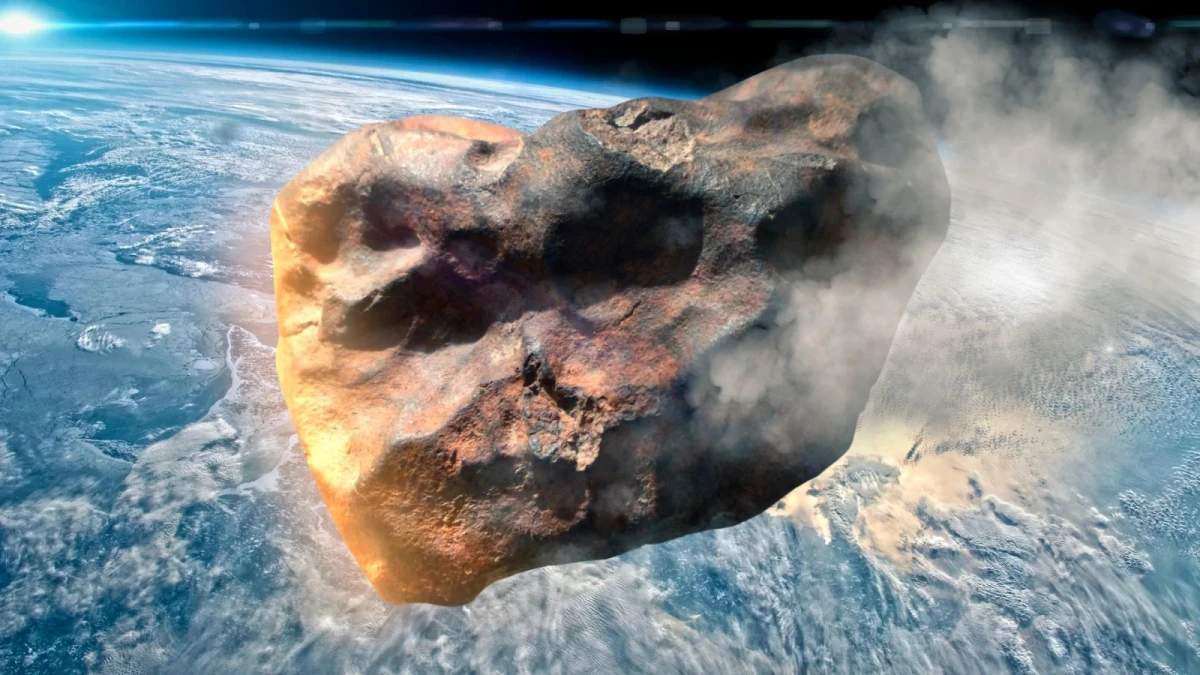
Space rocks that reach Earth's surface undergo a far more complex and destructive journey than previously thought. After studying videos and photographs of 75 meteorite falls, researchers identified seven stages of their interaction with the atmosphere. They found that evaporation is not the only process playing a key role in the mass loss and deceleration of these space objects: melting followed by fragmentation is also crucial.
The findings were published in the journal Meteoritics & Planetary Science. They help explain how meteorites survive their passage through the atmosphere and shed light on the behavior of larger asteroids capable of exploding in midair.
“We used to think that solid rocks evaporated because of the intense heating and bright glow as they encountered the atmosphere. However, we found that mass loss is driven primarily by melting and then fragmentation,” said the study's lead author, Peter Jenniskens, a meteor astronomer at the SETI Institute and NASA's Ames Research Center.
From a Glowing Streak to a Fireball
As ScienceDaily reports, in the first stage, a space rock enters the atmosphere at high altitude. When the air becomes dense enough, a shock wave forms ahead of the object. Collisions with air molecules heat both the rock's surface and the surrounding gas. They begin to glow, creating a bright trail that observers call a meteor, or shooting star.
In the second stage, the object moves through increasingly dense layers of the atmosphere, and its glow intensifies. Sometimes its brightness varies periodically: these fluctuations allow researchers to estimate the space object's rotation rate. Among the fastest-spinning objects examined in the study, a full rotation took between half a second and five seconds.
In the third stage, the meteor becomes a brilliant fireball, or bolide. This is when melting becomes the main mechanism of mass loss. The airflow strips molten material from the surface, releasing droplets that subsequently evaporate.
The researchers note that laboratory experiments cannot yet fully reproduce the conditions of a space object's natural entry into the atmosphere at immense speed. According to Eric Stern, formerly of NASA Ames and now chief scientist at Hyperspace Technologies, if extensive fragmentation of the rock were the dominant process, the observed pattern of changes in fireball brightness would look different.
The fourth stage begins at an altitude of roughly 60 kilometers. Melting reaches a relatively steady state, and the fireball's brightness stops changing sharply or increases more steadily. The scientists calculate that melting alone can ultimately remove up to 40% of the rock's initial mass.
Why Space Rocks Break Apart
As the object descends, air density increases, and pressure on its front surface intensifies. This causes cracks to form and fragments to break off. That marks the beginning of the fifth stage, during which fragmentation may be accompanied by repeated flashes of light.
One unexpected finding was that fragmentation begins at relatively low pressures. According to the researchers, rocks can break apart when the air pressure on their front surface reaches only about one-fifth of the strength measured in meteorites recovered on Earth.
The scientists suggest that a combination of factors may explain this: heating weakens the material during atmospheric entry, while cracks formed in earlier collisions in space make it more vulnerable.
At this stage, the remaining body rapidly shrinks and loses considerable speed. The more extensively it breaks apart, the more rapidly it decelerates. Study co-author Stu Pilorz of the SETI Institute notes that the observed deceleration during fragmentation could be linked to mathematical models that had previously described mass loss during atmospheric passage.
The rock's shape also affects where its fragments end up. If the rear of the body remains intact, a low-pressure region forms behind it, helping keep small fragments close to the main object.
“Our modeling shows that as long as the back of the space rock remains intact, a region of low-density air forms behind it, which fragments tend to enter. That is why small meteorites fall to the ground in a narrow strip,” explains study co-author Darrel Robertson of NASA's Ames Research Center.
The Final Flash and the Fall of Meteorites
The sixth stage begins when the rear of the main body finally breaks apart. This breakup produces a bright flash and scatters fragments at higher relative speeds.
By this point, the space object has already slowed considerably. As a result, the final flashes usually have a reddish hue, unlike the bright green flashes that can be observed earlier in the flight.
“The final breakup scatters fragments at higher relative speeds,” says Jenniskens. According to him, observations of previous falls have shown that meteorites weighing more than 20 grams often end up scattered over a wider area. Many of them probably break away from regions closer to the surface of the original space object, particularly its rear.
In the seventh and final stage, the remaining fragments continue to melt and break apart while losing speed. Once they slow enough to stop emitting visible light, melting ceases. A thin, dark fusion crust forms on their surfaces as a result of brief exposure to high temperatures.
The fragments then complete their fall without a glowing trail. Atmospheric winds can deflect them from their original trajectory, affecting where they land.
What Meteorite Falls Reveal About Dangerous Asteroids
The researchers analyzed 75 recorded falls of different types of meteorites. By comparing the observations, they were able to determine the altitudes at which the space objects transition from one stage to the next.
The findings are important not only for understanding how small rocks reach Earth's surface. They also help researchers study larger asteroids—from car-sized objects to those comparable in size to city blocks—that can explode in the atmosphere and produce powerful airbursts.
By measuring how solid space objects lose speed and break apart during atmospheric entry, scientists will be able to describe more accurately the processes that determine the consequences of such events.
“Asteroids up to several tens of meters across are also solid rocks: they generally rotate faster than larger asteroids made up of loose accumulations of debris,” explains Jenniskens.
According to him, the roughly 20-meter-wide asteroid that caused the airburst over Chelyabinsk in 2013 went through the same seven stages. Understanding the mechanisms of melting and fragmentation in small space objects could therefore help scientists assess the behavior of asteroids that pose a potential threat to Earth.