make preferable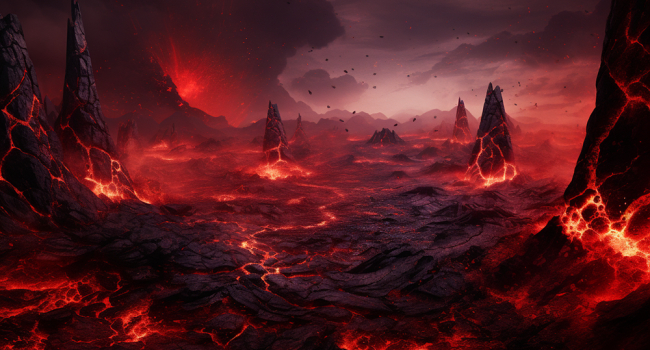
An international team of scientists from the Chinese Academy of Sciences has shown that a large fraction of Earth’s water in its earliest history did not rise to the surface but became locked inside minerals in the mantle. The findings were published in the journal Science.
How Water Moved Into the Planet’s Interior
For a long time, scientists believed that as Earth cooled after its formation, nearly all the water from the global magma ocean rose to the surface and formed the first oceans. The new experiments challenge this picture, showing that enormous amounts of water could have remained trapped deep inside the planet.
The team, led by Professor Wenhua Lu, recreated the extreme pressures and temperatures of the early mantle using a diamond anvil cell and laser heating. Under these conditions, they observed the formation of bridgmanite, the most abundant mineral in Earth’s lower mantle.
They found that hydrogen readily becomes incorporated into the crystal structure of bridgmanite, binding with oxygen atoms. When they compared the water content of the crystals with that of the surrounding melt, it became clear that during the early stages of Earth’s cooling, a substantial portion of water was preferentially absorbed into minerals. This process was especially efficient at very high temperatures, when more structural “vacancies” formed in the crystals, making it easier for hydrogen to enter.
A Gradual Return of Water to the Surface
As Earth continued to cool, bridgmanite’s ability to store water decreased. This created conditions for the slow release of the trapped water back toward the surface, through melting processes and volcanic activity. As a result, Earth’s oceans may not have formed all at once but were instead supplied in pulses over billions of years.
The authors note that some of this water may still remain in the deep mantle today. This means that modern oceans represent only part of Earth’s total water budget. These hidden reservoirs likely played an important role in maintaining long-term climate stability and in making Earth a habitable planet.
In Brief
Scientists from the Chinese Academy of Sciences have found that on the early Earth, vast amounts of water became locked inside mantle minerals, especially bridgmanite. Their experiments show that at high temperatures, hydrogen was readily incorporated into crystal structures, while cooling later allowed water to gradually return to the surface through volcanic processes. This explains why the oceans may have formed progressively rather than instantaneously and suggests that a significant fraction of Earth’s water is still hidden deep underground. The discovery reshapes our understanding of the young planet’s water balance and its path toward becoming suitable for life.