make preferable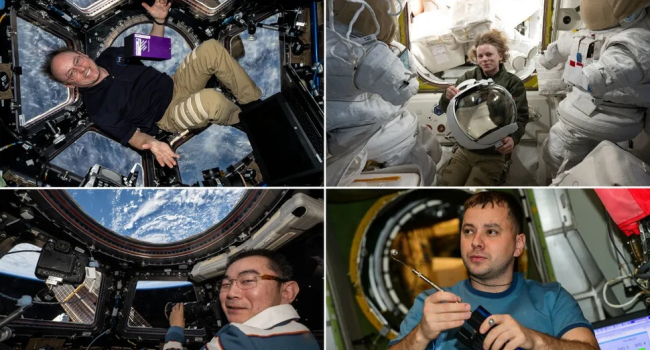
On January 8, 2026, NASA announced a decision to return the four astronauts of the Crew-11 mission from the International Space Station to Earth ahead of schedule due to a medical issue affecting one crew member. This will be the first medical evacuation in the history of the ISS, although the situation is not considered an emergency.
What happened
The Crew-11 mission, consisting of NASA astronauts Zena Cardman and Michael Fincke, Japanese astronaut Kimiya Yui, and Russian cosmonaut Oleg Platonov, arrived at the ISS on August 1, 2025 aboard the SpaceX Crew Dragon Endeavour spacecraft. The mission was planned to last six months, but a medical problem that arose on January 7 forced a change of plans.
The issue appeared on the eve of a scheduled spacewalk by Cardman and Fincke, which was subsequently postponed. NASA did not disclose the identity of the affected astronaut or details of the diagnosis, citing medical confidentiality, but emphasized that the condition is stable.
“This is not an emergency landing, although we always maintain that capability and train for it regularly,” NASA Administrator Jared Isaacman said at a press conference on January 8. He added that the ISS lacks the equipment for full diagnosis and treatment: “The ability to properly diagnose and treat this condition does not exist on the International Space Station.”
The decision to accelerate the return was made in part because the Crew-11 mission is nearly complete, with most objectives already accomplished. The next crew, Crew-12, is scheduled to launch in mid-February, although that timeline may be adjusted.
First medical evacuation in ISS history
The ISS has been continuously inhabited since November 2000, and in a quarter century this is the first case of an early crew return for medical reasons. NASA Chief Medical Officer James Polk noted that statistically such incidents were expected about once every three years.
“This is not an operational problem. This is not an injury sustained during work,” Polk explained. “It is primarily a medical issue occurring in the challenging conditions of microgravity, with a very limited set of diagnostic tools.”
After the departure of Crew-11, three people will temporarily remain aboard the station: American astronaut Christopher Williams and Russian cosmonauts Sergey Kud-Sverchkov and Sergey Mikaev, who arrived on a Soyuz spacecraft on November 27. Williams will become the only NASA representative on the ISS, but according to Deputy Administrator Amit Kshatriya, he is fully prepared: “Chris is trained to perform all tasks on the station. In addition, most operations are controlled from the ground, with thousands of specialists supporting the crew.”
When the astronauts will return
The exact date of Crew-11’s return has not yet been determined. It will be announced in the coming days once spacecraft readiness and weather conditions are confirmed. The Crew Dragon Endeavour is already docked at the station, so technically the return could take place in the near future.
In brief
For the first time in the history of the ISS, NASA will return a crew early for medical reasons. The affected astronaut’s condition is stable but requires treatment on Earth. This is not an emergency, but a planned decision near the end of a six-month mission. After the crew’s departure, three astronauts will temporarily remain on the station, including one American. The situation is under control and highlights the limitations of medical care in space.