make preferable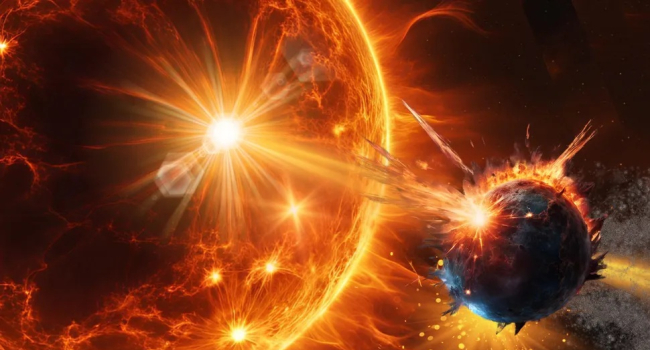
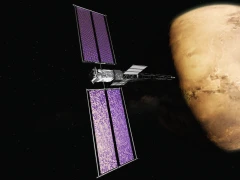
Astronomers from the University of Warwick and University College London analyzed data from the TESS space telescope and found compelling evidence that aging stars like our Sun really do consume their closest planets. This is not just a theoretical model: statistics show that older stars have significantly fewer planets on tight orbits. The study was published in Nature Astronomy.
Why planets disappear around old stars
The researchers compared planetary systems around young main-sequence stars, such as the Sun today, with systems around post-main-sequence stars — giants nearing the end of their lives. In a sample of 456,000 post-main-sequence stars, they identified only 130 planets and candidates on close orbits.
Edward Bryant from the University of Warwick explained that the data show planets becoming less common as stars age. The difference is not because such planets never formed in the first place: the stars have similar masses and compositions. Instead, aging stars effectively become destructive to nearby worlds.
When a star exhausts its hydrogen fuel, it expands into a red giant, with its diameter increasing by hundreds of times. The closest planets are engulfed entirely. Even before that phase, tidal forces accelerate orbital decay: planets lose their atmospheres, spiral inward, and are ultimately torn apart or fall into the star.
The model developed by Bryant and Daniel Van Eylen specifically accounts for tidal orbital decay, and the TESS observations closely match its predictions.
Observational challenges and what this means for us
TESS detects planets via transits, when a planet passes in front of its star. Giant stars have much larger surfaces, which makes the transit signal weaker and planets harder to detect. However, the stars in the sample have masses close to that of the Sun, so their evolutionary paths should be similar.
Sabine Reffert from Heidelberg University, who was not involved in the study, noted that previously there had not been enough statistical data to clearly see the difference in planet occurrence between main-sequence stars and giants. She said that this approach now looks very promising.
Metallicity, meaning the abundance of heavy elements, does affect planet formation, but the main conclusions remain robust.
Earth’s future: five billion years from now
The Sun is currently about halfway through its life. In roughly five billion years, it will expand into a red giant and will most likely engulf Mercury, Venus, and Earth. The new findings offer a preview of our planet’s eventual fate.
The ESA mission Plato, scheduled to launch in December 2026, will provide greater sensitivity and should be able to detect even subtle signs of orbital decay — planets slowly spiraling toward destruction.
In brief
Analysis of TESS data shows that aging Sun-like stars have far fewer planets on close orbits because these planets are destroyed or consumed by tidal forces and stellar expansion. This provides direct evidence of giant stars “eating” their planets. In about five billion years, the same fate likely awaits Earth. Future missions such as Plato will reveal even more details about the final stages of planetary systems.