make preferable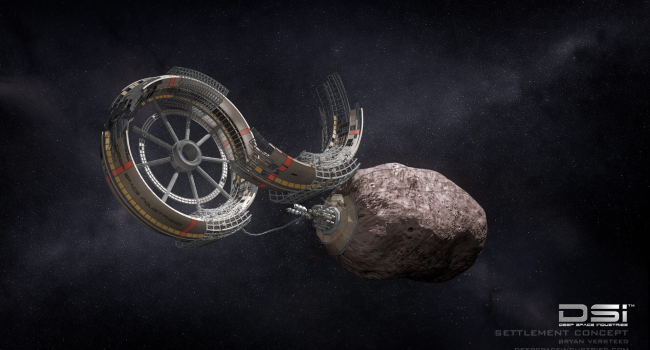
In recent years, asteroids have increasingly drawn the attention not only of astronomers but also of engineers. A new study from the Institute of Space Sciences shows that small carbon-rich bodies — C-type asteroids — may become true resource reservoirs if approached wisely. The work, published in Monthly Notices of the Royal Astronomical Society, offers a fresh perspective on the chemistry of these objects.
Six Classes of Chondrites: What Asteroids Hide
The research team analyzed samples of carbonaceous chondrites — the rare meteorites that make up only a few percent of all those falling to Earth. They classified six main groups and compared their chemical composition with surface data from asteroids. This allowed them to conclude that C-type asteroids are not simply rocks but genuine “building blocks” of the early Solar System, rich in carbon and possibly water.
Graduate student Pau Grebol Thomas, one of the authors, emphasized indirectly that the team’s goal had been to understand whether extracting resources from such bodies was even justified. The researchers found that rare metals are far less abundant than once hoped, and the mechanics of regolith — the loose layer of dust and fragments — makes large-scale mining extremely challenging. However, for testing and small-scale operations, these bodies appear ideal.
Challenges and Solutions: From Regolith to Water
Most small asteroids are loose rubble piles covered in regolith. Taking a sample is easy, but industrial-scale extraction demands new approaches. The authors suggest starting with water: it is the most valuable resource in space, enabling fuel production and supporting mission autonomy. This would require technologies for gentle capture and processing — methods that avoid breaking apart the asteroid in the attempt to retrieve material.
Interestingly, such techniques could also help protect Earth by gradually reducing the mass of a hazardous asteroid and altering its orbit. Grebol Thomas noted indirectly that what seemed like science fiction three decades ago — returning samples from asteroids — is now reality, and industrial-scale resource extraction may advance the same way, depending on the technologies developed.
In Brief
A new MNRAS study refines the chemistry of C-type asteroids based on six classes of chondrites. These bodies are poor in rare metals but rich in water and carbon. Mining is limited by regolith mechanics, but the best starting point is extracting H₂O to support autonomous missions. Gentle-capture technologies could both enable resource extraction and help neutralize hazardous objects. This marks a step toward real space mining, where asteroids may one day serve as fuel depots for spacecraft.