make preferable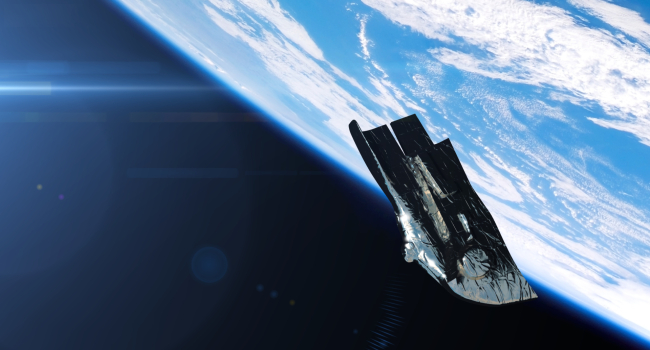
The conspiracy theory surrounding the so-called “Black Knight” satellite claims that a mysterious, extraterrestrial object has been orbiting Earth for 13,000 years—and that NASA is hiding the truth about its existence. Photographs taken during the 1998 Space Shuttle STS-88 mission are cited by UFO enthusiasts as “proof” of this ancient satellite. However, scientists and astronauts offer a far more mundane explanation: it was just a lost thermal blanket. Space.com explores the origin of the myth, its enduring popularity, and what’s really behind the “Black Knight.”
The 1998 Photos: What Did the Astronauts See?
In December 1998, during the Endeavour shuttle’s STS-88 mission—the first American mission to assemble the International Space Station (ISS)—astronauts were photographing Earth and their work in orbit. One of the photos, taken by cosmonaut Sergey Krikalev, shows a dark, angular object against the blue backdrop of Earth. Conspiracy theorists quickly dubbed it the “Black Knight,” claiming it was an alien satellite monitoring humanity.
NASA, however, cataloged the object in photo STS088-724-66 as space debris. Astronaut Jerry Ross, who participated in the mission, explained that it was a thermal blanket lost during a spacewalk while installing insulation on the ISS module. Mission commander Robert Cabana even radioed Ross: “Jerry, one of the thermal blankets floated away from you.” The object floated in orbit for several days before burning up in Earth’s atmosphere. Former NASA engineer James Oberg, who worked on the STS-88 mission trajectory, confirmed that the photos show ordinary debris—not an alien craft. He noted: “Every part of this story matches what I know as a space operations specialist—why the blanket was needed, how it detached, and why it floated the way it did.”
Where Did the Myth Come From?
The legend of the “Black Knight” is a patchwork of unrelated events that conspiracy theorists stitched together into a single narrative:
- 1899 – Nikola Tesla: The famed inventor claimed to have received strange radio signals in his Colorado Springs lab. He speculated they could come from aliens, but scientists believe they were likely natural phenomena (e.g., signals from the galactic center) or terrestrial interference. Pulsars, a possible explanation, were only discovered in the 1960s.
- 1927 – Jørgen Hals: A Norwegian radio amateur recorded “long-delayed echoes” (LDE)—radio signals that returned with several seconds’ delay. This phenomenon remains not fully explained but is attributed to natural or technical causes, not alien satellites.
- 1954 – Donald Keyhoe: A retired U.S. Air Force major claimed that the military had detected two satellites in orbit, even though no country had yet launched one. His statements were likely promotional material for his UFO book and were never substantiated.
- 1960 – A Mysterious Object: TIME magazine reported that the U.S. Navy discovered a “dark object” in orbit, thought to be a Soviet spy satellite. It was later identified as debris from the American Discoverer 8 satellite, part of the CORONA reconnaissance program.
These unrelated events were compiled in 1973 by Scottish writer Duncan Lunan, who speculated that Hals’s echo signals might have come from an alien probe in lunar orbit, created by a civilization from the Epsilon Boötis star system 13,000 years ago. Lunan later admitted his methods were unscientific and retracted his conclusions.
Why the Myth Persists
Despite NASA’s explanations, the STS-88 photographs became “key evidence” for conspiracy theorists. The object in the images appears unusual—angular, twisted, and lacking typical satellite features like solar panels or markings. In weightlessness and unusual lighting, the thermal blanket appeared three-dimensional, enhancing the illusion of an alien craft. Oberg noted that “for people only familiar with Earth-bound behavior, the motion of objects in space can look strange.”
Several factors fuel the theory’s continued popularity:
- Psychology: The human brain is wired to find patterns and hidden meanings, especially in ambiguous situations. Unusual images easily invite supernatural interpretations.
- Cultural Interest: Public fascination with UFOs and UAPs (Unidentified Aerial Phenomena), fueled by government disclosures, makes such stories especially appealing.
- Social Media: Platforms like YouTube and TikTok spread videos with dramatic music and speculation, amplifying the myth. Posts on X in 2025 still refer to the “Black Knight” as a 13,000-year-old satellite, despite repeated debunking.
- Distrust of Authorities: Some theorists believe NASA is deliberately hiding the truth, especially since links to the STS-88 photos on NASA’s website have become unavailable—interpreted by some as evidence of a cover-up.
The Truth: A Blanket, Not a Beacon
NASA and experts like James Oberg and Flinders University archaeologist Alice Gorman stress that the “Black Knight” is a case of mistaken identity. Thermal blankets, used to insulate spacecraft components, are commonly lost during spacewalks and can look unusual due to light effects and zero gravity. The STS088-724-66 object burned up in the atmosphere within days—typical behavior for small space debris. Moreover, the notion of a satellite remaining in orbit for 13,000 years defies orbital mechanics: without propulsion or course correction, such an object would not maintain a stable orbit.
Other “evidence,” such as Tesla’s signals or Hals’s echoes, also have natural or technological explanations. Tesla’s signals likely originated from galactic sources or early pulsars. Hals’s echoes may have resulted from radio waves reflecting off Earth’s ionosphere—not from an alien probe.
The Bigger Picture: Why Space Myths Thrive
The “Black Knight” is a textbook example of how disconnected events and lack of context can generate conspiracy theories. Similar stories—such as claims that astronaut Gordon Cooper saw UFOs in 1963—have also been debunked; neither NASA records nor Cooper’s personal writings support such events. Social media and pop culture continue to feed interest in these tales, especially amid ongoing UAP discussions. For instance, the 2023 U.S. Congressional hearings on UFOs reignited speculation about the “Black Knight,” despite NASA finding no evidence of extraterrestrial satellites.
In Conclusion
The “Black Knight” is not an alien satellite but a myth woven from misinterpretations and humanity’s love of mystery. The 1998 STS-88 photos of a lost thermal blanket became the basis for speculation despite clear explanations from NASA and experts. Tesla’s signals, Hals’s echoes, and other events attributed to the “Black Knight” have down-to-earth scientific explanations. Yet the legend lives on, fueled by distrust, imagination, and a yearning for proof that we are not alone. Like many space myths, the story of the “Black Knight” reminds us that reality—though often simpler than fantasy—is no less fascinating.