make preferable
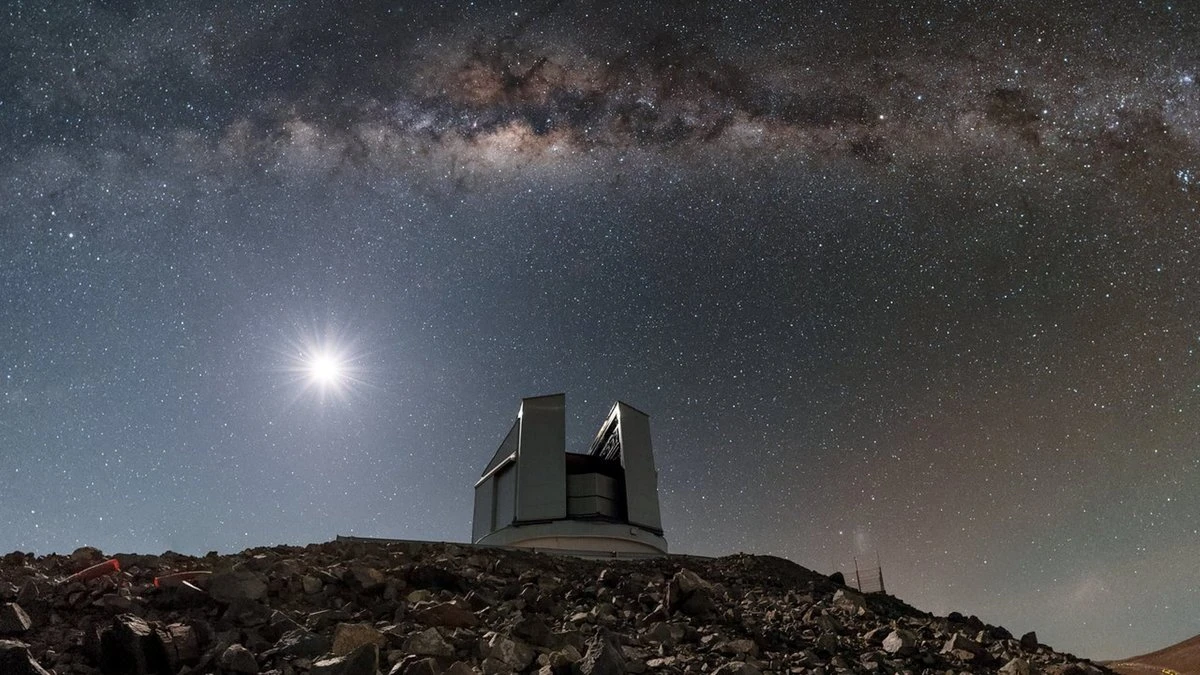
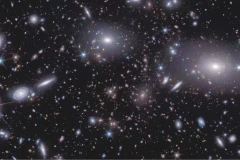
An international team led by the University of Western Australia has begun the main phase of WAVES, a large-scale observing program using the 4MOST telescope. Over five years, researchers plan to collect data on millions of galaxies and trace how the large-scale structure of the Universe has changed over roughly the past seven billion years.
The project aims to determine how dark matter influences galaxy formation and the distribution of matter in space, and to test which existing models best agree with observations.
Mapping the cosmic web
The 4MOST telescope is located at Paranal Observatory in Chile. Following 15 years of development and international collaboration, it can collect light from thousands of astronomical objects simultaneously.
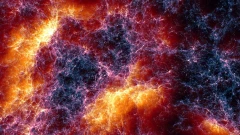
As part of WAVES, scientists will measure galaxies' distances, motions, and other properties. They will use these data to build a detailed map of the cosmic web—a system of galaxy groups and clusters linked by large-scale structures and separated by vast voids.
This map will make it possible to study not only the galaxies themselves, but also how matter is distributed in space. This distribution carries information about the gravitational influence of dark matter.
Searching for differences between models
Dark matter cannot be observed directly at any wavelength of electromagnetic radiation, but its gravitational effects influence the formation and arrangement of galaxies. Different theoretical models predict slightly different structures of the Universe.
According to Professor Simon Driver, WAVES aims to measure these subtle differences. As the program's scientific lead, Sabine Bellstedt, explains, previous observations lacked the resolution needed to reveal some of them. She compared the future map to an image of Australia in which individual bays and beaches would be distinguishable instead of a blurred outline.
The project therefore does not seek to detect dark matter directly. Instead, it is intended to test which models best explain the observed structure of the cosmos.
Data preparation and new computational methods
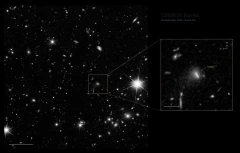
Before the survey began, researchers processed a large collection of existing astronomical images. They selected candidate galaxies for observation, distinguished stars from galaxies, and compiled precise target catalogs.
The University of Western Australia also led the development of software to process the forthcoming data. According to project co-author Luke Davies, the volume and rate of incoming information require new computational methods that have not previously been used in astronomy on this scale.
The preparatory work and the program's objectives are described in the journal Nature Astronomy. If WAVES succeeds in measuring the structure of the Universe with the required precision, astronomers will gain a new way to compare theoretical dark matter models with the observed cosmic landscape.