make preferable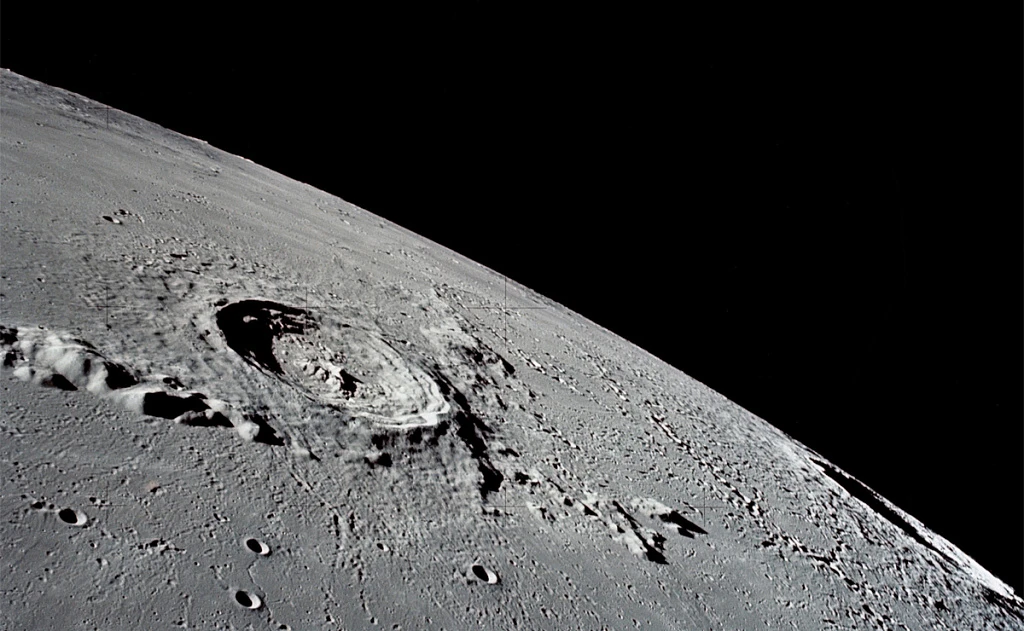
Scientists have found new evidence that the differences between the Moon’s near side and far side may have arisen because of the movement of molten rock inside the young satellite. Analysis of samples delivered by China’s Chang’e-6 mission in 2024 showed that the Moon’s mantle may be relatively uniform in chemical composition, while its crust differs noticeably between the two hemispheres. Researchers suggest that heat and Earth’s gravitational influence played a key role.
Two Sides of One Satellite
The side of the Moon facing Earth is covered with vast dark plains — traces of ancient volcanic activity. These regions contain relatively large amounts of potassium, rare earth elements, and phosphorus. The far side looks different: it is dominated by ancient, heavily cratered highlands, and volcanic plains are much less common there. In addition, the far-side crust is thicker.
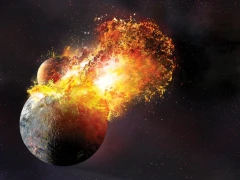
Why the two hemispheres of the same celestial body differ so greatly has been debated by scientists for decades. Proposed explanations have included uneven movement of molten rock in the interior, a giant impact, tidal heating from Earth, and особенности формирования лунной коры.
Another question also remained: are these differences limited to the surface and crust, or do they extend deeper into the Moon’s mantle?
What the Far-Side Samples Revealed
In 2024, China’s Chang’e-6 mission delivered soil from the Moon’s far side to Earth for the first time. This made it possible to compare it directly with samples collected on the near side by the American Apollo expeditions and China’s Chang’e-5 mission.
A team led by Professor Heqiu Hui of Nanjing University studied three types of rocks: anorthosites, Mg-suite rocks, and mare basalts.
One important result turned out to be unexpected. The basalts brought back by Chang’e-6 carry chemical signatures indicating that they originated from depleted mantle material. A similar pattern is seen in low-titanium basalts collected on the Moon’s near side.
Similarities were also found in the analysis of Mg-suite rocks. Their Mg# value — the ratio of magnesium to iron — was close in samples from both sides of the Moon. These rocks form through interactions between the crust and mantle, including when part of the accumulated mantle material undergoes partial melting.
The results indicate that the materials that crystallized in the ancient lunar magma ocean and formed the basis of the mantle did not separate into two hemispheres with sharply different compositions.
The Crust Preserves Signs of Ancient Redistribution of Material
In the crust, the differences are much more pronounced. Anorthosites from the Chang’e-6 samples have higher maximum Mg# values than comparable rocks from the near side. This points to a higher content of magnesium-rich material in the crust of the far hemisphere and is consistent with remote sensing data.
Differences were also found in Mg-suite rocks. Samples from the far side contained extremely low amounts of rare earth elements, and the thorium-to-samarium ratio (Th/Sm) was lower than in samples from the near side.
Scientists are considering two possible explanations. The magmas from which these rocks formed may have developed on the far side without significant involvement of material enriched in the so-called KREEP component. Alternatively, the layer containing such elements may itself have been unevenly distributed across the Moon from the start.
KREEP is material rich in potassium, rare earth elements, and phosphorus. It is associated with the late stages of crystallization in the ancient lunar magma ocean. An uneven distribution of this material may have influenced how the two hemispheres later evolved.
How Earth’s Gravity May Have Changed the Moon
The researchers proposed a scenario linking the chemical differences to the satellite’s early thermal history.
At first, the global magma ocean cooled and crystallized relatively evenly. As a result, the first layers of mantle material and the anorthositic crust formed. Later, the Moon became tidally locked: its rotation period synchronized with its orbital motion, so the same hemisphere has always faced Earth.
At that time, the Moon was much closer to our planet. According to the proposed model, Earth’s tidal forces produced stronger heating on the Moon’s near side than on the far side. The resulting temperature difference may have triggered large-scale horizontal movement of molten rock.
Hot magma moved from the near side to the far side, carrying with it already formed magnesium-rich material. Over time, this may have led to the buildup of additional material in the crust of the far hemisphere — and helped explain why it became thicker and richer in magnesium.
The remaining melt, according to the model, moved mainly in the opposite direction. As a result, more late-stage crystallization products became concentrated on the near side, including materials enriched in KREEP and ilmenite.
Why This Matters
The proposed model explains how the Moon could have ended up with a relatively compositionally uniform mantle while still having such different hemispheres. This does not necessarily require assuming that the original material beneath each side of the Moon was strongly different from the beginning: uneven heating and redistribution of material during the period when the Moon still retained a significant portion of its interior in a molten state would be enough.
However, this is still an explanatory scenario, not the definitively established history of the Moon’s formation. The new samples give scientists a rare opportunity to test such hypotheses directly through rock composition, rather than relying only on orbital observation data.
Further study of soil from the far side will help clarify exactly how the lunar crust and mantle formed and what role Earth’s interaction with its closest satellite played in that process.