make preferable

A new energy storage technology based on vitamin B12 could eventually offer a safer alternative to conventional lithium-ion batteries. Researchers at the University of Córdoba in Spain have developed a prototype rechargeable zinc-air battery in which vitamin B12 acts as a catalyst for chemical reactions. The prototype withstood up to 250 charge and discharge cycles.
The development opens up further possibilities for creating compact power sources and electricity storage systems. Although the technology is still at the research stage, the experiment confirmed that a biological molecule can be used as an active component in a rechargeable battery.
How the vitamin contributes to energy generation and storage
The prototype was developed by the FQM-204 physical chemistry research group at the University of Córdoba's Institute of Chemistry for Energy and the Environment (IQUEMA).
The development is based on zinc-air technology. This type of battery uses zinc and oxygen from the surrounding air to generate electricity. Vitamin B12, also known as cobalamin, enables the necessary electrochemical reactions to take place.
To use the vitamin in a battery, the scientists attached its molecules to single-walled carbon nanotubes. At the center of the B12 molecule is cobalt in the +3 oxidation state, which facilitates the chemical reactions needed for the battery to operate.
One of the main challenges was keeping the vitamin inside the battery. B12 dissolves readily in water, so when used with an aqueous electrolyte, it could escape from the system's active region. The researchers solved this problem by attaching the vitamin molecules to carbon nanotubes. In developing the method, they used a principle resembling the mechanism by which amino acids bond together to form proteins.
According to Manuel Cano Luna, one of the study's authors, the team investigated the properties of natural substances that could be used to develop new battery technologies.
Why this battery can be recharged
The key achievement is that vitamin B12 helps drive reactions during both battery discharge and charging.
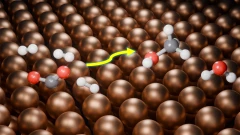
During discharge, the battery converts chemical energy into electrical energy. At this stage, the vitamin promotes the reduction of oxygen to form water. During charging, the process is reversed: the catalyst facilitates a reaction that produces oxygen again.
As researcher Antonio Jesús Fernández Romero explained, vitamin B12 demonstrated the ability to efficiently support both reactions, making it a promising catalyst for rechargeable zinc-air batteries.
The research group had previously experimented with using natural molecules in batteries. In particular, the scientists studied hemoglobin and catalase—biological substances containing iron in different oxidation states. Vitamin B12 was the third molecule the team used as a catalyst. However, it was B12 that enabled them to demonstrate repeated battery recharging—up to 250 cycles.
How zinc-air batteries differ from lithium-ion batteries
Extracting raw materials for conventional lithium-ion batteries involves economic, environmental, and social challenges. Zinc-air batteries are of interest because zinc is readily available and recyclable, and because they offer high energy storage capacity relative to their weight.
Another feature of this design is its use of oxygen directly from the surrounding air. The battery does not need to store all the reactants required to generate energy inside it, which helps reduce its weight.
An additional advantage is the aqueous electrolyte, which is not a flammable liquid. This design could reduce the risk of fire compared with batteries that use combustible electrolytes.
Zinc-air batteries are already used in compact electronic devices, particularly hearing aids. However, developing efficient rechargeable versions remains a challenge. This requires a catalyst capable of supporting reactions in both directions. Using vitamin B12 could help solve this problem.
In the future, the technology could be used in systems that store electricity generated by solar panels and wind turbines. These sources generate power intermittently, so batteries are needed to store surplus electricity for use when generation falls.
This article is based on material from Science Daily