make preferable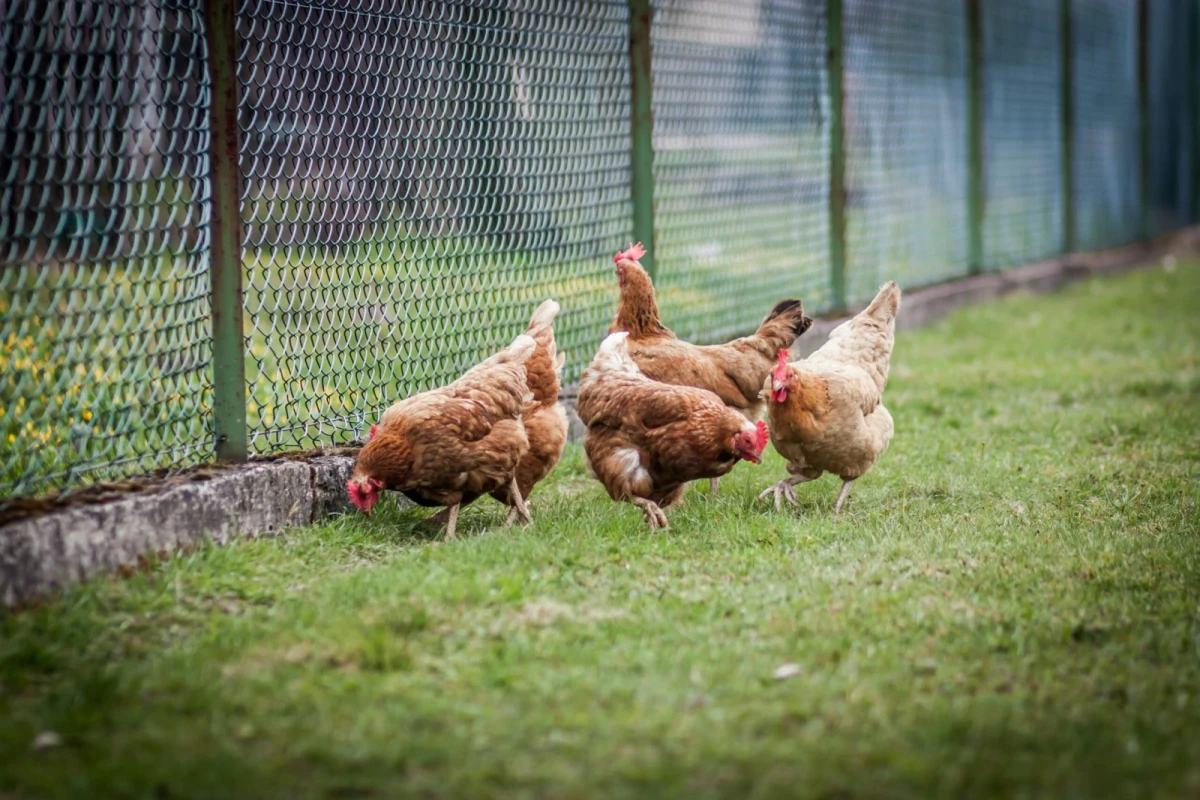
Researchers in India have developed an energy-storage material based on chicken feathers. After thermal treatment, the feathers are transformed into porous carbon, which, when combined with zinc gallium oxide, improves the performance of supercapacitors — devices capable of rapidly storing and releasing charge. In experiments, the material demonstrated a specific capacitance of 642 farads per gram, and after 5,000 charge-discharge cycles, the device retained 94% of its initial capacitance.
The study results were published in the journal Scientific Reports. The development could help use poultry industry waste to create long-lasting energy storage devices.
How feathers help store charge
The technology is based on keratin, the protein that chicken feathers are made of. By heating them, the researchers converted the feathers into a porous carbon framework. Its structure facilitates ion movement and charge storage within the electrode.
The carbon was then combined with zinc gallium oxide, a semiconductor material that participates in the functioning of the composite. The resulting combination made it possible to improve the electrode’s electrochemical characteristics.
In tests, its specific capacitance reached 642 farads per gram. This is a measure of the material’s ability to store electric charge when voltage changes. However, the high capacitance of an individual electrode does not by itself mean that a finished device will be able to store more energy than a conventional battery: such a comparison requires data on the characteristics of the entire energy-storage device.
How supercapacitors differ from batteries
The main advantage of supercapacitors is their ability to charge quickly and deliver high-power energy output. They can also withstand a large number of charge-discharge cycles.
Conventional batteries, including lithium-ion ones, usually have a higher energy density: at comparable sizes, they can power a device for longer. That is why supercapacitors are especially useful where short, powerful pulses matter more than long autonomous operation.
For example, such energy storage devices can smooth out sharp spikes in power consumption in electronics and electric transport. In such systems, they can complement batteries by taking on short-term peak loads.
In the new study, a device based on feather-derived carbon retained 94% of its initial capacitance after 5,000 charge-discharge cycles. This indicates the material’s stability under the conducted tests, although additional studies will be needed to assess its practical service life.
Millions of tons of waste could get a second life
Chicken feathers are one of the by-products of poultry farming. Their durable structure, due to keratin, makes natural decomposition difficult, and in many cases their recycling is limited to use in feed additives and other products.
Converting feathers into a functional carbon material offers an alternative way to utilize this raw material. Instead of becoming waste, it can be used in the production of components for energy-storage devices.
At the same time, the environmental friendliness of the technology has yet to be assessed across the full production cycle. To do this, it is important to take into account the energy costs of feather processing, the reagents used, the scalability of the process, and the characteristics of the finished devices.
Will such energy storage devices replace lithium-ion batteries?
For now, it is premature to talk about replacing lithium-ion batteries. The study demonstrates a promising material for supercapacitors, but it does not prove that devices based on it will be able to provide energy density, cost, and reliability comparable to batteries under real-world conditions.
A more likely area of application is systems that need to deliver power quickly and withstand frequent operating cycles. If the technology can be scaled up without excessive costs, chicken feathers could become an accessible raw material for individual components of energy-storage devices while also helping reduce the volume of poultry industry waste.