make preferable
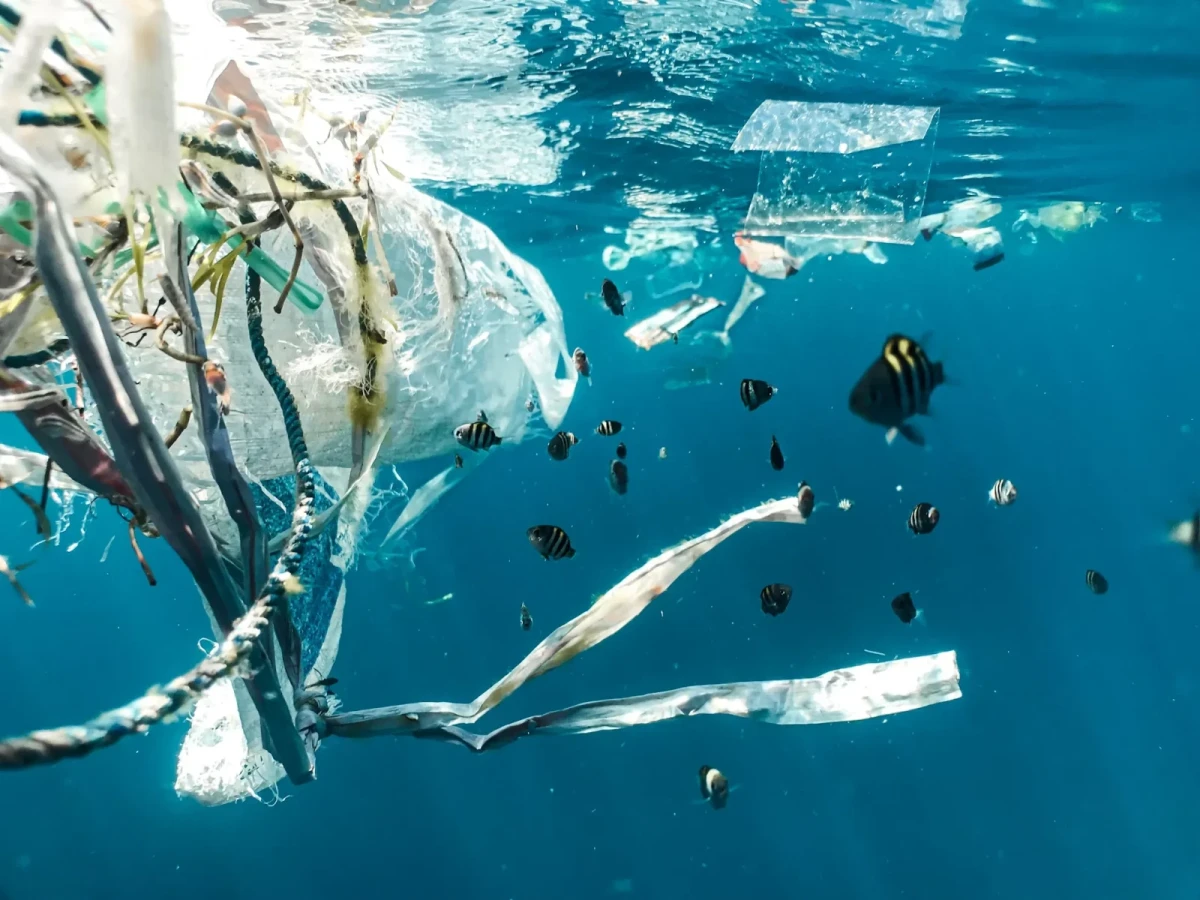
Japanese researchers have developed a way to accelerate the biodegradation of compostable plastic in seawater, including at great depths. By embedding special enzymes directly into the material, they achieved almost complete decomposition of some polymers within five months at a depth of 757 meters. The technology could help reduce the accumulation of plastic waste in the ocean, where conventional compostable materials can persist for a long time.
The study results were published in the journal Nature. The scientists tested the technology in coastal waters and on the seafloor at depths ranging from 757 to 5,503 meters. The experiments used four types of compostable polyesters that are employed as alternatives to traditional plastics.
How enzymes speed up plastic decomposition
Many types of compostable plastic are designed primarily to break down under industrial composting conditions, where elevated temperature, humidity, and high microbial activity are maintained. In the marine environment, the process can proceed much more slowly, especially at great depth because of low temperatures, high pressure, and the characteristics of local microbial communities.
To solve this problem, the researchers incorporated two enzymes into the polymer structure: Candida antarctica lipase B and HiC cutinase. They are capable of cleaving chemical bonds in various polyesters. The enzymes were added directly to the material during thermal processing while preserving their catalytic activity.
The experiments examined polybutylene succinate (PBS), a copolymer of polybutylene succinate and adipate (PBSA), polycaprolactone (PCL), and a copolymer of polybutylene adipate and terephthalate (PBAT). The scientists made thin films and microgranules measuring from 20 to 300 micrometers from these materials to test the technology on materials of different forms.
Almost complete decomposition in five months
At a depth of 757 meters, films made of PBS, PBSA, and PCL containing 3% HiC cutinase by weight lost nearly all of their original mass within five months. By comparison, samples without enzymes showed virtually no degradation over the same period.
In coastal waters, the results were achieved with a much lower enzyme concentration. Films made of PBS, PBSA, and PCL with the addition of just 0.1% HiC lost 27.4%, 100%, and 85.5% of their mass, respectively, within one month. PBAT, however, proved more resistant to breakdown: at a depth of 757 meters, its mass loss over five months was 12.1%.
The researchers also observed accelerated degradation of the materials at a depth of 5,503 meters. For example, PBSA films with lipase lost 30.5% of their mass over 18 months, whereas in control samples without the enzyme this figure was 1.6%. Thus, the effectiveness of the technology depends on the polymer composition, the enzyme used, and environmental conditions.
Tests of the microgranules showed that the enzymes remain active even in small-sized materials. Pores and cracks appeared on their surfaces, indicating the polymer breakdown process.
Preserving strength and the technology’s limitations
One of the goals of the study was to accelerate plastic decomposition without depriving it of the necessary performance properties. With the addition of 0.1% enzyme, the tensile strength of the films remained virtually unchanged. A higher concentration, particularly 3%, could reduce the material’s strength and elongation at break, although the values remained within ranges the authors consider practically applicable.
Chemical analysis showed that the breakdown of the polymers produces soluble products with low molecular weight. Tests with seawater also confirmed that microorganisms are capable of processing some of these products: within one month, the biodegradation rate of a PBS film with 0.1% HiC reached 50.9%, based on measurements of biochemical oxygen demand used to assess the material’s mineralization.
At the same time, the scientists emphasize that accelerated decomposition does not automatically solve the problem of plastic pollution. For broad application of the technology, it will be necessary to consider the cost of the enzymes and the compostable polymers themselves, the rate of decomposition under different conditions, the environmental impact, and the further fate of the breakdown products.
The authors believe the method can be adapted for other products, including fishing nets and lines. However, for practical implementation, its effectiveness and environmental consequences in various marine ecosystems need to be evaluated further.