





 make preferable
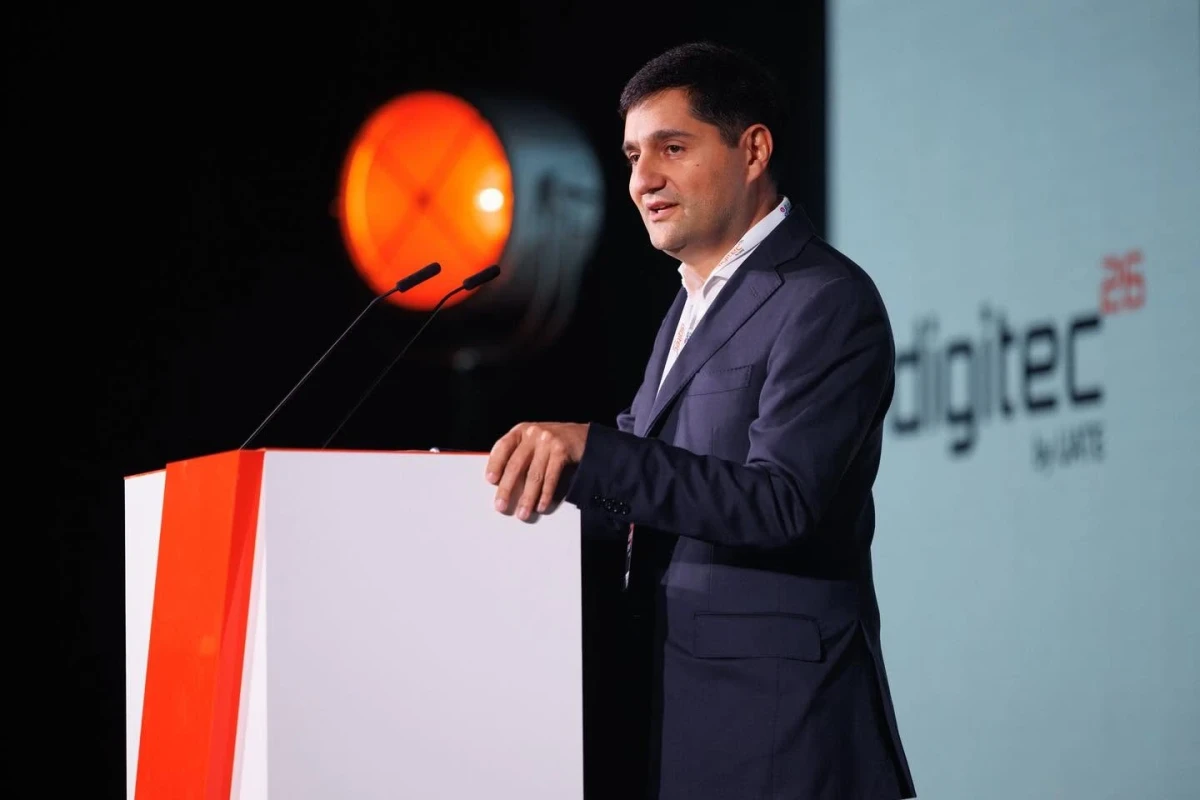
Armenian company Firebird is in talks with 48 countries on projects to build artificial intelligence infrastructure. The company is developing projects in Kazakhstan and Argentina, and its international plans call for computing facilities with a total power capacity of around 500 MW. Company co-founders Alexander Yesayan and Razmig Hovaghimian announced this at DigiConf. In Armenia, Firebird has already begun construction of the second phase of its AI complex in Hrazdan, valued at around $8 billion. The new phase will include eight large data centers and is scheduled to launch around the end of 2027.
From Armenia to Kazakhstan and Argentina: Firebird expands its project footprint
According to Alexander Yesayan, the development of artificial intelligence is transforming the global economy, affecting virtually every industry. He noted that discussions at DigiConf covered the use of AI in computer graphics, rendering and animation, as well as its impact on healthcare. In his view, the next major area will be robotics and so-called physical AI, which will bring changes to the physical world. The spread of these technologies is driving the growth in demand for computing capacity on which Firebird's strategy is based. Yesayan said the company had announced the second phase of its project in Armenia, as well as a project in Kazakhstan worth around $6 billion. A project in Argentina has also been announced.
Hovaghimian confirmed that the Argentina project had already been announced and outlined the company's international plans. According to him, Firebird is developing a project called AFS, and the combined power capacity of the company's projects worldwide is around 500 MW. “We have literally spoken with representatives of 48 different countries. Alexander and I have traveled to many countries. I have been to Tunisia, Paraguay and other places. But the artificial intelligence revolution is happening, and we want to do our part to ensure it is not concentrated in the hands of just a few players,” Hovaghimian said.
He stressed that the company intends to participate in developing AI infrastructure not only in Armenia but also in other countries. In his view, expanding this infrastructure will create more opportunities for the entire market, rather than just a limited number of major players. Firebird plans to bring in strong international partners to implement its projects.
Armenian companies become users of the AI factory
Discussing the development of Armenia's technology ecosystem and Armenian companies' use of Firebird's computing capacity, Hovaghimian noted that the first phase of the complex in Armenia was equipped with a cluster of 6,200 GPUs. Demand for computing capacity, meanwhile, reached 25,000 GPUs.
According to Hovaghimian, the company initially expected a single major customer to use a substantial portion of the cluster. Now, however, Firebird is seeing a more diverse demand pattern: various companies are connecting to the infrastructure, not only using its capacity but also testing technologies and helping improve the product and the platform's software layer. “What makes us even happier is meeting companies that are not just trying out and testing our solutions, helping us improve the product and software layer, but are also actively using our infrastructure,” he noted.
Hovaghimian named Chess.com, ActiveLoop, Pickstart and Krisp among the cluster's users. He also mentioned CyberFusion and the public sector. In addition, he named Perplexity and Firefly among its new users.
Hovaghimian also recalled that the company originally planned to allocate around 20% of its computing capacity to the local market. However, this share could increase as the complex expands and more Armenian companies build their own products on Firebird's infrastructure.
Second phase in Hrazdan will be 15 times larger than the first
Alexander Yesayan said construction of the second phase of the AI complex in Hrazdan had already begun. According to him, large-scale work is underway at the site, with numerous construction companies working day and night.
The second phase will include eight large data centers. Yesayan outlined the scale of the expansion: 45,000 GPUs and another 25,000 additional computing elements. He estimated that the new complex would be around 15 times larger than the first phase.
“We have already started construction. If you go to Hrazdan now, you will see major construction work underway on the second phase. We mentioned 45,000 plus 25,000. These will be eight large data centers. For those who have seen our first phase and the large building there, I can say that the second phase will be around 15 times larger than the first. This really is an enormous, mega-scale construction project,” Yesayan said.
The company expects to complete construction work in March and launch the second phase around this time next year. Thus, if the schedule is met, the new phase of the complex is expected to open in late 2027.
Firebird projects contribution of up to 10% of Armenia's GDP
Yesayan estimated investment in the second phase of the Armenian project at around $8 billion. He stressed that the economic impact would come not only from the creation of infrastructure but also from tax revenues flowing into the country's budget.
According to the Firebird co-founder, corporate income tax and other taxes will be paid in Armenia. He also assessed the project's potential impact on GDP.
“This represents roughly more than $8 billion in investment in the country, which is a substantial sum in itself. In addition, all corporate income taxes and other taxes will be paid in the country. In terms of GDP, this could contribute more than 5–7%, and once operations begin in 2028, the impact on the country's GDP could reach 8–10%,” Yesayan said.
The company therefore expects that once the complex is fully operational in 2028, its contribution to Armenia's economy could reach 8–10% of GDP.