make preferable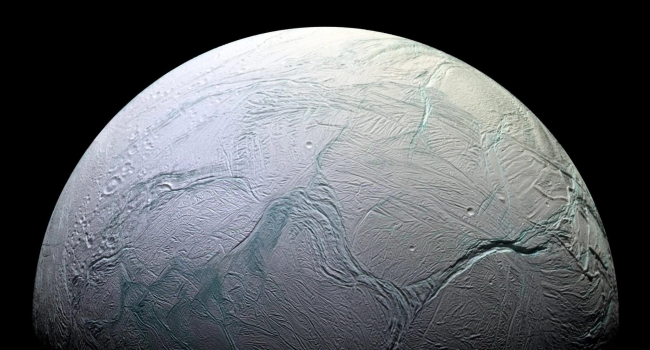
An international team of physicists and chemists from Japan and Germany has successfully reproduced, under laboratory conditions, the environment of the subsurface ocean of Saturn’s moon Enceladus. Their experiments show that complex organic molecules can naturally form in such settings, the same types of compounds that were previously detected by the Cassini spacecraft. The results were published in the journal Icarus.
Why Enceladus Is a Prime Candidate for Life
Enceladus has long been considered one of the most promising places in the Solar System to search for extraterrestrial life. Beneath its icy crust, which is tens of kilometers thick, lies a global ocean of liquid water. Strong evidence for this comes from the powerful geysers in the moon’s south polar region, where jets of water, ice, and organic material erupt through cracks in the surface and feed Saturn’s E-ring.
Between 2004 and 2017, the Cassini spacecraft repeatedly flew through these plumes. Its instruments detected carbon dioxide, methane, simple hydrocarbons, and more complex organic molecules that could act as precursors to biological compounds. A key open question, however, remained unresolved: are these molecules actively produced in Enceladus’s ocean today, or are they relics of ancient material left over from the moon’s formation?
How the Ocean of Enceladus Was Recreated
The research team, led by Max Craddock at the Tokyo Institute of Science, prepared a chemical mixture based on the compounds Cassini found in the plumes, including ammonia, hydrogen cyanide, and other simple molecules. This mixture was placed into a high-pressure reactor and subjected to cycles of heating and cryogenic freezing. These cycles were designed to mimic the physical conditions inside Enceladus, where tidal forces from Saturn generate internal heating and dynamic temperature changes.
After the reactions, the products were analyzed using a laser mass spectrometer configured to replicate the measurement methods used by Cassini. The results were striking. The samples contained amino acids, including glycine, as well as aldehydes, nitriles, and other complex organic compounds. Many of these matched the molecules detected by the spacecraft.
The formation of organic compounds was especially efficient during the freezing phases of the experiment. This suggests that Enceladus’s ocean chemistry alone is capable of producing the basic “building blocks of life,” without requiring external sources such as meteorites.
Implications for the Search for Life
Some of the larger molecules observed by Cassini did not appear in the laboratory experiments. This may indicate that their formation requires higher temperatures, catalytic mineral surfaces, or additional environmental factors not yet included in the setup. Even so, the study strongly supports the idea that Enceladus’s ocean has the chemical potential to sustain prebiotic processes.
This is an important step in interpreting data from past missions and in shaping the goals of future exploration. Although no new missions to Enceladus are currently scheduled, laboratory simulations like these make it possible to continue probing the moon’s hidden ocean and to evaluate how far chemical evolution might proceed beyond Earth.
In Brief
Scientists from Japan and Germany have recreated the chemical environment of Enceladus’s subsurface ocean in the laboratory. Their experiments show that amino acids, aldehydes, and other organic molecules can naturally form from simple compounds under Enceladus-like conditions, matching those detected by Cassini. This demonstrates that the moon’s ocean can independently generate the building blocks of life. The discovery strengthens Enceladus’s status as one of the leading candidates for extraterrestrial habitability and provides valuable guidance for future missions.