make preferable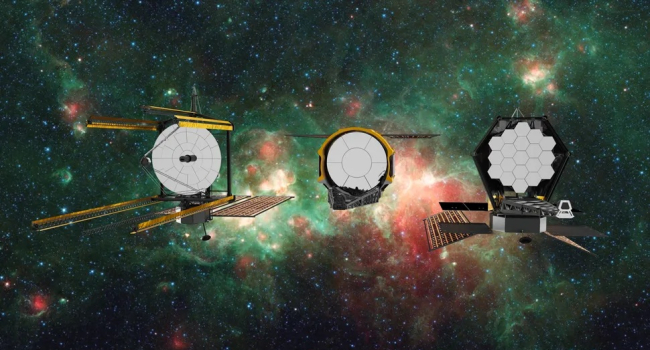
NASA has officially launched a program to develop the key technologies for the Habitable Worlds Observatory (HWO), a future space telescope that is set to become one of the agency’s most powerful tools ever for searching for signs of life beyond Earth. The announcement was made on January 5, 2026.
Seven Companies Awarded Contracts
Seven companies have received three-year fixed-price contracts to tackle the main engineering challenges of the HWO mission:
- Astroscale
- BAE Systems Space and Mission Systems
- Busek
- L3Harris
- Lockheed Martin
- Northrop Grumman
- Zecoat
Each company will focus on solving specific technical problems required to make the telescope possible. HWO is designed to analyze light passing through the atmospheres of exoplanets hundreds and even thousands of light-years away. This is the primary method for detecting potential biosignatures—gases that could indicate biological activity.
NASA Administrator Jared Isaacman emphasized the importance of the project:
He said that this is exactly the kind of bold, forward-looking scientific mission that only NASA can carry out. Humanity is waiting for the breakthroughs this mission can deliver and for answers to questions about life in the Universe. He added that NASA intends to move with maximum urgency and accelerate timelines wherever possible to bring these discoveries to the world.
Major Technical Challenges
HWO will require an unprecedented level of optical stability, with positioning accuracy on the scale of the width of a single atom. Such precision is necessary to separate the faint light of an exoplanet from the overwhelming glare of its host star.
The telescope will also need an extremely powerful coronagraph, a device that blocks starlight so that nearby planets can be observed. According to current plans, this coronagraph must be thousands of times more effective than any existing system.
In addition, HWO is being designed to be serviceable. If it suffers damage or failures, for example from micrometeoroid impacts, NASA plans to be able to send a repair mission, much like the servicing missions that kept the Hubble Space Telescope operating for decades.
Sean Domagal-Goldman, Director of NASA’s Astrophysics Division, explained that such contracts are a critical part of NASA’s mission incubation program, which combines government leadership with commercial innovation to turn today’s impossibilities into tomorrow’s realities.
Timeline and Significance
The launch of the Habitable Worlds Observatory is planned for the late 2030s or early 2040s. By that time, it will rely on technologies that largely do not yet exist and must be invented and perfected over the next decade.
HWO will build on the legacy of the Hubble Space Telescope, the James Webb Space Telescope, and the upcoming Nancy Grace Roman Space Telescope, whose launch is expected in 2026. Unlike its predecessors, however, HWO will be specifically optimized for studying the atmospheres of Earth-like exoplanets and searching for chemical signs of life.
In Brief
NASA has awarded contracts to seven companies to develop the core technologies for the Habitable Worlds Observatory, often described as a future “Super-Hubble” dedicated to the search for life. The telescope will require atomic-scale stability, an ultra-powerful coronagraph, and the ability to be repaired in space. Its launch is planned for the late 2030s or early 2040s. As Jared Isaacman stressed, NASA intends to move with maximum urgency. HWO is expected to become a cornerstone mission for studying exoplanet atmospheres and hunting for biosignatures beyond Earth.