make preferable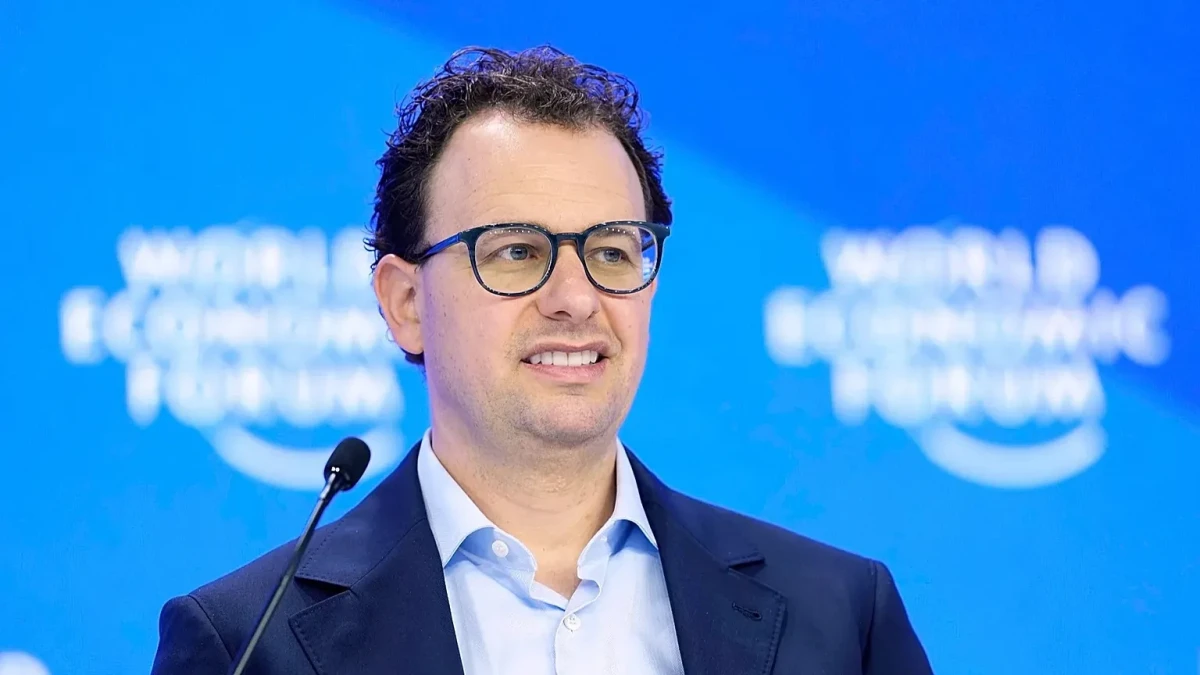
Anthropic CEO Dario Amodei has found himself at the center of a new political conflict over the future of artificial intelligence. Allies of U.S. President Donald Trump are trying to portray him as one of the leading figures in the movement that warns about catastrophic AI risks and calls for slowing the development of advanced models.
The trigger was a memo being circulated among White House officials. It links the effective altruism movement to the formation of today’s AI safety movement and describes Amodei himself as one of the people who helped build that network. The document was prepared by a Trump political adviser who does not work directly in the White House, Axios reports.
The conflict escalated after Amodei urged the tech industry to slow the pace of advanced model development and strengthen safety measures. In September, his position was publicly supported by, among others, OpenAI CEO Sam Altman and Elon Musk.
Effective altruism at the center of the AI dispute
Effective altruism is a philosophical and social movement that proposes using data and rational analysis to direct time and money toward solving humanity’s most important problems. It has gained notable influence in academia, philanthropy, and Silicon Valley.
Over time, one branch of the movement became focused on AI safety. Its supporters warn that the development of powerful systems could create not only economic opportunities, but also extremely serious risks, including the loss of control over AI.
It is precisely this part of effective altruism’s activity that is now facing political criticism from Trump supporters. In the circulated memo, the movement is accused of creating what the authors call an “AI doomer pipeline,” and its values are contrasted with the political course of the Trump administration.
Axios notes that effective altruism is not a centralized organization and brings together people with different views and areas of activity. At the same time, its influence on the development of AI safety research has indeed been significant.
Why Amodei is singled out in the memo
The authors of the document connect early Anthropic employees and supporters to effective altruism, and describe Dario Amodei as one of the people involved in building the relevant network.
At the same time, Amodei himself denies belonging to the movement. Anthropic president Daniela Amodei has also publicly distanced herself from the term “effective altruism,” and people inside the company have emphasized that this philosophy is not its organizational ideology.
Nevertheless, Anthropic’s early history does indeed intersect with the effective altruism community. Axios had previously noted the movement’s ties to the company’s employees and investors.
In the new memo, these connections are grouped under the label “Anthropic knot.” The authors use them as an argument that Amodei’s position on AI safety is part of a broader ideological system.
At the same time, some of the document’s claims are clearly political in nature. For example, the movement is accused of supposedly placing the interests of future generations, animals, or potential machine intelligences above the interests of Americans. This is the memo authors’ assessment, not an established fact.
Amodei is indeed calling for slower AI development
The new attack comes amid a noticeable shift in the public rhetoric of leaders at major AI companies.
On September 12, Amodei published an essay urging the industry to slow the pace of advanced model development. He warned about the risk of losing control over AI systems, their use in cyberattacks and bioterrorism, as well as serious economic consequences. At the same time, the Anthropic chief separately listed the technology’s possible positive effects — from accelerating economic growth to the potential treatment of many serious diseases.
Trump himself has taken the opposite position. The president said that fears that AI could spiral out of control and destroy humanity are exaggerated, and he spoke out against attempts to slow the development of American AI technologies.
Thus, the dispute is no longer only about how dangerous individual models are. At its center are fundamentally different visions of how the United States should develop advanced AI: by expanding its technological advantage as quickly as possible, or by introducing additional restrictions as system capabilities grow.
The conflict between Anthropic and the Trump administration continues
The new attack on Amodei has become another episode in Anthropic’s complicated relationship with the Trump administration.
In early September, U.S. Commerce Secretary Howard Lutnick said that the administration once again trusts Anthropic and considers the company to have returned “to the right side.” However, during the same period, Pentagon official Emil Michael said that Anthropic still retains the status of a threat to supply chains in the American defense sector.
At the same time, the administration continues to need leading AI developers because of their role in U.S. technological and national security. That is why the confrontation around Anthropic combines political disagreements, regulatory issues, and the state’s practical dependence on advanced AI companies.
Now this has been compounded by an ideological dispute surrounding the AI safety movement itself. Amodei has become one of the most visible figures in this conflict — at precisely the moment when Anthropic is preparing for a potential IPO and the debate over how quickly the industry should develop has moved far beyond Silicon Valley.