make preferable
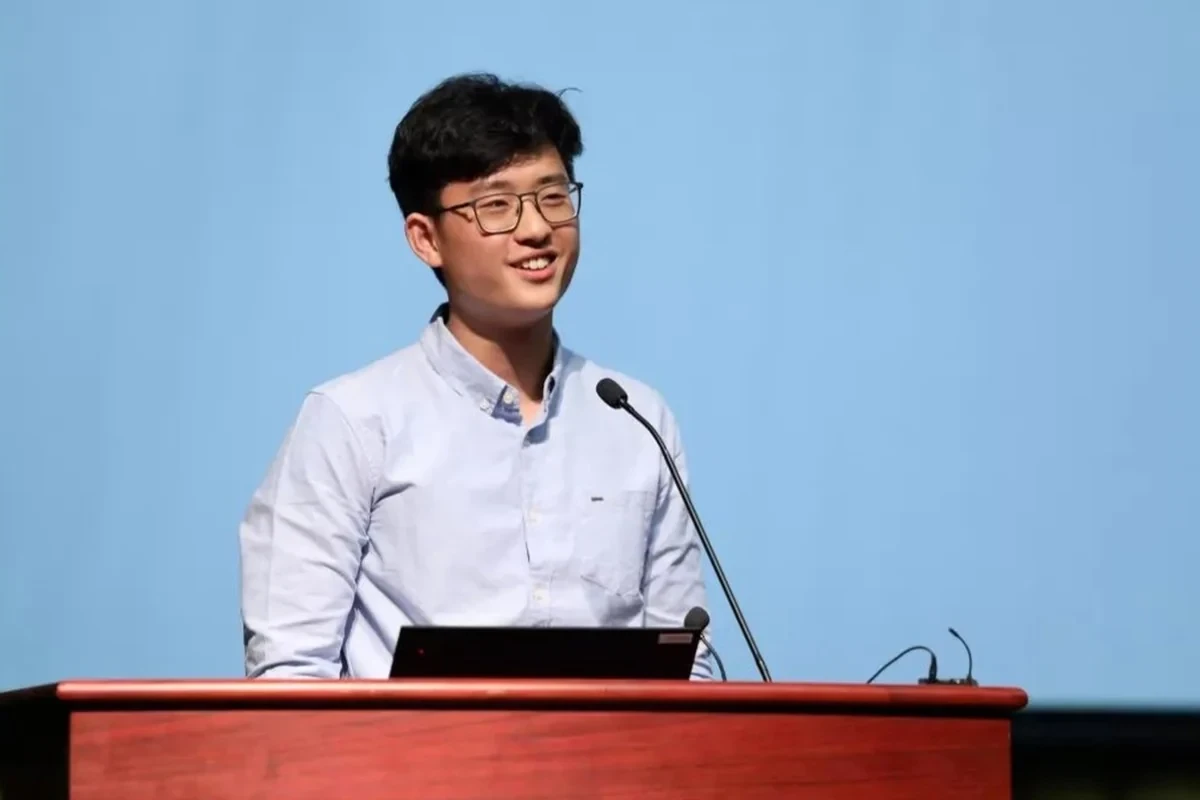
Artificial intelligence could reach a level in the near future enabling it to independently solve complex biological tasks. While this will unlock new opportunities for drug development and medical research, it will simultaneously create severe biosecurity threats, ranging from the creation of biological weapons to the emergence of new pandemics. This warning was issued by Vincent Yao, Chief Scientist at Tencent Holdings, during a scientific symposium organized by the Hong Kong Academy of Sciences and the Future Science Prize Foundation.
According to Yao, the capabilities of advanced AI models in cybersecurity are already approaching the threshold where they could be used to inflict real harm. A similar milestone will soon be reached in biology. "The cyber capabilities of models, and soon their biological capabilities, will reach a level where causing harm becomes entirely realistic," he warned.
Yao urged developers, including Chinese companies releasing open-weight models, to approach safety issues responsibly. He noted that technological progress in this field requires a particularly thorough assessment of potential consequences.
The development of AI in biology is viewed as the next major phase following the rapid advancement of models in coding. The latter has already significantly transformed the global cybersecurity landscape. At the same time, the biological capabilities of AI, much like its cyber capabilities, are dual-use: they can be employed for both defense and attacks. However, experts believe that separating these two sides in biology may prove considerably more difficult.
Tencent is developing autonomous scientific laboratories
Tencent is actively exploring the application of AI to automate scientific research. Addressing an audience primarily composed of computer science students, Yao outlined the company's plans to create autonomous scientific laboratories where artificial intelligence can independently conduct complex experiments across all stages. As one example, he cited inverse protein folding.
According to Yao, the technical obstacles along this path will eventually be overcome—it is merely a matter of time. Far more serious challenges, he believes, are tied to the social and organizational aspects of implementing such technologies.
Drug development remains one of the most promising applications of AI in biology. The technology can accelerate the search for new compounds and the creation of treatments. However, those same tools could provide bad actors with additional capabilities to develop dangerous biological agents.
Tencent сlaims limitation of its models' dangerous capabilities
Yao's warning came against the backdrop of the company's release of its new flagship model, Hy4. According to Artificial Analysis, an analytical organization that presented a comparative model evaluation, Hy4 ranked second among systems developed in China.
Tencent stated that during the model's training, data related to cyberattack capabilities was filtered out while preserving functions necessary for cyber defense. The company estimates that Hy4's biological capabilities remain well below the established high-risk threshold: the model is not yet capable of turning fundamental biological knowledge into concrete practical protocols.
Nevertheless, Yao urged the industry not to underestimate potential threats. He noted that the gap between Chinese and American AI models is narrow, meaning security issues are relevant to all leading developers.
Before releasing new models, he emphasized, a thorough assessment of their capabilities must be conducted. Tencent is collaborating with its own specialized security units, though this work is far from complete.