make preferable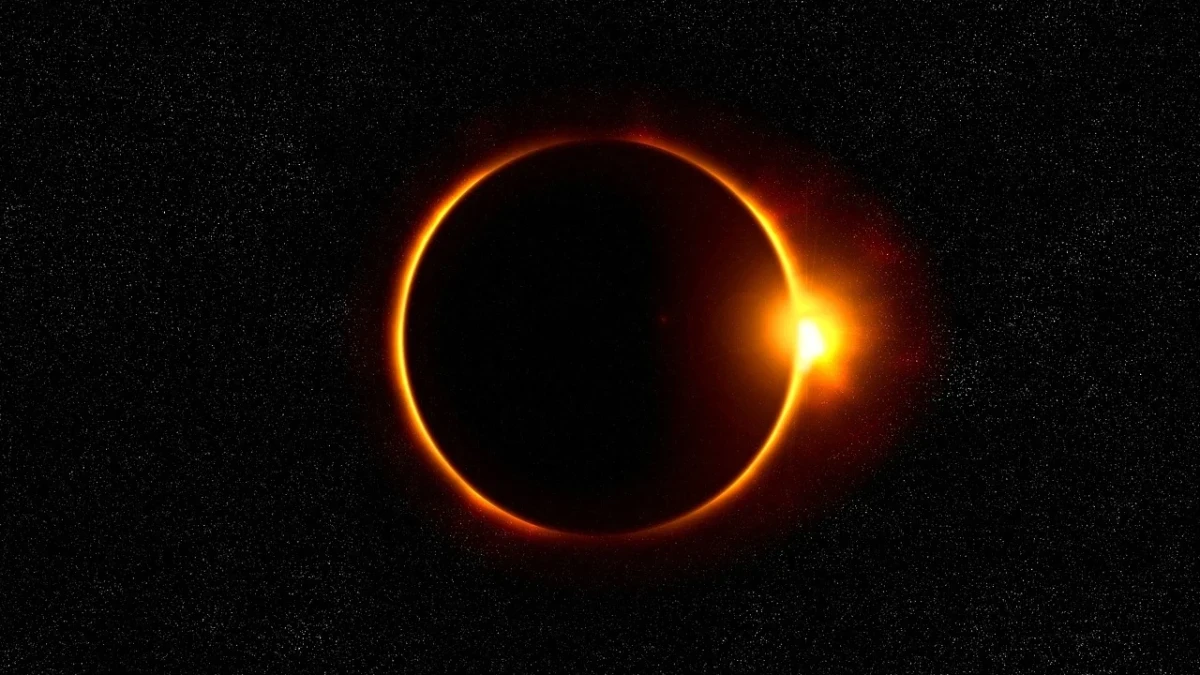
The total solar eclipse on August 2, 2027, is already being called the “eclipse of the century.” Strictly speaking, that is not entirely accurate: the longest total eclipse of the 21st century took place in 2009 and lasted up to 6 minutes 39 seconds — 16 seconds longer than the upcoming event. But there is a reason why the 2027 eclipse is generating so much excitement: nearly six and a half minutes of totality will be observable from land, and in places with exceptionally favorable weather.
The best views will be in Egypt. The Moon’s shadow will pass through the Luxor area, among other places, where totality will last more than six minutes. And that is the key difference between the 2027 event and the record eclipse of 2009.
The longest eclipse of the 21st century has already happened
On July 22, 2009, a total solar eclipse crossed India, China, and the Pacific Ocean. The maximum duration of totality reached 6 minutes 39 seconds — and that remains the 21st-century record.
However, the point of maximum duration was over the Pacific Ocean. Several cruise ships deliberately positioned themselves near Japan’s Ogasawara Islands, about 1,200 km south of Tokyo.
Most observers who wanted to see the eclipse from land traveled to eastern China. In some places near Shanghai, totality lasted almost six minutes.
But the weather let many observers down: clouds and rain obscured the eclipse in precisely the places where it was supposed to be especially spectacular.
As a result, a paradoxical situation emerged: the longest eclipse of the century did occur, but its maximum phase was seen by a relatively small number of people.
In 2027, nearly six and a half minutes will be accessible from land
On August 2, 2027, the maximum duration of totality will be 6 minutes 23 seconds. That ranks second among all total solar eclipses of the 21st century.
The difference from 2009 is just 16 seconds. But this time the geography is far more convenient.
The Moon’s shadow will pass across Europe, North Africa, and the Middle East. Egypt will be especially well placed: the Luxor area will fall within the zone where totality lasts more than six minutes.
At the same time, the eclipse will be visible against the landscapes of ancient Thebes, near the temples of Karnak and Luxor, as well as around the Valley of the Kings.
There is another factor too — the weather. In Luxor, early August usually brings virtually cloudless skies; according to the Time and Date statistics cited by the source, average cloud cover on that day is estimated at 0%.
So in practical terms, the 2027 eclipse really does look more attractive to observers than the record eclipse of 2009.
The years 2009 and 2027 share a common cosmic “ancestor”
The reason the two eclipses are so similar in duration is no coincidence. They belong to the same series — Saros 136.
A Saros is a cycle lasting about 18 years, 11 days, and 8 hours. After that interval, the Sun, Earth, and Moon once again end up in nearly the same geometric configuration, producing a very similar eclipse.
But the additional eight hours matter a great deal. In that time, Earth has time to rotate by about a third of a turn. As a result, the next Moon shadow passes roughly 120 degrees west of the previous one.
This creates a kind of eclipse chain: they occur over different parts of Earth, but share a common “relative” and similar geometry.
From Mexico through Asia to Egypt
Saros 136 has existed for many centuries. The first partial solar eclipse in this series occurred in 1360, and the first total one in 1721.
The duration of totality gradually increased and reached its maximum in 1955 — 7 minutes 7 seconds. Now the series is moving in the opposite direction, and the duration of the eclipses is gradually decreasing.
One of the best-known members of Saros 136 was the eclipse of July 11, 1991. Its path of totality crossed Hawaii, Mexico, Central America, and the northern part of South America, and the maximum duration reached 6 minutes 53 seconds.
Eighteen years and 11 days later came the 2009 eclipse. After the same interval came the 2027 event.
If you plot the paths of these eclipses on a globe, the characteristic shift of about 120 degrees to the west with each new member of the series becomes clearly visible.
After Egypt, the Moon’s shadow will head to the United States
Saros 136 does not end in 2027. The next eclipse in this series will occur on August 12, 2045, and will cross the United States, the Caribbean, and the northern part of South America.
The maximum duration of totality will be about 6 minutes 6 seconds. Cities within the path of totality will include Reno, Salt Lake City, Colorado Springs, Oklahoma City, Tulsa, Tampa, Orlando, Fort Lauderdale, and Miami.
After that, the series will continue in 2063, 2081, and 2099, gradually reducing the duration of totality.
Then another series will take over — Saros 139. It is this one that will produce 6 minutes 32 seconds of totality on June 3, 2114.
And on July 16, 2186, a truly exceptional eclipse will occur: near the Atlantic coast of South America, totality will last 7 minutes 29 seconds. It will be the longest total solar eclipse in the period from 4000 BCE to 6000 CE.
So why the “eclipse of the century”?
If taken literally, the 2027 eclipse is not the longest eclipse of the 21st century. In 2009, totality was 16 seconds longer.
But the upcoming event has another advantage: a record-long total phase will be accessible from land and will pass through regions with much more favorable viewing conditions.
That is why August 2, 2027, will be one of the most convenient opportunities in decades to spend several minutes under the Moon’s shadow — not in the middle of the ocean, but against the backdrop of Egyptian deserts and ancient monuments.
And for eclipse chasers, there is one more rule: the most interesting eclipse is not necessarily the one that set a record. What matters more is the one still waiting to be seen.