make preferable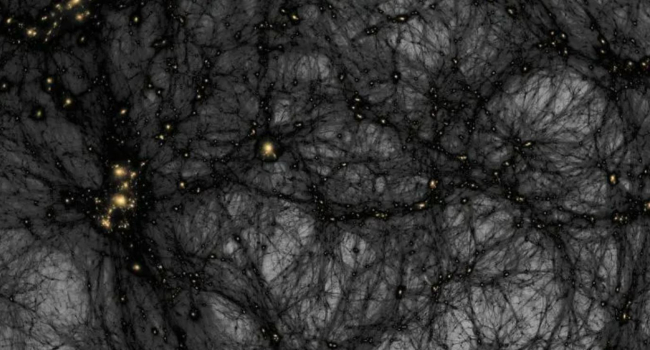
How can invisible, hypothetical particles be searched for? One approach is to observe how quickly they are able to effectively destroy white dwarfs, the dense remnants of dead stars.
In recent years, astronomers have shown growing interest in a theoretical particle known as the axion. It was proposed several decades ago to resolve a difficult problem in the theory of the strong nuclear interaction. Early attempts to detect axions in particle accelerator experiments were unsuccessful, and the idea temporarily faded into the background.
Subsequent research, however, indicated that axions could be serious candidates for dark matter. Theorists realized that such particles could fill the Universe in enormous numbers while still evading direct detection.
Invisible, but Not Entirely Unnoticeable
Even if axions interact only extremely weakly with ordinary matter, they could still leave observable traces. In a preprint published in November 2025 on the arXiv server, researchers proposed a way to test axion models using archival data from the Hubble Space Telescope. Although no direct evidence for axions was found, the study established new constraints that are currently the most stringent available.
The focus of the research was on white dwarfs, dense and faint cores left behind after stars exhaust their fuel. A single white dwarf can contain a mass comparable to that of the Sun compressed into a volume smaller than Earth. These objects are supported against collapse by electron degeneracy pressure: according to quantum mechanics, electrons cannot occupy identical states, which generates strong resistance to further compression.
Some theoretical models predict that axions can be produced in processes involving electrons. If an electron moves fast enough, it can emit an axion. Inside white dwarfs, electrons move at near-light speeds because of the extreme density of matter, creating ideal conditions for large-scale axion production.
Once produced, axions would interact very weakly with the surrounding material and escape freely from the white dwarf, carrying energy away with them. Since white dwarfs no longer generate energy through nuclear fusion, such an energy loss would cause them to cool more rapidly.
Modeling and Observations
The researchers incorporated an axion cooling model into a sophisticated computational framework that simulates stellar evolution and tracks changes in temperature and luminosity over time. This made it possible to predict the expected temperatures of white dwarfs of a given age both with and without the presence of axions.
These predictions were then compared with real Hubble observations of the globular cluster 47 Tucanae. Globular clusters are particularly well suited for this type of study because their stars formed at roughly the same time. As a result, the white dwarfs within them have similar ages, providing a large and relatively uniform sample.
No signs of axion-induced cooling were detected. Nevertheless, the study produced new limits, indicating that electrons cannot produce axions more efficiently than once in a trillion interactions.
What Comes Next
This result does not rule out axions entirely, but it makes strong direct interactions between axions and electrons unlikely. Continued searches will therefore require even more sophisticated methods.
White dwarfs, the quiet retirees of stellar evolution, continue to serve as natural laboratories for testing fundamental physics. Their slow fading may one day reveal the secret behind one of the greatest mysteries of the Universe: the nature of dark matter.
In Brief
In November 2025, a study was published using Hubble data on white dwarfs in the globular cluster 47 Tucanae to search for signs of axions. The idea was that axions produced by fast-moving electrons in the interiors of white dwarfs could accelerate their cooling. No evidence for such an effect was found, but new, stringent limits were placed on axion–electron interactions, restricting them to no more than one interaction per trillion. This narrows the range of viable models but does not eliminate axions as dark matter candidates, and the search will continue using other approaches.