make preferable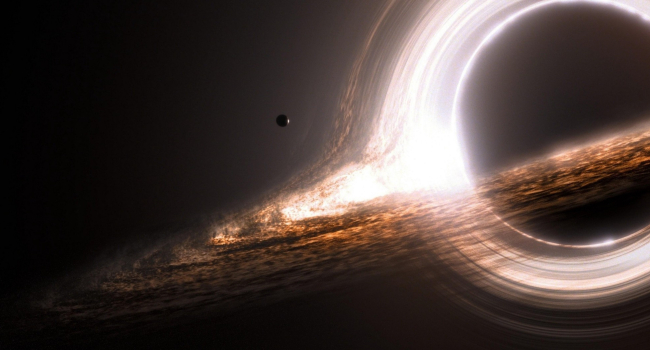
For the first time, scientists have directly observed the Lense–Thirring effect, the dragging of spacetime caused by a rotating black hole. This extremely rare phenomenon, predicted by Einstein’s general theory of relativity back in 1918, was seen in action during a tidal disruption event, AT2020afhd, in which a star was torn apart by a black hole. The study was published on December 10, 2025, in Science Advances.
How a Black Hole “Twists” the Space Around It
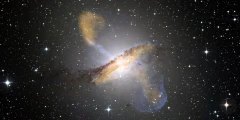
When a massive star passes too close to a supermassive black hole, gravity stretches it into long, spaghetti-like streams of matter that wrap around the black hole and form an accretion disk. Some of this material falls inward, while the rest is launched outward in powerful jets from the poles.
In the case of AT2020afhd, a team led by Cosimo Inserra of Cardiff University noticed something unusual. Both the accretion disk and the jets were wobbling in sync with a period of 20 Earth days. This wobble is a direct consequence of the Lense–Thirring effect. A rapidly spinning black hole, with a mass of billions of Suns, drags the fabric of spacetime along with it, forcing nearby matter to precess like a spinning top.
“Our study provides the most convincing evidence to date of the Lense–Thirring effect: a black hole dragging spacetime along with it, much like a spinning top creates a whirlpool in water,” said Cosimo Inserra.
Why This Discovery Matters
Until now, the Lense–Thirring effect had only been observed indirectly, for example in the orbits of satellites around Earth or in accretion disks around neutron stars. A direct detection around a supermassive black hole is a major breakthrough. It offers a new tool for studying:
- the spin of black holes
- the physics of accretion during tidal disruption events
- the formation of powerful relativistic jets
“This reminds us, especially during the holiday season when we gaze at the night sky with a sense of awe, that we have the ability to uncover ever more extraordinary objects, in all the variations and nuances created by nature,” Inserra added.
In Brief
Astronomers have directly observed the Lense–Thirring effect for the first time: a rotating supermassive black hole dragging spacetime along with it, causing the accretion disk and jets to wobble with a 20-day period during the tidal disruption event AT2020afhd. This confirms a prediction made by Einstein in 1918 and opens a new way to study black hole spin and the physics of extreme accretion. Once again, the universe proves that relativity holds true even under the most extreme conditions.