make preferable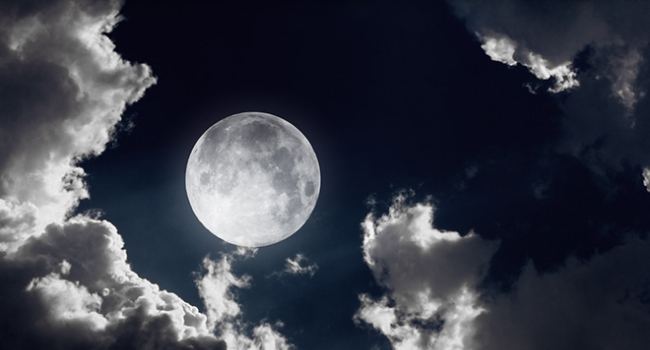
January 2026 will bring one of the brightest full moons of the year, a supermoon also known as the Wolf Moon. It will occur on January 3 at 05:03 Eastern Time in the United States (10:03 GMT), when the Moon reaches the point opposite the Sun and becomes fully illuminated from our perspective. It will not be an ordinary full moon. Thanks to its proximity to perigee, the closest point of its orbit to Earth, it may appear 14 percent larger and 30 percent brighter than the smallest full moon of the year, according to NASA.
Why the January Full Moon Is Called the Wolf Moon
Traditional names for lunar phases come from folklore and nature. The January full moon is called the Wolf Moon because wolf packs become particularly active in winter while searching for food. In North America it is also known as the Quiet Moon for the stillness of the cold season, or the Central Moon among the Assiniboine people because it marks the middle of winter. The Old Farmer’s Almanac adds the name Harsh Moon in reference to January’s severe weather.
Local rise and set times vary, so it is best to check the schedule for your region using apps such as Stellarium or TimeandDate.
How and Where to Observe the Wolf Moon
After sunset on January 3, look toward the east. The fully illuminated disk will rise above the horizon, likely appearing yellowish due to Rayleigh scattering of short wavelength light in the atmosphere. The Moon will shine among the stars of Gemini, and bright Jupiter will lie only about four degrees to the lower right. For comparison, that distance corresponds to the width of your little finger held at arm’s length.
To the southeast, the stars of Orion will be visible along with the V shaped Hyades cluster forming the face of Taurus and the Pleiades. To the southwest, Saturn will appear near the Circlet of Pisces, while the Great Square of Pegasus will set after midnight. An additional highlight awaits during the night of January 2 to 3, when the Quadrantid meteor shower peaks in the constellation Boötes. Under ideal conditions up to 25 meteors per hour are possible, although the bright Moon will wash out fainter ones.
How to Photograph the Wolf Moon
A full moon is an excellent opportunity for lunar photography because its seas, craters and ray systems stand out clearly. A DSLR with a telephoto lens or a smartphone with an astronomy mode such as recent iPhone or Samsung models will work well. Recommended settings include a tripod, manual focus set to infinity, ISO between 100 and 200 and a shutter speed of 1/125 to 1/250 second. For more detailed imaging, consider specialized equipment for astrophotography.
Summary
The Wolf Moon of 2026 will be a supermoon on January 3 at 10:03 GMT, appearing up to 30 percent brighter and 14 percent larger than usual. Look east after sunset to see it near Jupiter in Gemini. The Quadrantid meteor shower peaks on January 2 to 3. For photography use a tripod and manual controls. The January full moon remains one of the highlights of the winter sky.