make preferable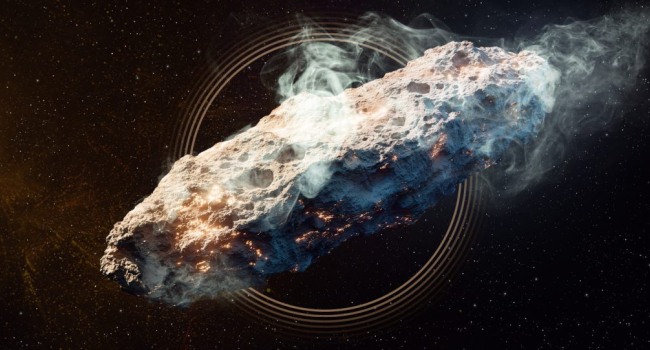
When Chile’s ATLAS telescope detected an unusual object on July 1, 2025, astronomers immediately suspected that it was not a local comet but a visitor from another stellar system. 3I/ATLAS has become the third confirmed interstellar object after the enigmatic ‘Oumuamua and comet Borisov. Its estimated age is more than 7.5 billion years — around three billion years older than the Sun. NASA has now announced an unprecedented observation campaign, while Russian researchers have warned that on November 21 the comet will encounter a blast of solar plasma. Experts insist there is no threat to Earth, but the event could reveal clues about the comet’s composition.
An Interstellar Wanderer: What We Know About 3I/ATLAS
3I/ATLAS was originally detected in the K2-18 system, 124 light-years away. Its diameter is estimated between 440 meters and 5.6 kilometers, and it is traveling at 221,000 km/h. Its hyperbolic orbit has an eccentricity greater than 6, which rules out any gravitational connection to the Sun. It will simply pass through the Solar System and continue on its way.
In September, the James Webb Space Telescope identified potential biosignatures in its atmosphere — including dimethyl sulfide (DMS), a compound that on Earth is produced only by living organisms. The finding caused excitement, but scientists remain cautious because DMS can also arise from geochemical processes. The comet will pass Earth on December 19 at a distance of 267 million kilometers — twice as far as the distance from Earth to the Sun. NASA’s deputy administrator for science missions, Nicky Fox, said 3I/ATLAS posed no threat and that the agency would continue observations until it leaves the Solar System.
An Unprecedented Campaign: 12 Spacecraft Already Involved
NASA has mobilized an entire fleet of space telescopes. Since the comet’s discovery, 12 spacecraft located across the Solar System have gathered data. This multisided view allows researchers to compare the comet with local objects and reconstruct its journey through space.
• Hubble and James Webb: spectra for chemical composition
• Parker Solar Probe: observations near the Sun (its perihelion was on October 29)
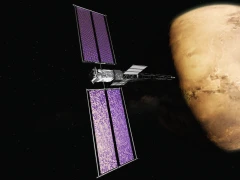
• Mars Express and ExoMars: a viewpoint from Mars
• SOHO and Solar Orbiter: monitoring the Sun’s influence
In spring 2026 the comet will cross Jupiter’s orbit, where Juno and Europa Clipper will join the campaign. According to NASA, this level of coverage from multiple vantage points will help scientists understand how such objects form in other planetary systems.
A Solar Strike on November 21: What Awaits the Comet
Researchers at the Russian Space Research Institute (IKI RAS) have warned that on November 21, 3I/ATLAS will encounter a large solar plasma ejection produced by the solar flares of November 18–19. This coronal mass ejection (CME) is a cloud of charged particles traveling at 1,000–2,000 km/s.
Scientists at the institute’s solar astronomy laboratory predicted that the plasma would hit the comet, possibly accelerating it slightly and altering its tail. This does not pose any danger to Earth, but it offers a rare opportunity to study how an interstellar object interacts with the solar wind. Measurements from Parker Solar Probe and SOHO will show how the CME affects outgassing and spectral features.
Why the Discovery Matters: Lessons for Astrobiology
3I/ATLAS offers a glimpse into another stellar system. Its age reflects processes that took place during the formation of comets nearly 10 billion years ago. If the presence of DMS is confirmed, it would hint at biological activity in a young planetary system. Even without biosignatures, the comet will provide valuable insights into the chemistry of distant worlds.
Summary
3I/ATLAS — a 7.5-billion-year-old interstellar visitor — poses no danger to Earth, passing no closer than 267 million kilometers on December 19. NASA has launched a massive observation campaign involving 12 spacecraft, with further monitoring near Jupiter in spring 2026. On November 21 the comet will be struck by a solar plasma ejection, a rare event that Parker Solar Probe and SOHO will study in detail. The comet could shed light on exoplanet chemistry and potential biosignatures such as DMS. Interstellar visitors continue to surprise.